Germany will grant police the power to shoot down rogue drones like those that have disrupted airports across Europe and that some European leaders have attributed to a hybrid war being waged by Russia.
The new law, agreed by the cabinet on Wednesday and awaiting parliamentary approval, explicitly authorises the police to down drones violating Germany's airspace, including shooting them down in cases of acute threat or serious harm.
Other techniques available to down drones include using lasers or jamming signals to sever control and navigation links.
"Drone incidents threaten our security," Chancellor Friedrich Merz said in a post on social media platform X.
"We will not permit that. We are strengthening the Federal Police’s powers so that drones can be detected and countered more quickly in future."
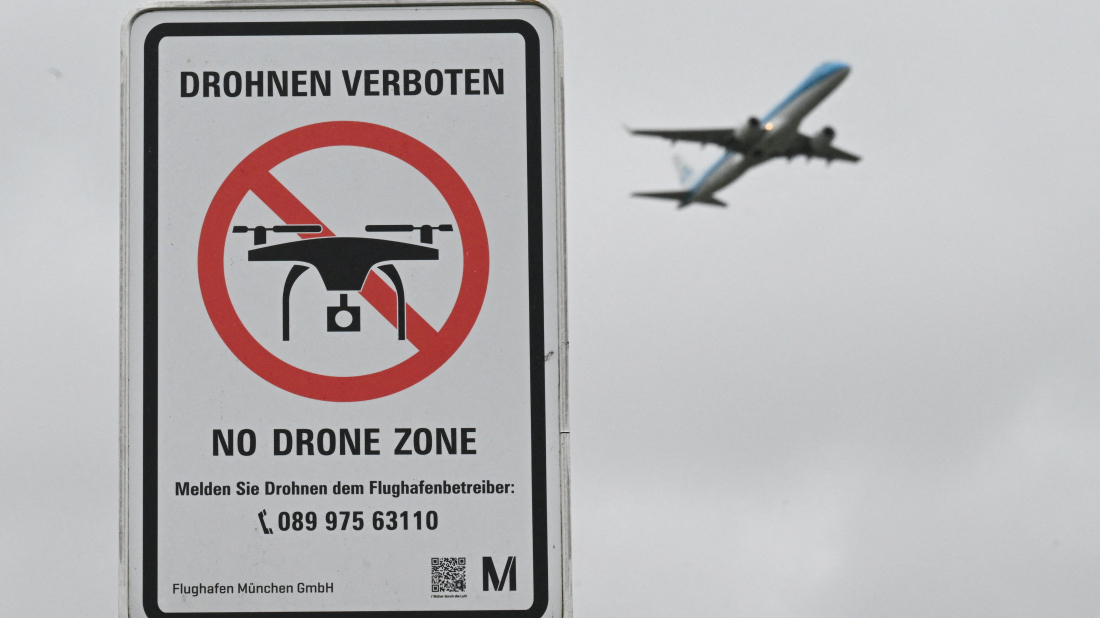
The new law comes after dozens of flights were diverted or cancelled last Friday at Munich Airport, Germany's second largest, leaving more than 10,000 passengers stranded, after rogue drone sightings.
Merz has said he assumed Russia was behind many of the drones flying over Germany last weekend, but none had been armed and were rather on reconnaissance flights.
EU leaders have come to view Russia as a major threat to their continent's security following Moscow's 2022 full-scale invasion of Ukraine and their support of Kyiv.
European Commission President Ursula von der Leyen called last month for what she described as a drone wall - a network of sensors and weapons to detect, track and neutralise intruding unmanned aircraft - to protect Europe's eastern flank.
But some say the drones involved in recent incidents could also have been launched from within the EU.
KEEPING PACE WITH FAST DRONE INNOVATION
With the new law, Germany joins European countries that have recently given security forces powers to down drones violating their airspace, including Britain, France, Lithuania and Romania.
A dedicated counter-drone unit will be created within the federal police, Interior Minister Alexander Dobrindt said, and researchers would consult with Israel and Ukraine as they were more advanced in drone technology.
Police would deal with drones flying at around tree-level, whereas more powerful drones should be tackled by the military, Dobrindt said.
Germany recorded 172 drone-related disruptions to air traffic between January and the end of September 2025, up from 129 in the same period last year and 121 in 2023, according to data from Deutsche Flugsicherung (DFS).
German military drills last month in the northern port city of Hamburg demonstrated how like a spider, a large military drone shot a net at a smaller one in mid-flight, entangling its propellers and forcing it to the ground, where a robotic dog trotted over to seek possible explosives.
Shooting down drones could be unsafe in densely populated urban areas, however, and airports do not necessarily have detection systems that can immediately report sightings.











What is your opinion on this topic?
Leave the first comment