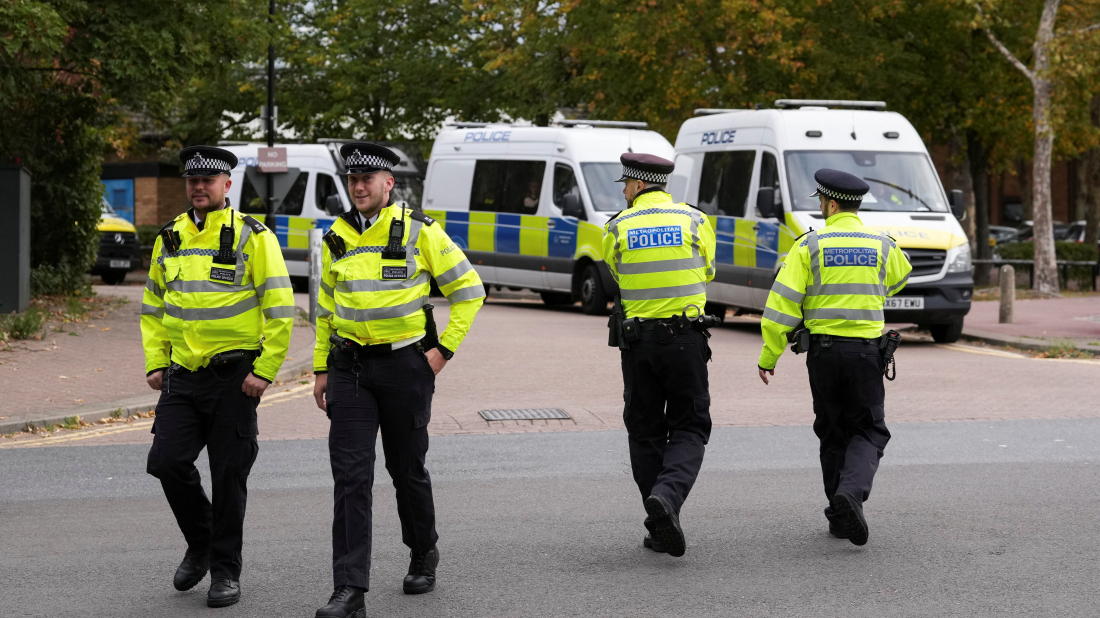
The UK government has announced plans to give police new powers to restrict repeated protests in the same location, following pro-Palestinian demonstrations that went ahead despite requests to cancel them after a deadly attack at a Manchester synagogue.
The British government said on Sunday that police will soon have greater authority to restrict repeat protests in the same place, amid growing tension over pro-Palestinian demonstrations held across the country.
The Home Office said the move will allow senior officers to consider the “cumulative impact” of ongoing protests on local communities, particularly when they cause distress or disruption.
Home Secretary Shabana Mahmood said the right to protest “is a fundamental freedom,” but added that it must be balanced with the rights of others to feel safe in their neighbourhoods.
“Large, repeated protests can leave sections of our country, particularly religious communities, feeling unsafe, intimidated and scared to leave their homes,” Mahmood said, highlighting concerns from Jewish communities after recent attacks.
On Saturday, police arrested almost 500 people in central London during a protest in support of Palestine Action, a group that was banned in July after members broke into an air base and damaged military planes.
Prime Minister Keir Starmer had urged organisers to call off the demonstration following the killing of two people at a synagogue in Manchester on Thursday on Yom Kippur, the holiest day for Jews.
Police shot dead the assailant, a British man of Syrian descent who officials said may have been inspired by extremist Islamist ideology.
The group behind Saturday's protest said the plans for more powers to limit demonstrations represented "a dangerous, authoritarian escalation" in a crackdown on free speech.
"We are announcing a major escalation ... and we urge all of our supporters to sign up to show we will not stand by as our fundamental rights are stripped away," a spokesperson for Defend Our Juries said.
The Board of Deputies of British Jews welcomed the government's announcement but said more action was needed to protect the Jewish community.
Mahmood is also due to review the police's existing powers to ensure they are sufficient and consistently applied, including powers to ban protests outright, the interior ministry said in a statement.











What is your opinion on this topic?
Leave the first comment