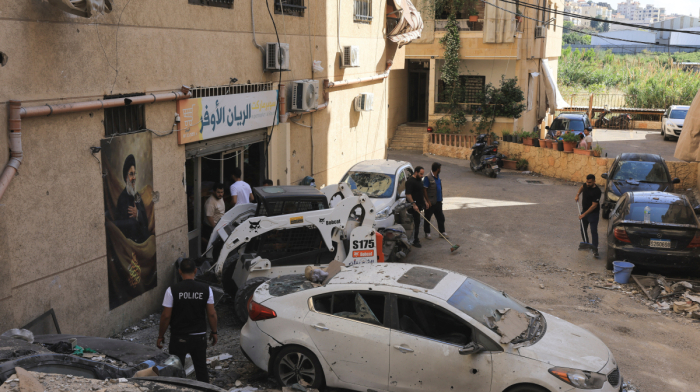
live Ceasefire strains as Israel intensifies attacks on Hezbollah in Lebanon killing hundreds - Thursday 9 April
Iran suggested it would be "unreasonable" to proceed with talks to forge a permanent peace d...
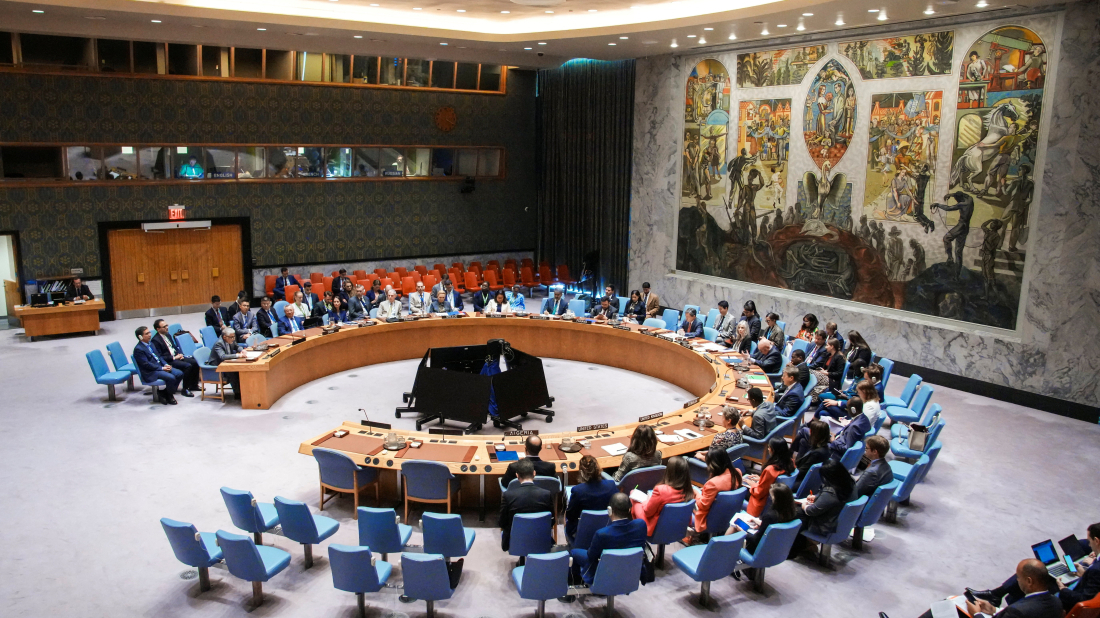
The United Nations Security Council will vote on Friday on a resolution proposed by Russia and China to delay the reimposition of sanctions on Iran for six months, but diplomats said it was unlikely to pass.
All U.N. sanctions on Iran are due to be reimposed at 8 p.m. EDT on Friday (0000 GMT on Saturday) after Britain, France and Germany triggered a 30-day process accusing Tehran of violating a 2015 deal with world powers aimed at preventing it from developing a nuclear weapon.
A resolution in the 15-member U.N. Security Council needs at least nine votes in favour and no vetoes by either Britain, France or the United States. Diplomats said there were likely to be a lot of abstentions from the vote and the text was unlikely to be adopted.
Iran and European powers have this week been trying to strike a last-ditch deal to delay the return of sanctions and make space for long-term negotiations on Tehran's nuclear programme.
Britain, France and Germany have offered a delay of up to six months - to allow space for talks on a long-term deal on Tehran's nuclear programme - if Iran restores access for U.N. nuclear inspectors, addresses concerns about its stock of enriched uranium, and engages in talks with the United States.
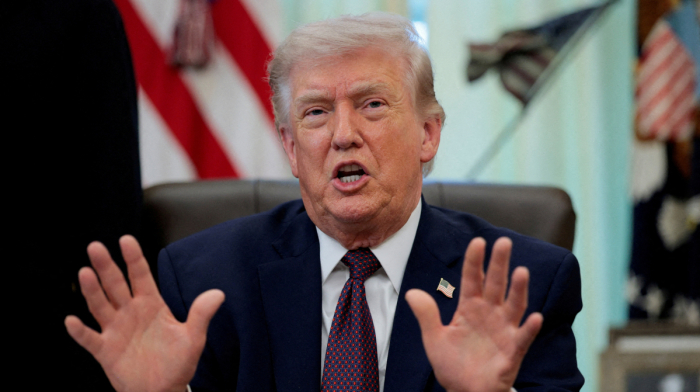
Iranian President Masoud Pezeshkian said on Thursday that Tehran was fully prepared to face any scenario and would adjust its policies if U.N. sanctions were reinstated, though he expressed hope they would not be revived, Iranian state media reported.
China and Russia vetoed a United Nations Security Council resolution on Tuesday aimed at coordinating defensive efforts to protect commercial shipping in the Strait of Hormuz, leaving no agreed international framework for securing the vital route.
Lebanon’s Hezbollah said it had stopped firing on northern Israel and Israeli forces on Wednesday as part of a two-week ceasefire in the Middle East brokered between the United States and Iran. However, a Hezbollah lawmaker warned that the pause could collapse if Tel Aviv does not adhere to it.
Pakistan’s Prime Minister Shehbaz Sharif said Iran and the United States, along with their allies, have agreed to an immediate two-week ceasefire covering all areas, but Israel says the deal excludes Lebanon. Tel Aviv says the U.S. is committed to achieving shared goals in upcoming negotiations.
Recent U.S. complaints about NATO allies and threats to quit the alliance are pushing European countries to seek alternative security arrangements, Spanish Foreign Minister Jose Manuel Albares said on Tuesday.
Construction has begun on a major new solar power project in Xizang, as China continues to expand its renewable energy capacity and push towards a greener future.
At least four people died after a small dinghy carrying migrants to Britain sank in the English Channel, French authorities announced on Thursday.
North Korea has tested a new cluster-bomb warhead mounted on a tactical ballistic missile, alongside advanced electromagnetic and infrastructure-targeting weapons, in a significant escalation of its military capabilities.
A barrage of Russian drones targeted and damaged a critical power substation in Ukraine's southern Odesa region on Wednesday, Ukrainian officials confirmed.
Start your day informed with the AnewZ Morning Brief. Here are the top stories for 9 April, covering the latest developments you need to know.
Greece will ban access to social media for children under 15 from 1 January 2027, Prime Minister Kyriakos Mitsotakis said on Wednesday, citing rising anxiety, sleep problems and the addictive design of online platforms.
You can download the AnewZ application from Play Store and the App Store.
What is your opinion on this topic?
Leave the first comment