live UN halts Strait of Hormuz escort operations after reported attack on cargo ship
The UN's International Maritime Organization has paused escort operations through the Strait of Hormuz after a cargo ship was reportedly attacked near...
Microsoft has stopped providing certain services to a unit within the Israeli Ministry of Defence following reports that the military was using the company’s cloud technology for mass surveillance of Palestinians.
The decision was confirmed by Microsoft President Brad Smith, who said the company had “ceased and disabled a set of services” for the Israeli military unit.
The move follows an investigation by The Guardian and Israel’s +972 Magazine, which reported that Unit 8200, Israel’s military intelligence branch, had used Microsoft Azure to store millions of phone calls from Palestinians in Gaza and the occupied West Bank.
Microsoft said it began reviewing the allegations on 15 August, examining business records, financial statements, and internal documents, but not the content of any stored material. Smith stressed that Microsoft does not provide technology for mass surveillance of civilians, a standard the company applies globally.
The company said its review found evidence supporting some elements of the reports, including Israeli use of Azure storage in the Netherlands and Microsoft AI services. As a result, Microsoft informed Israel it would stop specific subscriptions and related cloud storage and AI services.
An Israeli security official stated that the decision would not affect the operational capabilities of the Israel Defence Forces.
Microsoft has said its review is ongoing.

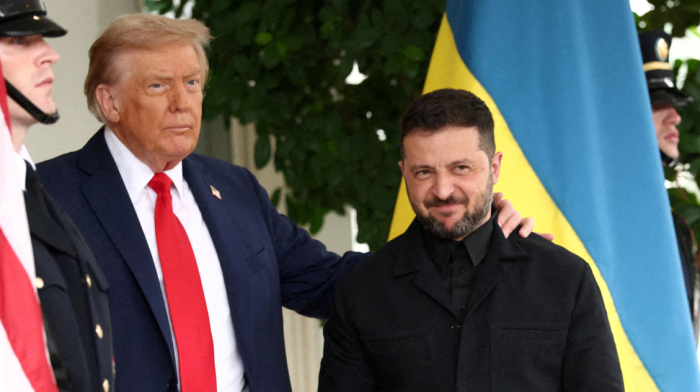
Russia has called for clarification on whether U.S. President Donald Trump has changed his position on the war in Ukraine following remarks made at the recent G7 summit in Evian-les-Bains.
As Western Europe battles a deadly heatwave that has shattered temperature records, disrupted transport and power supplies, and forced the closure of schools and cultural landmarks, attention is turning to whether El Niño is playing a role in the extreme conditions.
An earthquake of magnitude 6.9 struck Japan's northeast coast on Thursday, but no tsunami warning was issued, no injuries were immediately reported and no irregularities were found at nuclear facilities, the authorities said.
Israel's defence minister said on Wednesday Israeli troops will not withdraw from southern Lebanon, highlighting a hurdle to Iran-U.S. peace talks, as the top U.S. diplomat tours the Middle East to win over allies sceptical about a proposed deal.
The U.S. Senate rejected a resolution on Wednesday that would have directed President Donald Trump to remove U.S. forces from hostilities against Iran unless Congress formally authorised military action.
Tens of thousands of people are still unaccounted for after two powerful earthquakes struck Venezuela. At least 589 people have been confirmed dead and hundreds are believed to be trapped under rubble, as emergency crews and international rescue teams race to respond.
South Korea's former first lady Kim Keon Hee was sentenced to seven years in prison on Friday (26 June) after a court found her guilty of accepting luxury gifts in return for political favours.
Start your day informed with the AnewZ Morning Brief. Here are the top stories for 26 June, covering the latest developments you need to know.
Power was fully or partly cut across the Russian-held part of Ukraine’s Kherson region early on Friday (26 June), according to the Moscow-installed governor Vladimir Saldo.
Belarusian President Alexander Lukashenko has warned Ukraine not to try to draw his country into the war, saying any such move would change the conflict "instantly".
You can download the AnewZ application from Play Store and the App Store.
What is your opinion on this topic?
Leave the first comment