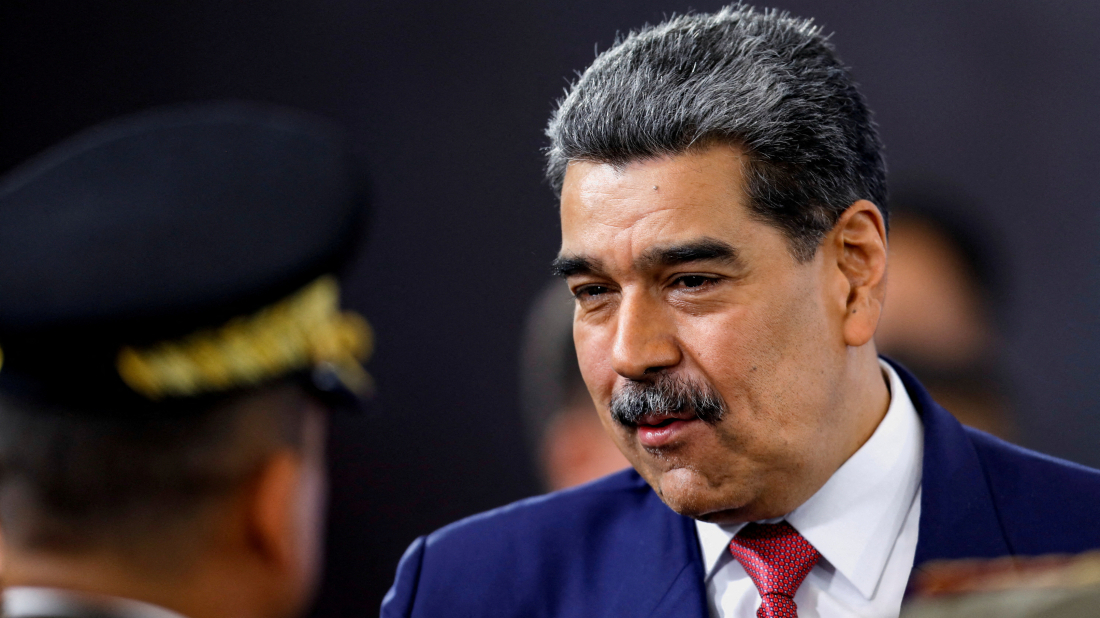
Venezuelan President Nicolás Maduro proposed direct talks with U.S. President Donald Trump just days after the first U.S. strike on a boat from Venezuela, which Trump claimed was carrying drug traffickers.
In a letter to Trump, viewed by Reuters and published by the Venezuelan government on Sunday, Maduro rejected U.S. claims that Venezuela played a significant role in drug trafficking. He stated that only 5% of the drugs produced in Colombia pass through Venezuela, with 70% of them being neutralised and destroyed by Venezuelan authorities.
"President, I hope that together we can defeat the falsehoods that have tainted our relationship, which should be historic and peaceful," Maduro wrote. "These and other issues will always be open for direct and frank conversation with your special envoy (Richard Grenell), to overcome media noise and fake news."
He also mentioned that Grenell had helped quickly resolve earlier allegations that Venezuela was refusing to accept deported migrants, adding that this channel of communication had worked "flawlessly."
Despite the U.S. strikes, twice-weekly deportation flights of illegal migrants to Venezuela from the U.S. have continued without interruption, sources familiar with the matter told Reuters.
The letter, dated 6 September, came four days after a U.S. strike on a vessel the Trump administration claimed, without evidence, was carrying drug traffickers. The attack resulted in 11 deaths, which Trump said were members of the Tren de Aragua gang involved in drug trafficking.
Following the publication of the letter, the Venezuelan government confirmed that it had been handed to an intermediary on 6 September.
The White House had no immediate comment on the matter.
Trump continued to ramp up his pressure on Venezuela, warning in a post on his Truth Social platform that Venezuela must accept the return of all prisoners, whom he accused Venezuela of forcing into the U.S., or face an "incalculable" price.
On Friday, Trump announced a third strike against alleged drug vessels from Venezuela, amid a large U.S. military presence in the southern Caribbean, including seven warships, a nuclear-powered submarine, and F-35 stealth fighters.
The strike killed "three male narcoterrorists aboard the vessel," according to Trump, though no evidence was provided.
The Venezuelan government, which claims to have deployed tens of thousands of troops to combat drug trafficking and defend the country, maintains that none of those killed in the first strike were part of the Tren de Aragua gang. It also denies allegations of ties between senior Venezuelan officials and drug cartels.
Maduro has repeatedly accused the U.S. of trying to remove him from power. Although Trump denied any intention of regime change, Washington raised its reward for information leading to Maduro’s arrest to $50 million last month, accusing him of links to drug trafficking and criminal groups.
Maduro again denied the accusations in his letter, describing them as "the most egregious instance of disinformation against our nation, intended to justify an escalation to armed conflict that would inflict catastrophic damage across the entire continent."
Trump's administration appears divided on Venezuela, with Secretary of State Marco Rubio and Secretary of Defense Pete Hegseth leading the pressure campaign against Maduro, while Richard Grenell and others advocate for diplomacy.
Maduro’s letter noted that he had, and would continue, communicating with Grenell, who helped facilitate deportation flights, some directly to Caracas and others via Honduras.
The administration official revealed that more than 8,000 Venezuelans have been deported from the U.S. via these flights to date, although Reuters was unable to verify the figures.
Grenell also worked with Maduro’s government to secure the release of seven U.S. citizens, including an Air Force veteran, Joe St. Clair, who was freed in May after being wrongfully detained in Venezuela since November 2024.
Grenell was unavailable for comment.
"Maduro is clearly making overtures," said Geoff Ramsey, a senior fellow at the Atlantic Council. "The question for the White House is, how do they achieve a victory here? Maduro is unlikely to want to hand over his power to the Venezuelan opposition or the Americans."
Ramsey noted that the U.S. military buildup aimed to encourage the opposition to overthrow Maduro, but this strategy had been tried unsuccessfully for decades.
Henry Ziemer, an associate fellow at the Centre for Strategic and International Studies, observed that while Trump generally avoids entanglements, more targeted strikes are likely.
"I don't think Trump wants a war, and Maduro certainly doesn't want one," Ziemer said. "But the more assets you deploy in the region, the more opportunities there are for miscalculations. The risk is that both Maduro and Trump may feel they cannot back down."










What is your opinion on this topic?
Leave the first comment