South Korean President Lee Jae Myung on Saturday ordered an all-out response after hundreds of South Korean nationals were detained in a U.S. immigration raid at a Hyundai car battery plant in Georgia.
Foreign Minister Cho Hyun said the government had set up a special team to respond to the arrests and could dispatch him to Washington for talks if necessary.
“I am deeply concerned. I feel heavy responsibility for the arrests of our citizens,” Cho told an emergency government meeting.
The raid, carried out Thursday at the facility near Savannah, saw around 475 workers detained, including more than 300 South Koreans.
U.S. officials described it as the largest single-site immigration enforcement operation in the history of the Department of Homeland Security.
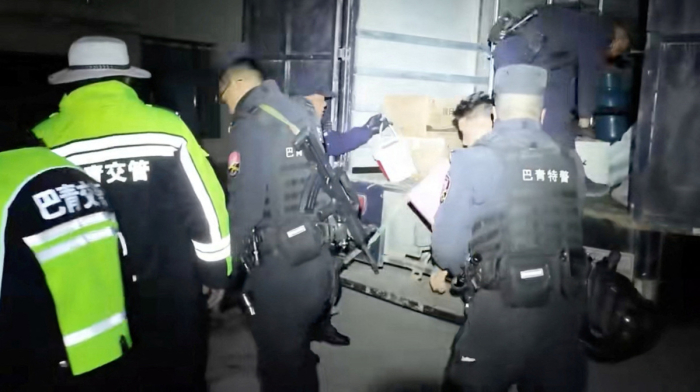
Video released by U.S. Immigration and Customs Enforcement (ICE) on Saturday showed rows of detainees lined up against the plant walls before being loaded onto buses. The operation, dubbed “Operation Low Voltage,” involved more than 400 law enforcement officers after a months-long investigation.
Homeland Security officials said those detained had either crossed the border illegally or overstayed visas.
The crackdown, part of U.S. President Donald Trump’s stepped-up immigration enforcement, risks straining ties with Seoul at a time when the two allies are already at odds over trade. South Korea has pledged $350 billion in investment in the United States under a bilateral deal whose implementation details remain contentious.
LG Energy Solution, Hyundai’s joint venture partner in the plant, said 47 of its employees were among those arrested, along with about 250 contractor staff.
The company has recalled employees from U.S. business trips and suspended all non-essential travel to the United States.
Hyundai said none of those detained were directly employed by the automaker. Chris Susock, the company’s chief manufacturing officer for North America, has assumed governance of the Georgia site, with Hyundai pledging to investigate all suppliers and subcontractors.
The Savannah-area facility is a key part of Hyundai’s expansion into the U.S. electric vehicle market, and the raid marks a significant disruption for one of the largest South Korean investments in the country.
The White House said Friday that “any foreign workers brought in for specific projects must enter the United States legally and with proper work authorizations.”
South Korea’s Foreign Ministry expressed regret and concern, with spokesperson Lee Jae-woong saying, “The economic activities of our companies investing in the United States and the interests of our citizens must not be unduly violated during the course of U.S. law enforcement.”
The U.S. Department of Justice said several workers attempted to flee during the raid, with some pulled from a sewage pond on the site.
Hyundai shares fell 0.7% on Friday while LGES stock dropped 2.3% as investors reacted to the disruption.
Political reaction in Georgia has been divided: the state’s Democratic Party condemned the raid as “politically-motivated fear tactics,” while Governor Brian Kemp’s office said Georgia would continue to enforce state and federal immigration laws.














What is your opinion on this topic?
Leave the first comment