Japan halts restart of Kashiwazaki-Kariwa plant a day after it goes online
Tokyo Electric Power Company (TEPCO) has suspended operations at the Kashiwazaki-Kariwa nuclear power plant in Japan, just a day after a reactor was b...
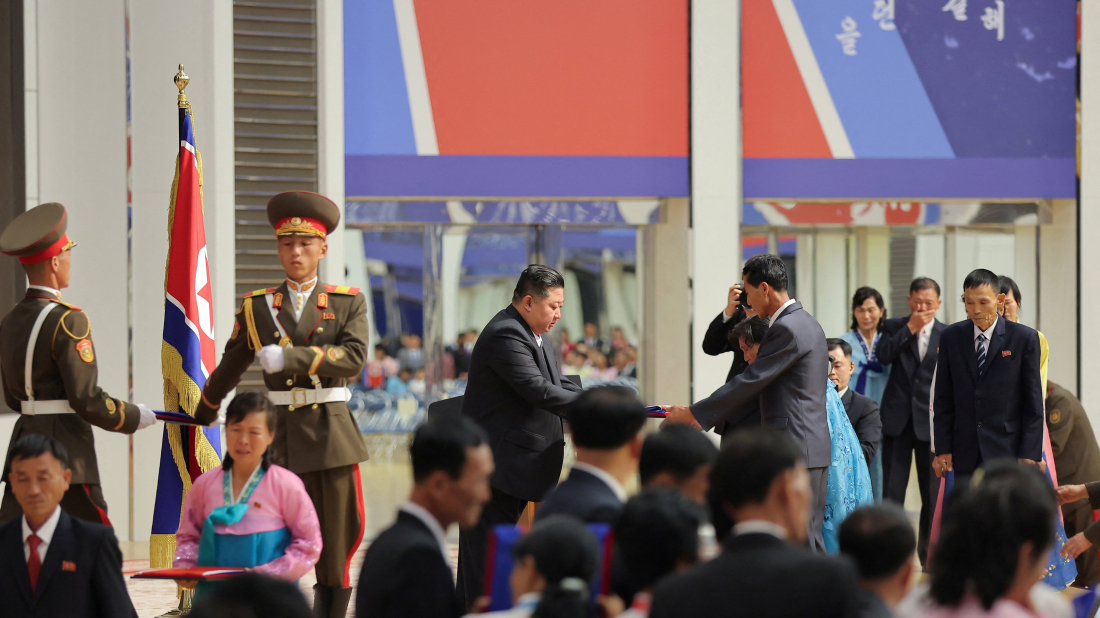
North Korean leader Kim Jong Un visited a new missile production facility on Sunday, reviewing automated processes aimed at increasing productivity and the combat readiness of major missile units, KCNA reported on Monday.
The visit comes ahead of his trip to Beijing to attend a military parade alongside leaders including China’s Xi Jinping and Russia’s Vladimir Putin.
A spokesperson from South Korea’s Unification Ministry said the tour likely aimed to showcase North Korea’s missile production capabilities.
Despite international sanctions over its nuclear and ballistic missile programs, North Korea has continued to receive growing economic, military, and political support from China and Russia, weakening the impact of U.N. Security Council resolutions.
KCNA highlighted Kim’s satisfaction with the automated system, which it said would boost both productivity and the quality of missile units.
North Korea has also reportedly sent military equipment and missiles to Russia to support Moscow in the Ukraine war.
Separately, the North’s foreign ministry condemned the U.S., Japan, and South Korea for using cyberspace as a “theatre of geopolitical confrontation,” criticising a recent trilateral statement on cybersecurity threats from Pyongyang.
The ministry warned that continued hostile actions by the U.S. would only deepen distrust and hostility between Washington and the DPRK.

President Donald Trump said on Thursday that the United States has an "armada" heading toward Iran but hoped he would not have to use it, as he renewed warnings to Tehran against killing protesters or restarting its nuclear programme.
Russian President Vladimir Putin said on Wednesday that Moscow could pay $1 billion from Russian assets frozen abroad to secure permanent membership in President Donald Trump’s proposed ‘Board of Peace’.
A commuter train collided with a construction crane in southeastern Spain on Thursday (22 January), injuring several passengers, days after a high-speed rail disaster in Andalusia killed at least 43 people.
Turkish President Recep Tayyip Erdoğan has told his Iranian counterpart Masoud Pezeshkian that Türkiye opposes any form of foreign intervention in Iran, as protests and economic pressures continue to fuel tensions in the Islamic republic.
President Donald Trump says he has agreed a "framework" for a Greenland deal with NATO.
Tokyo Electric Power Company (TEPCO) has suspended operations at the Kashiwazaki-Kariwa nuclear power plant in Japan, just a day after a reactor was brought back online for the first time in more than a decade.
UK Prime Minister Keir Starmer has accused U.S. President Donald Trump of making “insulting and frankly appalling” remarks about Nato forces in Afghanistan, saying the comments wrongly diminish the sacrifice of British and allied troops and should be followed by an apology.
In the snowy peaks of Davos, where the world’s most powerful leaders gather for the 56th World Economic Forum, a new narrative is emerging that challenges the current dominance of artificial intelligence (AI).
Start your day informed with AnewZ Morning Brief: here are the top news stories for the 23th of January, covering the latest developments you need to know.
The United States officially left the World Health Organization on 22 January, triggering a financial and operational crisis at the United Nations health agency. The move follows a year of warnings from global health experts that a U.S. exit could undermine public health at home and abroad.
You can download the AnewZ application from Play Store and the App Store.
What is your opinion on this topic?
Leave the first comment