U.S. President Donald Trump and Russian President Vladimir Putin failed to reach a deal on Ukraine at their Alaska summit, sparking swift reactions from Kyiv, European capitals and beyond. Leaders stressed the need for firm security guarantees for Ukraine and continued pressure on Moscow.
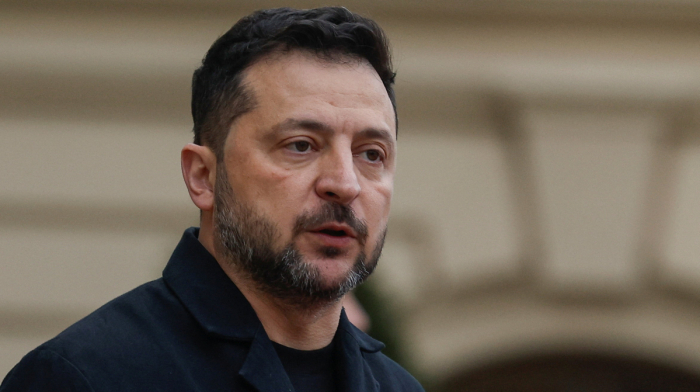
Ukrainian President Volodymyr Zelenskyy said on X that he welcomed Trump’s proposal for a trilateral meeting with Russia and would travel to Washington on Monday to “discuss all of the details regarding ending the killing and the war.” He added that Europe must remain involved to ensure “reliable security guarantees together with America.”
A joint statement by European leaders underlined that “Ukraine must have ironclad security guarantees” and insisted Russia cannot veto Kyiv’s pathway to the EU or NATO. The leaders pledged further sanctions on Moscow, warning that international borders must not be redrawn by force.
UK Prime Minister Keir Starmer praised Trump’s efforts, saying his leadership “brought us closer than ever before to ending Russia’s illegal war.” French President Emmanuel Macron highlighted Russia’s track record of breaking commitments, stressing that “France continues to stand resolutely by Ukraine’s side.” Italian Prime Minister Giorgia Meloni described the outcome as “a glimmer of hope,” while German Chancellor Friedrich Merz and European Commission President Ursula von der Leyen both vowed “unwavering solidarity” with Ukraine.
EU foreign policy chief Kaja Kallas said Washington holds the leverage to compel Moscow to negotiate seriously, noting that the EU is preparing a 19th sanctions package. Norwegian Foreign Minister Espen Barth Eide said Europe must guard against Putin’s attempts to split allies, while Czech Prime Minister Petr Fiala accused the Russian leader of seeking “the greatest possible territorial gains and the restoration of the Soviet empire.”
Polish Prime Minister Donald Tusk warned that “the game for Ukraine’s future…has entered a decisive phase,” calling unity essential. His aide Marcin Przydacz added that talks themselves held some value but reiterated that Poland sees Russia’s defeat as the surest outcome. Swedish Prime Minister Ulf Kristersson cautioned against “a bad peace on Russia’s terms,” saying Europe must keep supporting Ukraine to avoid fresh threats.
From outside Europe, India welcomed the summit as “highly commendable,” stressing diplomacy as the only path forward. Romanian Foreign Minister Toiu Oana said Black Sea stability is crucial for peace and prosperity, while Hungarian Prime Minister Viktor Orban declared that “today the world is a safer place than it was yesterday.”
The differing tones reflect both cautious optimism and firm resolve. While Trump prepares to meet Zelenskyy in Washington, European leaders and allies signal they will keep sanctions and military support flowing until Moscow makes concessions.










What is your opinion on this topic?
Leave the first comment