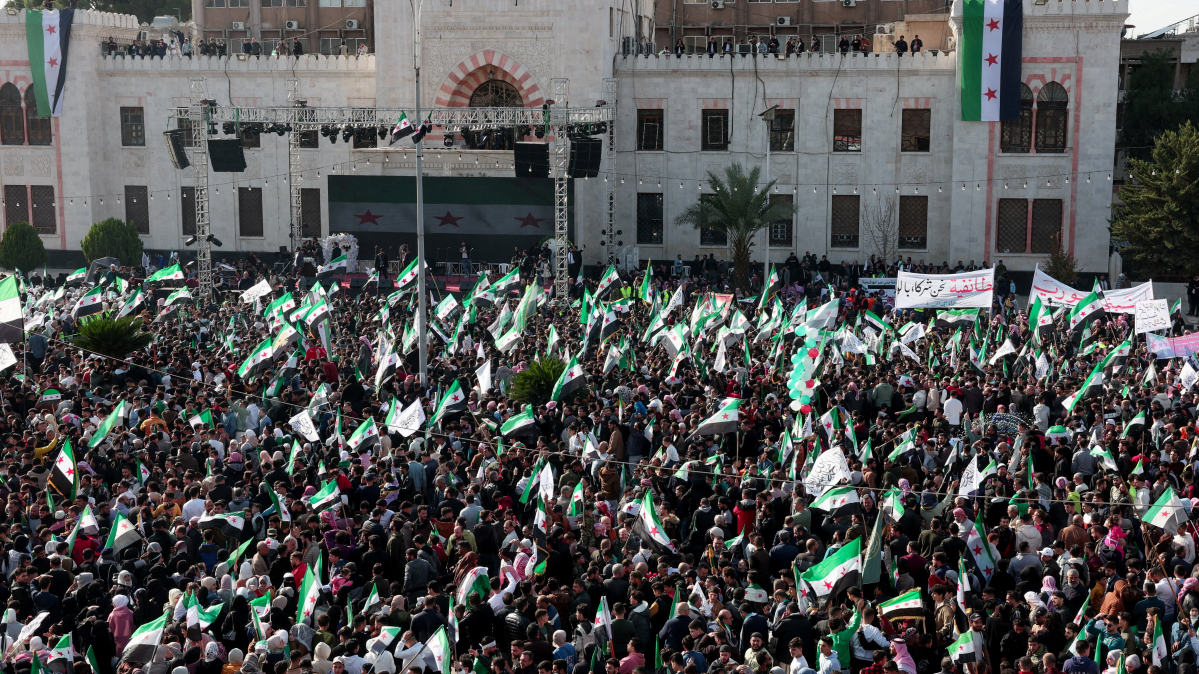
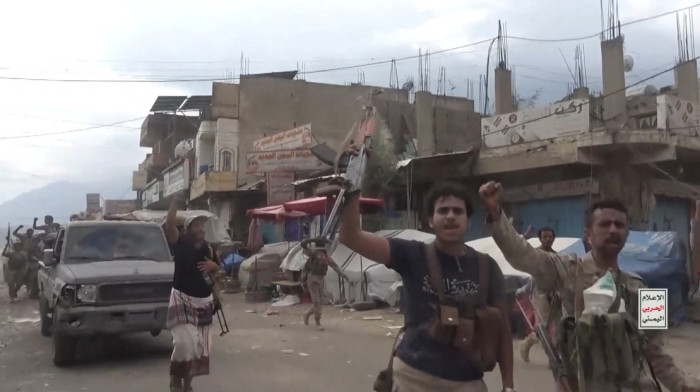
Residents of Hama filled the streets, balconies, rooftops, main squares, on Friday (5 December), waving flags and chanting slogans, celebrating the first anniversary of the departure of forces loyal to Bashar al-Assad.
For many in Hama, long considered a bastion of opposition and previously haunted by repression, the mood is remarkably different from years past. Journalists described the atmosphere as one of “hope and belief” in Syria’s future.
Hama has a traumatic legacy: during the 1982 crackdown ordered by Bashar’s father, Hafez al-Assad, government forces besieged and bombed neighbourhoods, and massacred thousands — a brutal chapter that left deep scars.
That painful history made the 5 December 2024 recapture of the city — by opposition forces led by Ahmed al-Sharaa — more than just a strategic victory. For many, it symbolised justice, redemption, and the end of decades of fear.
Today’s celebrations reflect that symbolic reversal: Hama, once a cautionary tale for dissidents, now stands at the heart of a new Syrian chapter.
What’s changed?
The city’s public life has opened up - people speak more freely, move about without the constant fear of detention or reprisals, something rare under the old regime. According to on-the-ground reporters, the transformation is tangible.
But residents and analysts caution that real stability remains fragile. For many young Syrians, the “freedom” they see is still overshadowed by uncertainty about the future — from security to livelihoods.
At the national level, the new leadership under Ahmed al-Sharaa has begun to rebuild state institutions. Former rebel and opposition factions have agreed to integrate under a unified Defence Ministry — a step toward centralised order rather than fragmented militias.
Hope, fears, and what lies ahead
The events in Hama echo a larger transformation across Syria. The fall of Assad after a lightning 2024 offensive triggered an overhaul of the political and military landscape. The recapture of Hama was not simply territorial — it struck at the heart of old Assad-era oppression and fear.
Yet the optimism in Hama coexists with serious challenges - rebuilding a shattered country, restoring social cohesion, ensuring security for minorities, and turning fleeting euphoria into sustainable peace. As one analyst put it — international rehabilitation means little “if all Syrians don’t feel safe walking their own streets.”
In Hama there is belief, and cautious hope, that this “new chapter” might become something real.










What is your opinion on this topic?
Leave the first comment