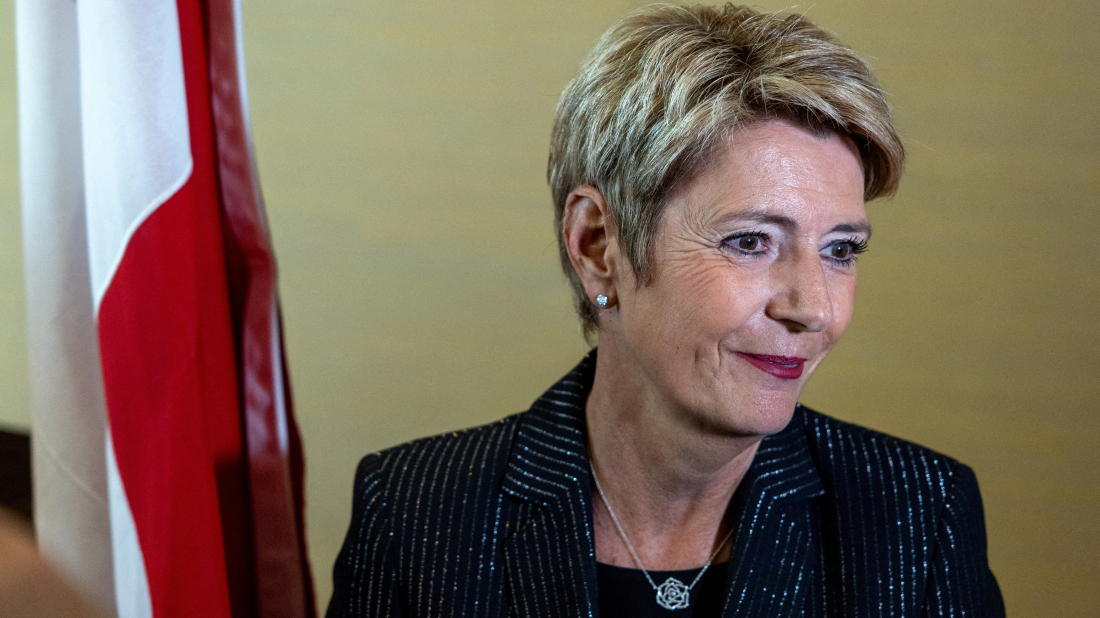
Swiss President Karin Keller-Sutter is set to meet U.S. Secretary of State Marco Rubio on Wednesday as Switzerland races to secure a deal that would prevent a severe 39% tariff on its exports to the United States.
The Swiss economy, heavily reliant on trade, was blindsided by U.S. President Donald Trump’s announcement last week imposing one of the steepest tariffs seen since his administration began its global trade reset. The tariffs, scheduled to take effect on Thursday, have sparked concern over the potential damage to Switzerland’s export-oriented industries.
Keller-Sutter, accompanied by Business Minister Guy Parmelin, arrived in Washington on Tuesday for emergency talks aimed at reaching a compromise. According to a Swiss source familiar with the discussions, the Trump administration is seeking increased Swiss purchases of American energy and defence products as part of any deal.
Parmelin has already floated the idea of Switzerland importing more U.S. liquefied natural gas (LNG) to improve negotiating terms.
“Look at the European Union, they promised to buy LNG. Switzerland imports LNG too, maybe that's one path,” Parmelin said.
In a recent deal with Washington, the European Union secured a reduced tariff rate of 15% by agreeing to purchase $750 billion worth of LNG, oil, and nuclear energy over three years. While the EU did not formally commit to buying more U.S. arms, it indicated that its rising defence spending under NATO obligations would benefit American suppliers- an assurance viewed as key to the agreement.
Switzerland already purchases U.S. military equipment and has committed to a 6-billion-franc ($7.43 billion) deal for Lockheed Martin’s F-35A fighter jets. However, the trade dispute has prompted some Swiss lawmakers to question the continuation of the deal.
Meeting Rubio, winning over Trump
President Keller-Sutter is expected to lead the delegation in a one-hour meeting with Rubio at the State Department at 10:15 a.m. (14:15 GMT) on Wednesday, according to the official schedule. The Swiss government has not commented on the meeting or disclosed any further engagements with U.S. officials.
In early July, Swiss negotiators reached a draft agreement with U.S. officials, reportedly including a 10% tariff. However, that progress appeared to unravel after what was described by U.S. sources as a tense phone call between Trump and Keller-Sutter. Swiss officials acknowledged the call did not go well but denied any personal fallout.
Trump’s reversal last week, opting instead for a 39% rate, has drawn criticism from Swiss industries, which fear the tariffs will hit exports of watches, machinery, and chocolate — products for which the U.S. is a major market.
Industry groups and economic analysts are urging a swift resolution.
“We greatly appreciate the tireless commitment of the Federal Council and the Federal Administration and welcome the efforts to find a solution with the United States,” said Noé Blancpain of industry group Swissmem.
Claude Maurer, chief economist at BAK Economics, stressed that the key objective was to win over President Donald Trump.
“Trump's team and the Swiss negotiators apparently already struck a deal. So it's in their mutual interest to get it over the line with Trump himself,” he said. “Whoever is best positioned to make that happen will be important.”











What is your opinion on this topic?
Leave the first comment