What is the blood-brain barrier, and why could it hold a key to Alzheimer’s?
A new study in mice suggests the brain’s protective barrier does more than block harmful substances. It also delivers essential proteins from...
Microsoft expects to invest about $30 billion in capital expenditures this quarter, part of an overall record of more than $80 billion planned for fiscal 2025, as its Artificial Intelligence (AI) powered cloud services continue to accelerate revenue and market value.
Microsoft’s surge in AI spending is paying off. In Q4, the company is projected to spend roughly $30 billion. It is a quarterly peak as it builds out AI infrastructure to support Azure, Microsoft 365 Copilot, GitHub, and other cloud services.
For fiscal 2025 overall, Microsoft remains on track to exceed $80 billion in capital expenditures, dedicated largely to data centres and high-performance servers that underpin its AI strategy.
The company’s AI-led growth strategy showed results in its Q4 earnings - Azure surpassed $75 billion in annual revenue, growing 34% year‑on‑year and helping drive total quarterly revenue to $76.4 billion, up 18% from a year earlier.
Microsoft shares climbed more than 7% following the earnings release, as investors welcomed earnings beats and strong forward guidance on cloud and AI momentum. The company is now nearing a $4 trillion market valuation.
Despite laying off around 15,000 employees this year, executives reaffirmed that cutting costs was “transformational” and necessary to align with rapid AI infrastructure scaling and efficiency goals
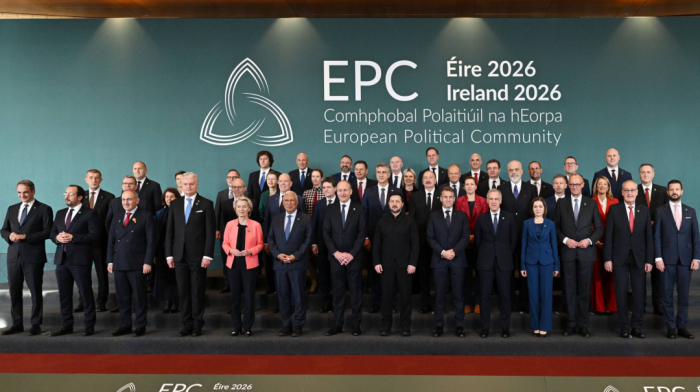
European leaders gathered in Dublin on Thursday, 12 November, for the ninth European Political Community (EPC) summit, with security, defence and energy high on the agenda. Azerbaijani President Ilham Aliyev held talks focused on peace, trade and regional cooperation.
Iran will not let a single particle of its enriched nuclear material leave the country, and any new U.S. attack would be met with strikes on distant American bases, Iranian security chief Mohsen Rezaei has said.
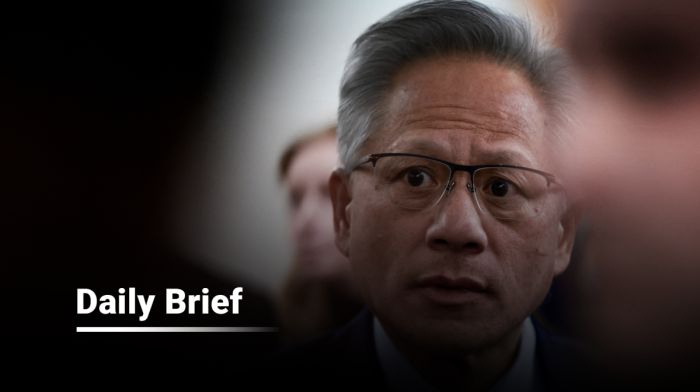
Nvidia chief executive Jensen Huang is stepping down amid reports linking him to a woman suspected by U.S. authorities of spying for China, throwing the future of the $4 trillion chipmaker into uncertainty.
Four million workers across Spain joined a general strike on Wednesday over the country’s deepening housing crisis, unions said, bringing disruption to factories, ports, shops and public transport just weeks before a snap general election.
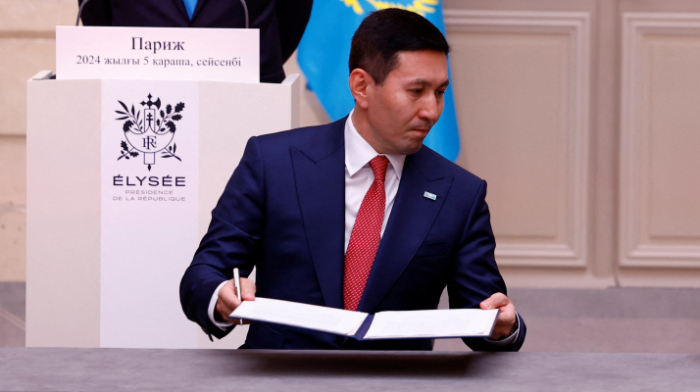
Kazakhstan’s security service has arrested Nurlan Zhakupov, CEO of Samruk-Kazyna, the country’s sovereign wealth fund, on suspicion of corruption. Yelzhas Otynshiyev, Chairman of KTZ, Kazakhstan’s national railway firm has also been detained.
The United Nations Children’s Fund (UNICEF) says 3.7 million children in Afghanistan are suffering from acute malnutrition, as worsening drought and funding shortages threaten to deepen the crisis amid the COP31 climate summit in Türkiye.
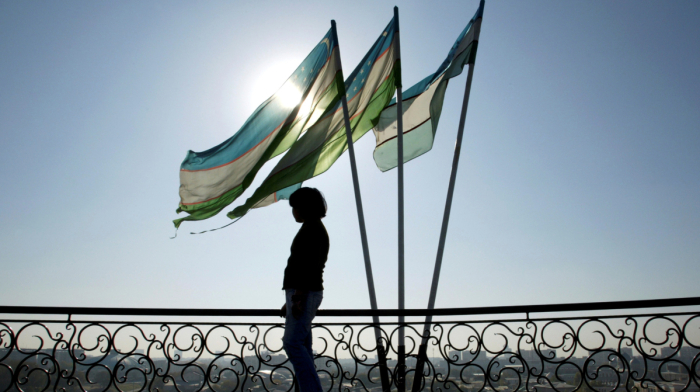
A consortium of Türkiye’s Limak and Qatar’s HBK Contracting has won an international tender to build and operate a new airport terminal in Bukhara, Uzbekistan, under a 23-year public-private partnership, with the project potentially costing up to $300 million.
Spain’s parliament has approved a government package aimed at easing the country’s housing crisis, a day after workers staged the first general strike in 14 years over soaring housing costs.
Here's your AnewZ Technology Daily Brief for the 13th of November. This week, a Microsoft outage hit Australian agencies, Google restricted mapping data in South Korea, a lawsuit targeted advanced AI development, and Nvidia faced a leadership crisis after Jensen Huang's resignation.
Microsoft struggled to restore its services on Friday after a major outage disrupted Outlook, Teams and Copilot across the United States and Asia-Pacific region.
You can download the AnewZ application from Play Store and the App Store.
What is your opinion on this topic?
Leave the first comment