Start your day informed with AnewZ Morning Brief: here are the top news stories for the 29th of July, covering the latest developments you need to know.
1. White House says Trump is open to talks with North Korean leader
U.S. President Donald Trump remains open to renewed talks with North Korean leader Kim Jong Un to fully end the country’s nuclear programme, a White House official said Monday.
The statement followed new comments from North Korea’s state media KCNA, in which it said the country declared that “reality has changed” since the previous U.S.–North Korea summits and that no amount of dialogue would lead to the abandonment of its nuclear weapons.
The remarks come amid escalating rhetoric from Kim Yo Jong, the influential sister of Kim Jong Un and one of the country’s top political figures.
Speaking on behalf of her brother, she acknowledged that the personal relationship between Kim and Trump is not bad, but said that leveraging that connection to end the North’s nuclear programme would only be met with “mockery.”
2. Baku hosts 8th meeting of Azerbaijan-Turkmenistan Joint Intergovernmental Commission
The 8th meeting of the Joint Intergovernmental Commission between Azerbaijan and Turkmenistan was held in Baku, focusing on expanding cooperation in trade, energy, transport, and agriculture.
Azerbaijan’s Economy Minister Mikayil Jabbarov highlighted the strong cultural and historical ties between the two nations and noted growing joint projects and investments. He stressed the importance of collaboration on the East-West and Middle Corridor transport routes, with transit volumes exceeding 2 million tons last year and more than 1 million tons in the first half of this year.
Turkmenistan’s Deputy Prime Minister Nokerguly Atagulyev spoke of the potential for deepening ties across key sectors. The meeting ended with the signing of a protocol on its outcomes.
3. Firefighters battle blazes in Türkiye, Greece and Albania
Firefighters are battling intense wildfires across Türkiye, Greece, and Albania, fuelled by strong winds and extreme heat.
In Türkiye, blazes in Karabük and southern provinces have prompted evacuations of people from villages and left three firefighters dead in a vehicle crash. Ten others died last week in Eskişehir.
Greece saw 44 new fires in 24 hours, including on Kythera and near Athens. In Albania, 900 personnel are tackling fires near Saranda, with 13 arrests made for arson.
Bulgaria is battling a major blaze near the Türkiye border, aided by European partners. Meanwhile, Serbia saw relief as rain helped extinguish more than a 100 fires.
4. Kyiv welcomes Trump’s direct tone on ending Russia’s war
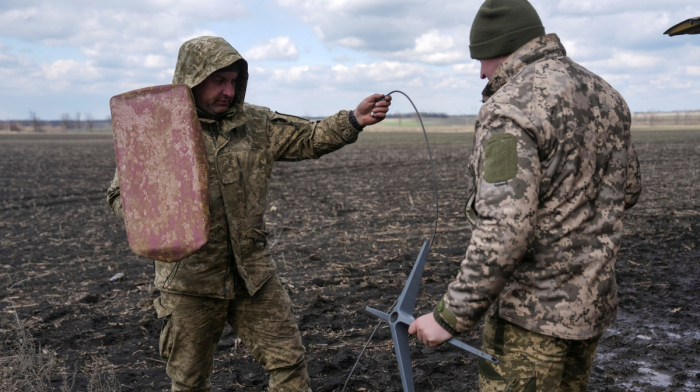
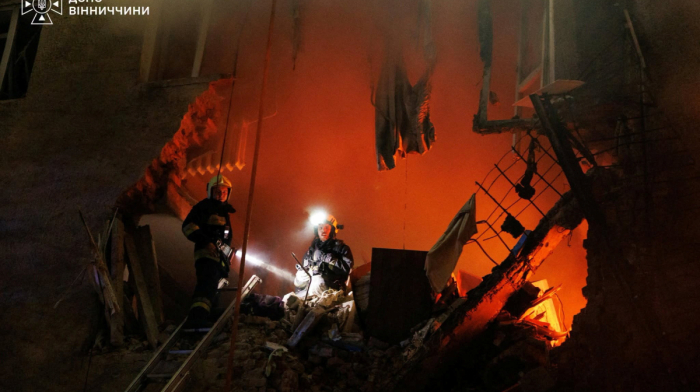
Ukrainian President Volodymyr Zelenskyy has praised U.S. President Donald Trump’s decision to cut Russia’s ceasefire deadline from 50 days to just 10–12 days.
In a post on X, Zelenskyy thanked Trump for his “clear stance” and focus on saving lives, calling it timely and necessary amid ongoing Russian air strikes.
In his nightly address, he said Trump’s position was “particularly significant” and stressed the need for continued sanctions. Zelenskyy added that Ukraine is ready to work with the U.S. for a “secure, lasting peace.”
5. Netanyahu and Putin hold phone call focused on Iran, says Israeli PM's office
Israeli Prime Minister Benjamin Netanyahu spoke with Russian President Vladimir Putin, with discussions centered around Iran, according to a statement posted by Netanyahu’s office on X.
Israeli Prime Minister Benjamin Netanyahu held a phone conversation with Russian President Vladimir Putin on Monday, marking a rare public exchange between the two leaders amid ongoing regional tensions.
The talks, according to a post by the Israeli Prime Minister's Office on the platform X (formerly Twitter), focused primarily on Iran, though no further details were disclosed.
The call comes at a time of heightened sensitivity in the Middle East, with Israel expressing increasing concern over Iran’s growing influence and weapons transfers to proxy groups in Lebanon, Syria, and Gaza. Russia, meanwhile, has maintained close ties with Tehran, especially since deepening its military and economic cooperation with Iran during the war in Ukraine.
6. Trump urges more Gaza aid and contradicts Netanyahu on starvation
U.S. President Donald Trump has called for urgent food aid to Gaza, saying “a lot of people are starving,” in direct contrast to Israeli Prime Minister Benjamin Netanyahu’s claim that there is “no starvation” in the territory.
Speaking in Scotland, Trump announced plans to set up open-access food centres in Gaza and urged Israel to do more to ensure aid reaches civilians.
Netanyahu later softened his tone, acknowledging the situation was “difficult” and pledging to work with international partners to facilitate aid.
Gaza health officials say 147 people, including 88 children, have died from hunger since the war began.
7. Head of Russia’s Roscosmos holds talks with NASA in Houston
Head of Russia's Roscosmos has arrived in Houston for talks with NASA interim head, Russian agencies report.
The head of the Russian space agency Roscosmos, Dmitry Bakanov, has arrived in Houston, where he will hold talks with the interim head of NASA, Sean Duffy, Russian agencies reported early on Tuesday.
Talks are scheduled for Thursday (31 July), Russia's TASS state news agency reported, citing a Roscosmos statement.
"The two sides plan to discuss ongoing projects. These will be the first talks between the heads of Roscosmos and NASA since 2018," the statement said.
8. Thirty dead in Beijing following torrential rains, Xinhua reports
At least 30 people have died in Beijing after torrential rains battered the Chinese capital, state news agency Xinhua reported on Monday.
A wave of severe rainfall and flooding has claimed at least 30 lives in Beijing, according to China’s Xinhua news agency, marking one of the deadliest weather disasters in the city in recent years.
Authorities have not yet released full details on the victims, but local reports suggest the casualties include both residents and emergency responders. Search and rescue operations are continuing across flooded districts, and the death toll may rise.
Beijing has experienced a record-level rainfall over the past several days, overwhelming drainage systems, flooding roads, subways, and homes. Videos circulating online showed submerged vehicles, collapsed infrastructure, and residents wading through waist-deep water.
The heavy rains are part of a broader extreme weather pattern affecting several provinces in northern China.
Officials have warned residents to evacuate from high-risk areas and avoid unnecessary travel. Emergency shelters have been set up, and the central government has pledged assistance.
Meteorologists expect rain to continue in the coming days, raising fears of further landslides and flash floods.

















What is your opinion on this topic?
Leave the first comment