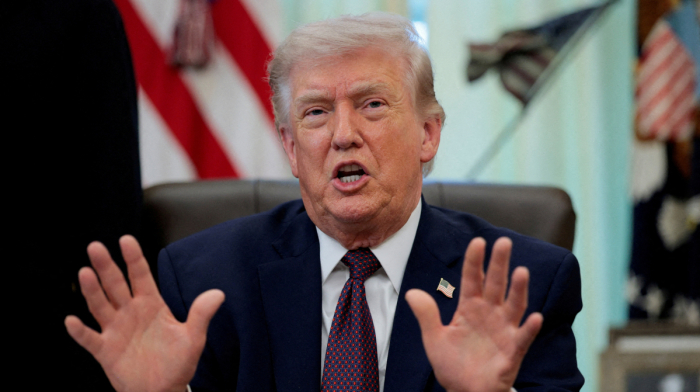
Trump threatens severe action if Iran does not agree to ceasefire deal
U.S. President Donald Trump warned Iran it could face devastating strikes within hours unless it agrees to a ceasefire by Tuesday night, escalating...
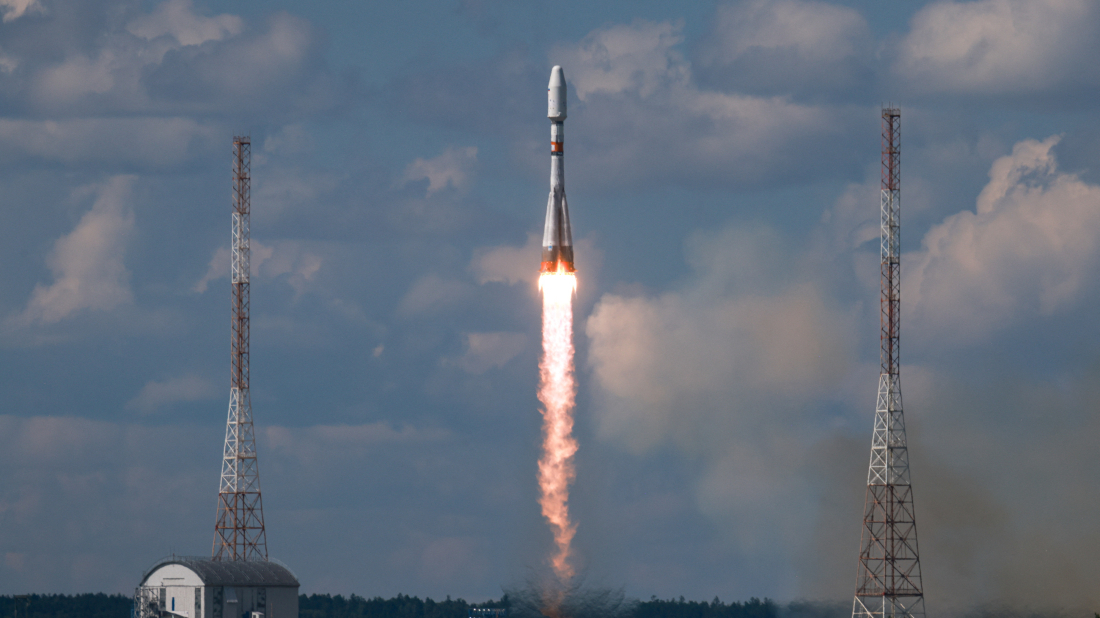
Russia launched 20 satellites into space on Friday, including the Iranian-made Nahid-2 telecommunications satellite, in a mission aimed at expanding scientific, commercial, and educational capabilities in low Earth orbit.
A Soyuz-2.1b carrier rocket lifted off at 8:54 Moscow time from the Vostochny Cosmodrome in the Far East, the Russian space agency Roscosmos said.
The primary mission featured the deployment of Ionosfera-M satellites No. 3 and No. 4. These instruments will monitor physical processes in the Earth’s ionosphere, such as electromagnetic field disturbances and ozone distribution, as well as changes in spatial structure caused by both natural and human activity. The data is expected to enhance understanding of the upper atmosphere and radiation environment.
In addition to the main payload, 18 small satellites were released into orbit. Among them were nine built by the Russian firm Geoscan, which will support Earth observation, sea and air traffic monitoring, and the study of near-Earth space.
Several of the smaller satellites serve educational objectives. These include hands-on experiments with satellite-to-Earth communication links and control systems for small satellite navigation and positioning in orbit.
The Nahid-2 satellite, built in Iran and designed for telecommunications purposes, was included in the multi-payload launch, according to TASS.
U.S. President Donald Trump on Monday told reporters that Iran could be taken out in one night, "and that night might be tomorrow night," warning Tehran it had to make a deal by Tuesday night or face wider bombing raids.
The crew of Artemis II mission are entering a pivotal phase of their journey, as they prepare to swing around the Moon and head back towards Earth. Now on the fifth day of their 10-day mission, the four astronauts are already witnessing views no human has ever seen.
U.S. President Donald Trump threatened Iran's energy and transport infrastructure in a social media post containing expletives on Sunday (5 April), as he seperately gave Iran a deadline of Tuesday to reopen the Strait of Hormuz.
A new proposal to end hostilities between the United States and Iran could come into effect as soon as Monday, potentially reopening the vital Strait of Hormuz, a source familiar with the plan said on Monday.
Oil prices rose sharply on Monday as fears deepened over potential supply shortages caused by the ongoing conflict in the Middle East, unsettling global energy markets and the row over the Strait of Hormuz, raising concerns for consumers and businesses alike.
As Hungary approaches a crucial vote, younger citizens who grew up under Prime Minister Viktor Orbán are increasingly backing the opposition, with some saying they may leave if he secures another term.
Greek Prime Minister Kyriakos Mitsotakis has urged EU prosecutors to speed up their probe into politicians from his party who are under investigation for fraud. The EU has asked to investigate 11 conservative MPs who are currently protected by parliamentary immunity.
In a move highlighting growing friction between global trade and digital retail, China on Monday issued new guidance for its rapidly expanding e-commerce sector.
North Korea's test of a solid-fuel rocket engine is intended for intercontinental ballistic missiles (ICBM) built with carbon fibre to extend range and allow for delivery of heavier and possibly multiple warheads, South Korean lawmakers said on Monday.
Hungarian Prime Minister Viktor Orbán called an emergency defence council on Sunday (5 April) after powerful explosives were discovered near a pipeline in Serbia that carries Russian gas to Hungary.
You can download the AnewZ application from Play Store and the App Store.
What is your opinion on this topic?
Leave the first comment