Start your day informed with AnewZ Morning Brief: here are the top news stories for 20th July, covering the latest developments you need to know.
1. President Ilham Aliyev shares strategic vision at Shusha Global Media Forum
At the 3rd Shusha Global Media Forum, President Ilham Aliyev addressed climate strategy, regional connectivity, and Azerbaijan’s evolving international role.
Climate and green energy
Aliyev highlighted Azerbaijan’s eco-conscious energy policy, noting reliance on hydropower and natural gas, with a goal to produce 6 GW of green energy by 2030. He called for climate realism, arguing that oil and gas remain essential for now. Azerbaijan pledged $10 million to help small island states combat climate threats and played a key role in resolving the Article 6 carbon market deadlock at COP29.
Post-conflict transformation and Khankendi
Aliyev showcased Khankendi’s symbolic rebirth, hosting the ECO Summit in a new Congress Hall built over a former separatist site. The area now features “Victory Square” and upcoming cultural institutions, reflecting a shift toward peace and reconstruction.
Zangezur Corridor and regional integration
Aliyev emphasised the Zangezur Corridor’s potential as a new North–South transport link, connecting Azerbaijan, Armenia, Iran, and Türkiye. Construction is nearing completion, with cargo capacity projected at 15 million tonnes.
Global media and dialogue
The president praised the Shusha Forum as a growing platform for open dialogue on global challenges beyond media. He underscored trust, diplomacy, and strong neighbourly ties as prerequisites for regional transit and security.
Relations with Ukraine and Russia
In response to a Ukrainian journalist, Aliyev urged continued resistance to territorial violations, drawing from Azerbaijan’s own experience. On the AZAL plane incident, he criticised Russia’s silence and called for accountability.
U.S.–Azerbaijan reset under Trump
Aliyev voiced optimism about renewed ties with the U.S. following Donald Trump’s return. He criticised past sanctions under Biden and welcomed recent positive signals from Washington.
Africa and climate justice
As COP29 President, Aliyev announced new cooperation formats to support African and small island states facing climate risks.
China ties and green technology
He revealed plans to boost trade and freight traffic with China, and expand joint projects in solar and wind energy. Chinese firms are already active in Azerbaijan’s renewable sector.
AI and values
Aliyev shared a cautious view on artificial intelligence, stressing the need to uphold traditional values despite rapid tech adoption.
Neo-colonialism and New Caledonia
He condemned French actions in New Caledonia, framing them as neo-colonialism and reaffirmed Azerbaijan’s support for decolonisation as a leading voice in the Non-Aligned Movement.
A just victory
Aliyev concluded by highlighting national unity as the foundation of Azerbaijan’s military success, calling it a testament that justice can be achieved through resilience and resolve.
2. Pakistan Air Force wins two top honours at UK airshow
The Pakistan Air Force (PAF) clinched two major awards at the Royal International Air Tattoo (RIAT) 2025 in the UK, officials confirmed Saturday.
Making its debut at the event, the PAF’s JF-17 Thunder Block-III won the "Spirit of the Meet" trophy, recognising its advanced technology and operational prowess. Co-developed with China, the aircraft is Pakistan’s most sophisticated multirole fighter.
Meanwhile, the PAF’s C-130H Hercules transport aircraft earned the "Concours d'Elegance" award for best maintenance and presentation.
The ISPR hailed the recognition as a testament to the PAF’s engineering excellence and global standing. The RIAT, held annually at RAF Fairford, is among the world’s largest military airshows, drawing participants from over 20 countries.
3. Israel and Syria agree ceasefire as Israel allows Syrian troops limited access to Sweida
A fragile U.S.-brokered ceasefire, backed by Türkiye and Jordan, has allowed Syrian internal security forces 48-hour access to Sweida to stabilise the Druze-majority region after over 300 deaths in sectarian clashes.
Violence erupted between Sunni Bedouin tribes and Druze militias, resulting in field executions, kidnappings, and widespread human rights abuses. Over 80,000 people are displaced, with hospitals shut and basic supplies cut off.
Citing its duty to protect the Druze, Israel struck Syrian military sites and demanded a withdrawal from Sweida. However, it later agreed to the limited Syrian security presence for humanitarian purposes.
Syrian Interim President Ahmed al-Sharaa declared a full ceasefire and urged unity among all factions. Despite this, fighting continues in parts of Sweida, casting doubt on the truce’s viability.
4. Magnitude 5.6 earthquake strikes northern Iran, EMSC says
A magnitude 5.2 earthquake struck 56 kilometres east of Gorgan in northern Iran early Sunday morning, according to preliminary seismic data.
The tremor occurred at 01:07 local time, with a shallow depth of just 3 kilometres, the European Mediterranean Seismological Centre (EMSC) reported.
Gorgan, the capital of Golestan Province, lies in a region of moderate seismic risk. Although the quake was felt across nearby areas, there have been no immediate reports of casualties or structural damage.
Iran’s Seismological Centre and other monitoring agencies are expected to confirm the data and provide updates as assessments continue.
Iran experiences frequent seismic activity due to its location on multiple fault lines. In recent decades, shallow quakes have caused severe damage, particularly in older or rural constructions.
5. President Ilham Aliyev demands Russia confess to accidentally shooting down Azerbaijani plane
President Ilham Aliyev has publicly pressed Russia to admit it accidentally shot down an Azerbaijan Airlines passenger plane in December, an incident that killed 38 people.
Aliyev, speaking at a news conference in the city of Khankendi during an event called The Global Media Forum, made clear that he wanted much more from Moscow whom he accused of inaction following the downing of the airliner. “We know exactly what happened and we can prove it. Moreover, we are confident that Russian officials also know what happened,” Aliyev said.
“The real question is: why didn’t they do what any responsible neighbour should do?”
He said Azerbaijan expected the incident to be formally acknowledged, for those responsible to be held accountable, for compensation to be paid to victims’ families and those injured, and for Moscow to reimburse the cost of the destroyed aircraft. “These are standard expectations within the framework of international law and good-neighbourly relations,” he said.
Flight J2-8243, en route from Baku to the Chechen capital Grozny, crash-landed near Aktau in Kazakhstan after diverting from southern Russia, where Ukrainian drones were reported to be attacking several cities. Thirty-eight people were killed and 29 survived. Russian air defence systems reportedly mistook the plane for a threat and fired upon it. While President Vladimir Putin apologised for the “tragic incident,” he stopped short of admitting that Russian anti-aircraft fire caused the crash. But he stopped short of saying Russia had shot down the aircraft.
Ties between Moscow and Baku have seriously deteriorated in recent months after Russian police detained a group of ethnic Azerbaijanis living in Russia and accused them of various historic crimes.
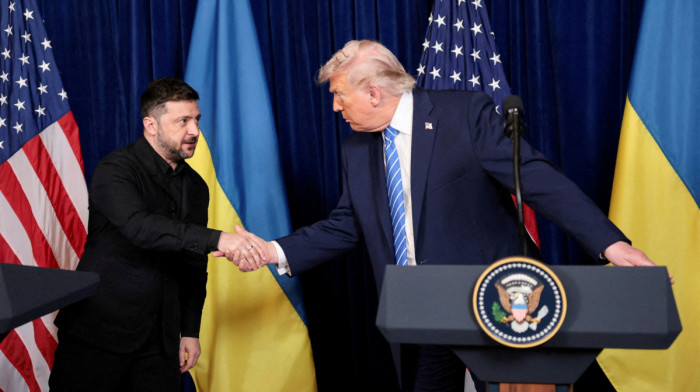
6. Zelenskyy offers Russia new round of peace talks next week
Ukrainian President Volodymyr Zelenskyy has invited Russia to resume peace talks next week, urging urgent steps toward a ceasefire.
In a Friday address, Zelenskyy said the proposal, delivered by security chief Rustem Umerov, aims to restart stalled diplomacy. Previous talks, including in Istanbul, yielded little beyond prisoner swaps.
Russia has yet to respond, though it claims to remain open to dialogue. Kyiv and its Western allies remain doubtful, citing Moscow’s continued territorial demands.
The move comes amid rising global pressure. Former U.S. President Donald Trump warned of sweeping sanctions if no deal is reached within 50 days.
As battlefield clashes persist, especially in Donetsk, the window for serious negotiation is rapidly closing.












What is your opinion on this topic?
Leave the first comment