Pashinyan says Armenia open to Azerbaijani fuel imports
Armenian Prime Minister Nikol Pashinyan has confirmed that fuel imports from Azerbaijan have resumed, saying the market is open to all businesses and ...
After more than a decade of waiting, Romania and Bulgaria will become full members of Europe’s Schengen free-travel area starting January 1, 2025, following Austria's decision to lift its veto.
The move comes after Austria lifted its veto against Romania and Bulgaria's Schengen membership, which had been tied to concerns over irregular migration along the Western Balkan route.
Earlier this year, Romania and Bulgaria gained partial access to the Schengen area, with air and sea border controls removed. However, land border negotiations continued through 2024. Austria insisted on the stricter border controls for reducing irregular migration, which played a key role in the breakthrough. Austria's decision was influenced by significant improvements in border management by both countries, resulting in a drop in migrant flows, particularly near Hungary—a major route to northern Europe.
Romanian President Klaus Iohannis welcomed the decision, emphasizing the economic benefits, including faster border crossings, lower costs for businesses, and a boost in foreign investment. He called the move "a major step for the country's economy and international image."
This marks the end of over ten years of efforts by Romania and Bulgaria to join the Schengen zone, strengthening their ties with the broader European Union.

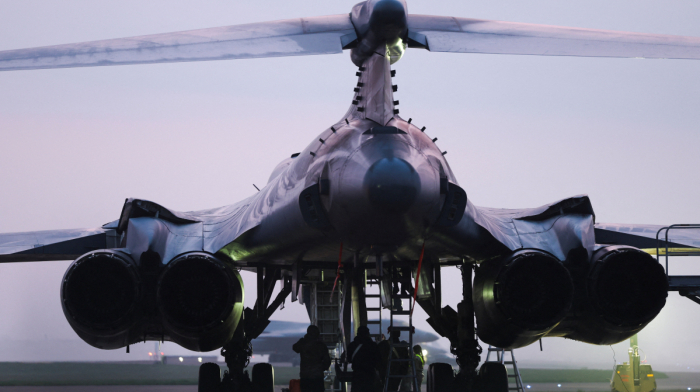
Open-source intelligence (OSINT) sources reported a significant movement of U.S. military aircraft towards the Middle East in recent hours. Dozens of U.S. Air Force aerial refuelling tankers and heavy transport aircraft were observed heading eastwards, presumably to staging points in the region.
Snow and ice stalled travellers in northwest Europe on Wednesday, forcing around a thousand to spend the night in Amsterdam's Schiphol airport but delighting others who set out to explore a snow-blanketed Paris on sledges and skis.
Diplomatic tensions between Tokyo and Beijing escalated as Japan slams China's export ban on dual-use goods. Markets have wobbled as fears grow over a potential rare earth embargo affecting global supply chains.
Two people have been killed after a private helicopter crashed at a recreation centre in Russia’s Perm region, Russian authorities and local media have said.
Iran’s chief justice has warned protesters there will be “no leniency for those who help the enemy against the Islamic Republic”, as rights groups reported a rising death toll during what observers describe as the country’s biggest wave of unrest in three years.
Iran’s Commander-in-Chief of Army, Major General Amir Hatami has warned against hostile rhetoric from U.S. and Israeli officials. “Iran considers the intensification of the enemies' rhetoric against the Iranian nation as a threat and will not leave its continuation unanswered,” Hatami said.
Türkiye says it's prepared a self-sustaining international stabilisation force for Gaza and has already begun training, Defence Minister Yaşar Güler said, reiterating Ankara’s readiness to deploy troops to support humanitarian efforts and help end the fighting.
Turkish President Recep Tayyip Erdogan has dismissed reports that Nicolas Maduro, Venezuela’s toppled leader, was previously offered asylum in Türkiye. “We have not received any such news,” Erdogan was quoted as saying by local media after a Cabinet meeting held Wednesday in Ankara.
Former NATO Deputy Secretary-General Rose Gottemoeller has warned that Europe could face a future without U.S. nuclear deterrence.
Start your day informed with AnewZ Morning Brief: here are the top news stories for the 8th of January, covering the latest developments you need to know.
You can download the AnewZ application from Play Store and the App Store.
What is your opinion on this topic?
Leave the first comment