



12:49 CET
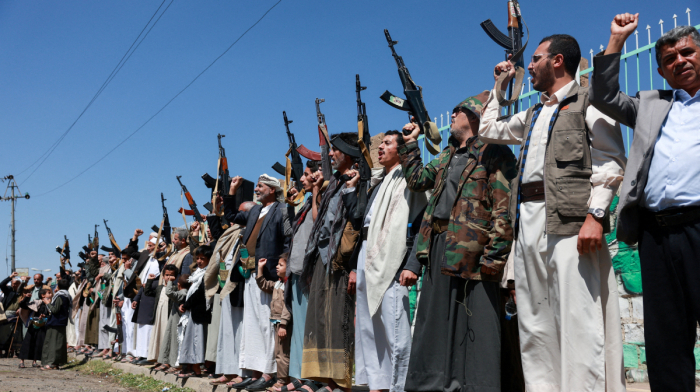
Yemen's Houthis
Three Saudi nationals killed in attacks on Riyadh airport
Saudi Arabia's civil aviation authority ...


Taiwanese officials meet Trump transition team members amid tensions with China, seeking stronger U.S.-Taiwan ties as Beijing increases military activity near Taiwan Strait.
Two senior members of Taiwan's government are in the United States to meet people connected to President-elect Donald Trump's transition team, five sources told Reuters, in an effort by Taiwan to establish ties with the incoming administration.
Lin Fei-fan and Hsu Szu-chien, both deputy secretaries-general of Taiwan's National Security Council and several of their staff have traveled to the Washington area for meetings through this week, the sources said on condition of anonymity.
Reuters was not able to confirm who from the U.S. side would join the meetings or the agenda.
Taiwan's presidential office said the national security team's visit and "exchanges" were a routine part of their work, and that it had no further comment.
China's embassy and the Trump transition team did not respond to requests for comment.
The visit by Lin and Hsu comes as China's military has stepped up activity near the Taiwan Strait, in what Taiwan has said is Beijing's effort to set a "red line" for the incoming Trump administration and U.S. allies.
One of the sources said the meetings were with individuals in Trump transition circles but would not include nominees for top positions in Trump's next administration, given sensitivity in Beijing over any talks between Taiwanese and U.S. officials.
The meetings are with "Republicans likely to populate mid-tier political positions" in the Trump administration, a second source said. A third source said it was "safe to say" Lin and Hsu were meeting the Trump transition team.
A fourth source added that visits to the United States at such a level are not rare and that they are to meet "old friends", including people in Trump's circle.
The United States does not have formal diplomatic relations with Taiwan, a democratically governed island that China claims as its own territory. Taiwan rejects Beijing's sovereignty claims, saying only the island's people can decide their future.
HOPE AND WORRY IN TAIWAN
Trump's electoral win in November has sparked hope in Taipei that he will pursue a tough line with China but also anxiety given his comments that the island should pay the U.S. for its defense.
Trump has named numerous China hawks to key posts in his incoming administration, including Senator Marco Rubio as secretary of state, who has called for unfettered interaction between U.S. and Taiwan officials.
Those nominations have been encouraging for Taipei, which Reuters has reported may place large new arms deals to show it takes seriously Trump's statements that Taiwan should pay "protection" money to the United States.
Engagement to date between Taiwan and the incoming administration appears to fall in a gray area of unofficial contact and has been low-key. That's a departure from the period before Trump's first term, when in December 2016, the month before his inauguration, he held a phone call with then-Taiwan president Tsai Ing-wen.
That call marked the first time since 1979 that a U.S. president-elect had spoken with the island's president, a move that angered China.
Ahead of his second inauguration, scheduled for Jan. 20, CBS News reported on Wednesday that Trump had invited Xi to attend the event, something that would be unprecedented for a Chinese leader.
The president-elect's camp and China did not immediately respond to a request for comment on the report, but Trump said in a interview with NBC News conducted last Friday that he "got along with very well" with Xi and that they had "had communication as recently as this week."

Saudi Arabia's civil aviation authority ...
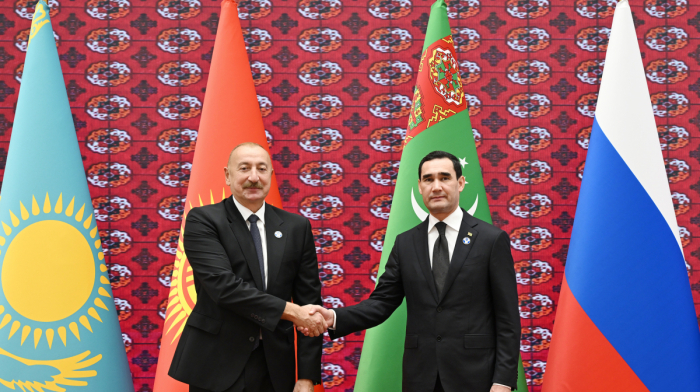
Azerbaijan is prepared to chair the Commonwealth of Independent States (CIS) in 2028, the country's President Ilham Aliyev has said. He made th...

U.S. federal immigration agents shot and wounded a man in a car with a five-year-old boy inside in New York City’s Bronx neighbourhood on Thu...

Russia struck Ukraine overnight in one of the biggest attacks of the conflict, killing at least 19 people, Kyiv's Foreign Ministry said on Wednesday. Around 70 missiles were fired at Ukraine during the attack, as well as drones, the Ministry said.
Azerbaijan is prepared to chair the Commonwealth of Independent States (CIS) in 2028, the country's President Ilham Aliyev has said. He made the remarks as regional leaders met at the CIS Council of Heads of State meeting in Awaza, Turkmenistan.
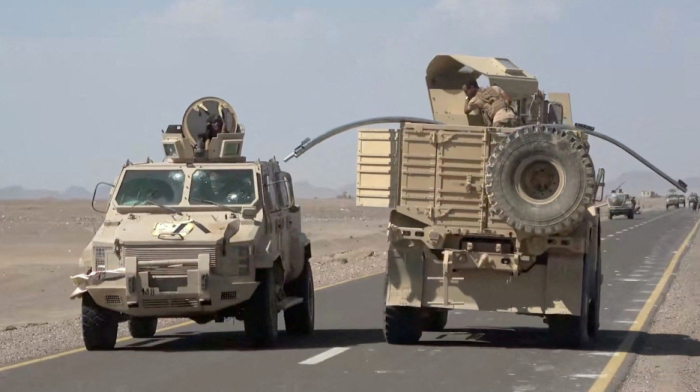
The Saudi-led coalition says it has carried out a series of military operations against Houthi targets in Yemen after attacks on two Saudi airports left three people dead and dozens injured.
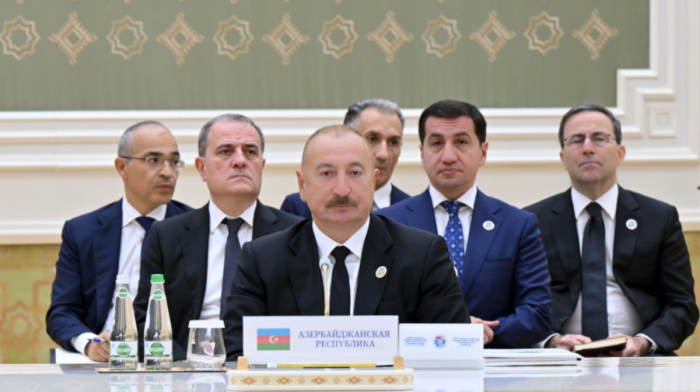
Azerbaijan and the five Central Asian states have signed two key documents at the 8th Consultative Meeting of Heads of State in Turkmenbashi, formalising a broader framework for regional cooperation in transport, trade, energy, digitalisation and security.
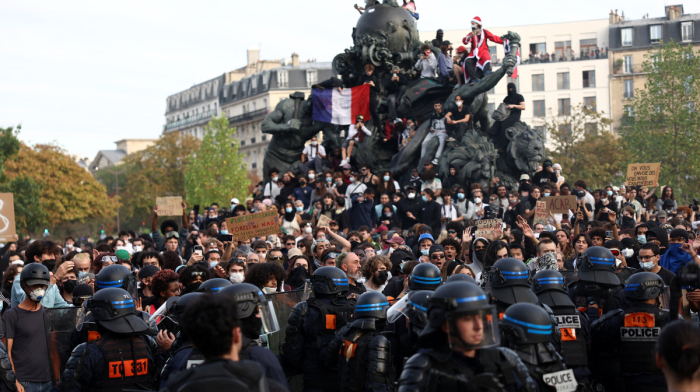
It started with classrooms. Too many students, not enough teachers, deteriorating buildings and growing anxiety over what comes after high school. But within weeks, a movement that began outside French lycées had spread across the country.
U.S. federal immigration agents shot and wounded a man in a car with a five-year-old boy inside in New York City’s Bronx neighbourhood on Thursday, city officials, police and witnesses say.
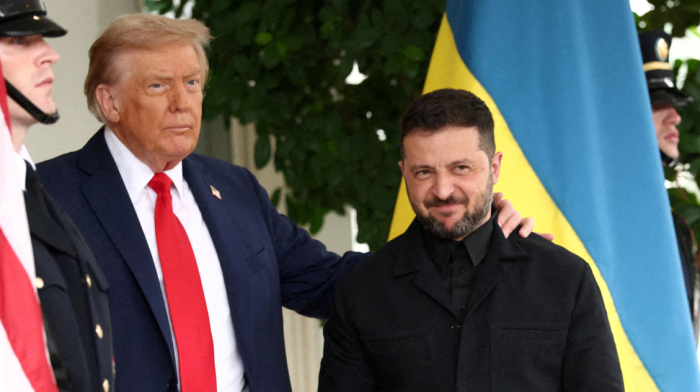
Ukrainian President Volodymyr Zelenskyy has sharply criticised the United States following a series of Russian attacks that killed more than 70 people over two days, arguing that Washington is not doing enough to help Kyiv counter Moscow's continued assault.
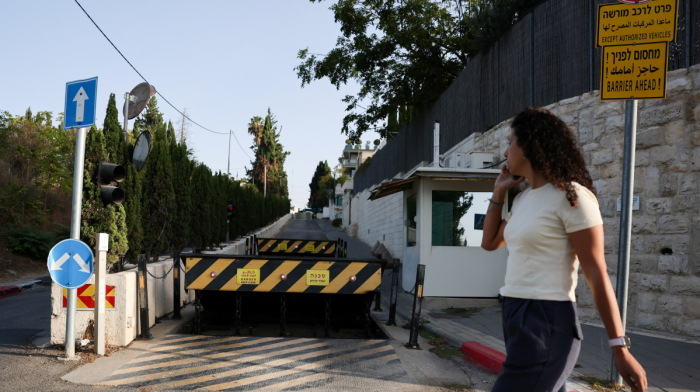
Britain and Israel have reached a temporary compromise over the future of the British Consulate General in East Jerusalem, easing a diplomatic dispute that had threatened to further strain relations between the two countries.

The United States has unveiled a new round of sanctions targeting Iran's energy exports, taking aim at vessels, companies and individuals accused of helping move Iranian crude oil, petroleum products and petrochemicals to overseas markets.
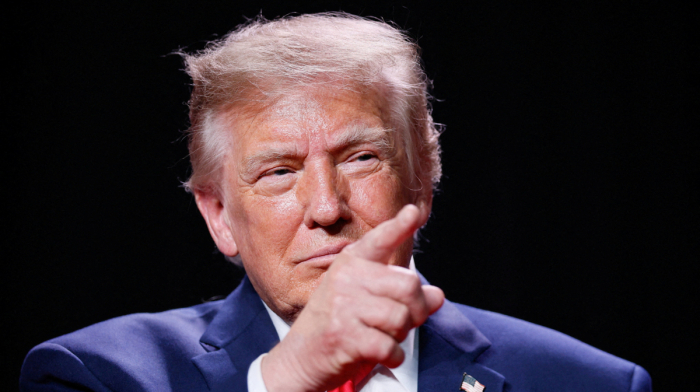
The Trump administration has launched a major expansion of its immigration enforcement agenda, restricting access to a key employment-based green card process for several of the world's largest technology and outsourcing companies.
You can download the AnewZ application from Play Store and the App Store.




What is your opinion on this topic?
Leave the first comment