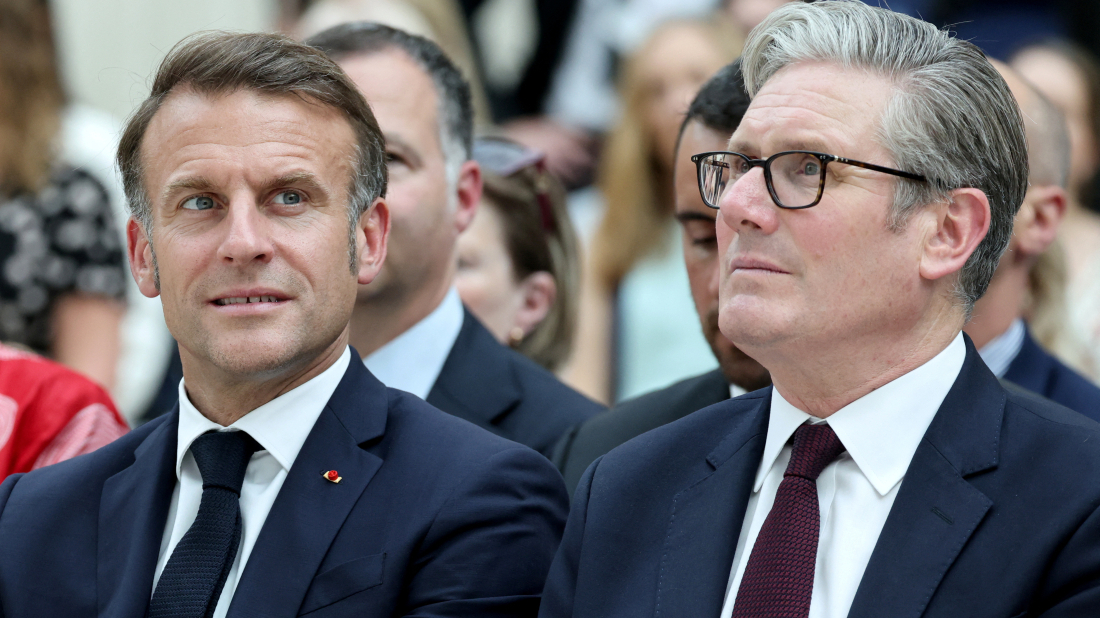
British Prime Minister Keir Starmer is aiming to secure a tougher migration agreement with French President Emmanuel Macron on Thursday, concluding a three-day state visit that has included formal ceremonies and royal hospitality.
Macron received a warm welcome, including a procession with King Charles to Windsor Castle. Now, Starmer is seeking tangible progress, particularly in response to Macron’s earlier commitment to stronger cooperation and practical outcomes on migration.
Facing declining approval ratings since his election landslide last year, Starmer is under pressure to reduce high immigration figures, especially the number of asylum seekers arriving in small boats. This is seen as essential to slowing the growing support for the populist Reform UK party, led by Nigel Farage.
Starmer’s team hopes to secure a “one in, one out” returns arrangement, under which Britain would send migrants arriving illegally in small boats back to France in exchange for taking in the same number of recognised asylum seekers.
However, Macron has also stressed the need to tackle the factors attracting migrants to the UK. He appears to want Starmer to tighten rules that allow undocumented migrants to find employment in Britain.
Nearly 20,000 people crossed the English Channel to the UK in small boats so far this year - a 48% increase compared to the first sixth months of last year, according to the latest government figures.
According to Downing Street, both leaders agreed in a bilateral meeting on Wednesday that innovative solutions were necessary. Starmer highlighted the UK's increased efforts to arrest undocumented workers as a deterrent.
Even if a returns agreement is not finalised, the leaders will present the visit as a success. Macron enjoyed all the formalities of a state visit, including a lavish banquet and extensive conversations with King Charles, with whom he maintains a close relationship.
Starmer and Macron will announce agreements to expand defence cooperation- specifically, the joint procurement of additional Storm Shadow cruise missiles for Ukraine and deeper collaboration on nuclear deterrence. For the first time, this will include the coordination of both countries' nuclear forces.
"As close partners and NATO allies, the UK and France have a strong history of defence cooperation, and these new agreements elevate our alliance further," Starmer said. "We are committed to advancing our combined military capabilities."
These steps mark a continuation of the UK and France’s joint leadership in supporting Ukraine, particularly in planning a support mechanism in the event of a ceasefire with Russia.
A French official from the Élysée Palace added: "We are building capabilities for Europe in response to growing threats, and in the nuclear domain, we are reinforcing solidarity and the shared strategic foundation of our two nations."
This visit- Macron’s first state visit to the UK since Brexit offers both leaders a respite from domestic political challenges and an opportunity to strengthen bilateral ties that have been strained in recent years.











What is your opinion on this topic?
Leave the first comment