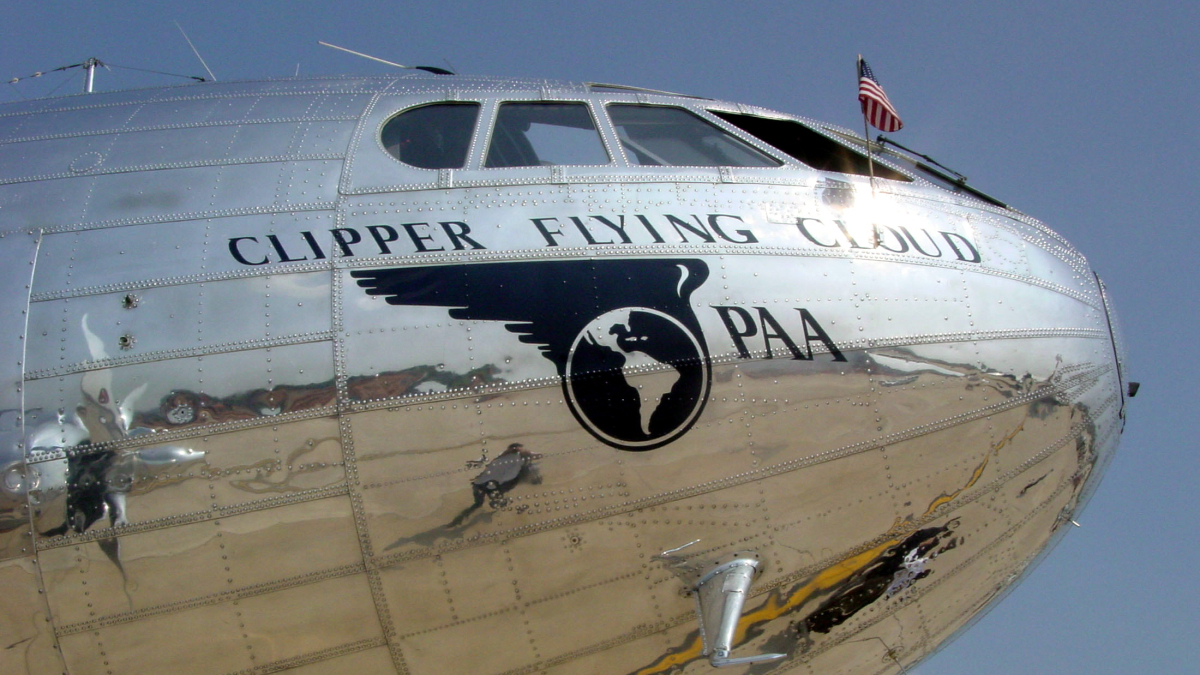
The wreckage of a Pan American Airways passenger plane that crashed in 1952 has been located on the floor of the Atlantic Ocean after a seven-year investigation led by the Air/Sea Heritage Foundation in partnership with the Discovery Channel, according to a recent press release.
Everyone survived the initial impact, but "with no safety briefing provided, a significant language barrier, and no coordinated evacuation procedure in place, passengers faced chaos, confusion, and heavy seas as the aircraft flooded and sank in less than three minutes," the foundation said.
As a result, only 17 of the 69 people on board survived.
The tragedy prompted the Civil Aeronautics Board, a predecessor to the Federal Aviation Administration, to introduce mandatory pre-flight safety briefings and emergency procedure demonstrations, the foundation added.
Seven-year investigation
Finding the wreckage of the Clipper Endeavor became a seven-year mission for Russ Matthews, president and co-founder of the non-profit Air/Sea Heritage Foundation, who played a central role in the project.
"We had to wait a couple of years to get our shot," Matthews said in an interview, explaining the delay in the investigation. He said the water where the aircraft sank was too deep for divers to reach the wreckage. Harsh weather conditions and the coronavirus pandemic also contributed to the delay.
Finally, in June, a search team from Deep Sea Vision found the wreckage of the DC-4 using high-resolution sonar and autonomous underwater drones nearly 2,000 feet beneath the Atlantic Ocean off the coast of Puerto Rico.
Read more:














What is your opinion on this topic?
Leave the first comment