Attack on Riyadh airport killed 12 people, injured hundreds
The explosion at King Khalid International Airport in Riyadh on Saturday afternoon killed at least 12 people and injured a further 309, according t...
Scientists and guests gathered at Boston University in Massachusetts on Thursday (18 September) for the 35th annual Ig Nobel Prize ceremony, which honours bizarre scientific discoveries.
This year’s winners included researchers who studied how narcissists react when told they are intelligent, and nutrition researchers studied the extent to which a certain kind of lizard chooses to eat certain kinds of pizza.
Other awards recognised work ranging from showing that drinking alcohol sometimes improves a person's ability to speak in a foreign language to discoveries about the physics of pasta sauce.
The ceremony mixed scientific presentations with audience members throwing paper planes, and miniature opera-like acts singing songs about digestion - a main theme for the ceremony this year.
This year’s prize was the model of a human stomach, with two sides of the stomach resembling a human face.
The annual prizes, meant to entertain and encourage global research and innovation, are awarded by the Annals of Improbable Research as a whimsical counterpart to the Nobel Prizes.
“Every Ig Nobel Prize winner has done something that first makes people laugh and then makes them think,” said master of ceremonies Marc Abrahams.

Leaders of countries from the Commonwealth of Independent States (CIS) have agreed to hold coordinated population censuses around 2030. They took the decision at the CIS Council of Heads of State meeting in Awaza, Turkmenistan on Friday, media reported.
The explosion at King Khalid International Airport in Riyadh on Saturday afternoon killed at least 12 people and injured a further 309, according to Saudi Arabia’s Civil Aviation Authority. The airport remains closed until further notice.
Britain and Israel have reached a temporary compromise over the future of the British Consulate General in East Jerusalem, easing a diplomatic dispute that had threatened to further strain relations between the two countries.
South African judge Navanethem “Navi” Pillay won the Nobel Peace Prize on Friday “for her efforts to promote peace and international law,” the Norwegian Nobel Committee said.
The U.S. has imposed sanctions on the International Criminal Court (ICC) on Friday (9 October) escalating tensions with European allies and potentially targeting companies that provide services to the tribunal. The move came hours after former ICC judge Navi Pillay won the Nobel Peace Prize.
Anthropic has announced that it is updating its usage policy to allow its AI agents to end conversations involving repeated abuse or cruel behaviour towards them, citing previous incidents.
Türkiye has banned children under 15 from using social media under new regulations published on Saturday. The new regulations prohibit firms from providing services to children “who have not reached the age of 15.”
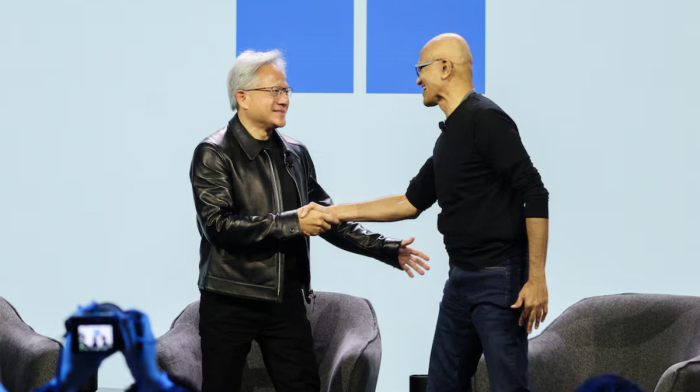
Microsoft has introduced new tools to stop AI agents from accessing data without permission, alongside a Nvidia-powered Surface laptop that can run advanced AI directly on the device.
Picture three scenarios: a hospital that can spot a disease before the patient feels sick, a power grid that feeds thousands of data centres and a government network that is attacked daily. All three depend on artificial intelligence, and one question matters most: who is really in charge?
OpenAI and Anthropic told Australian parliament on Tuesday they would welcome laws requiring them to report data breaches carried out by their AI agents, acknowledging the decision to notify authorities was currently at their discretion.
You can download the AnewZ application from Play Store and the App Store.
What is your opinion on this topic?
Leave the first comment