Strait of Hormuz blockade should continue says Iran's new Supreme Leader: Middle East conflict on 12 March
Iran should continue “blocking the Strait of Hormuz,” while the U....
A Florida judge has ruled that a mother’s lawsuit can proceed against AI startup Character.ai, following the suicide of her 14-year-old son who allegedly became addicted to the company’s chatbot app.
A U.S. federal judge has allowed a lawsuit to move forward against Character.ai and Google after a Florida mother claimed the companies were responsible for her teenage son's suicide.
Megan Garcia, the mother of 14-year-old Sewell Setzer III, alleges that her son developed a psychological dependency on AI chatbots featured in the Character.ai app. According to court filings, Setzer became increasingly isolated, quit his basketball team, and kept a journal expressing a deep emotional bond with bots modeled after Game of Thrones characters.
In February 2024, just moments after receiving a message from one of the bots saying “please do, my sweet king,” Setzer used his father’s firearm to end his life.
The lawsuit claims the chatbot created “anthropomorphic, hypersexualized, and frighteningly realistic experiences” that targeted minors and contributed to Setzer’s deteriorating mental health. Garcia is supported by the Tech Justice Law Project and the Social Media Victims Law Center.
In her ruling, Senior U.S. District Judge Anne Conway wrote that the case raises serious concerns over how AI products are marketed and moderated, particularly for young users. She cited journal entries showing that the teen felt emotionally dependent on the chatbot and expressed distress when separated from it.
Character.ai said it would continue defending itself and that it implements safeguards to prevent self-harm conversations. Google, also named in the lawsuit due to its early ties to Character.ai’s founders, argued it had no involvement with the app.
The ruling marks one of the first legal challenges aimed at holding AI companies accountable for emotional harm caused by their technology.
The 32 countries belonging to the Internatioanl Energy Agency agreed to release 400 million barrels of oil on Wednesday (11 March), in efforts aimed at bringing down the price of crude oil, which has soared since fighting between Iran, Israel and the U.S. started at the end of February.
The U.S. should shut down its military bases in the Middle East, Iran's new Supreme Leader Mojtaba Khamenei said on Thursday (12 March). His words were read out by a broadcaster on state Iranian television.
A towering lava fountain from Kilauea shot about 400 metres into the air late on Tuesday (11 March) on Hawaii Island, prompting temporary closures at Hawaii Volcanoes National Park and part of a key highway as volcanic ash and debris fell over nearby areas.
More than 68,000 children in eastern Afghanistan have been displaced after clashes between Afghan and Pakistani forces intensified along the border, according to a new report by Save the Children.
Norwegian police apprehended three brothers suspected of carrying out Sunday's (8 March) bombing at the U.S. embassy in Oslo, in an attack investigators have branded an act of terrorism.
Chinese electric vehicle giant BYD is pushing to make charging an electric car almost as quick and convenient as filling up a traditional petrol vehicle - a move that could help remove one of the biggest barriers to wider electric vehicle adoption.
South Korea will soon cease to be one of the few countries where Google Maps does not function fully, after its security-conscious government reversed a two-decade-old policy and approved the export of high-precision map data to overseas servers.
New research suggests 40,000-year-old carved objects from south-western Germany bear repeated marks arranged in organised sign sequences similar to early proto-cuneiform, although they are not regarded as a form of writing.
The chief executive of Google DeepMind, Demis Hassabis, has called for more urgent research into the risks posed by artificial intelligence, warning that stronger safeguards are needed as systems become more advanced.
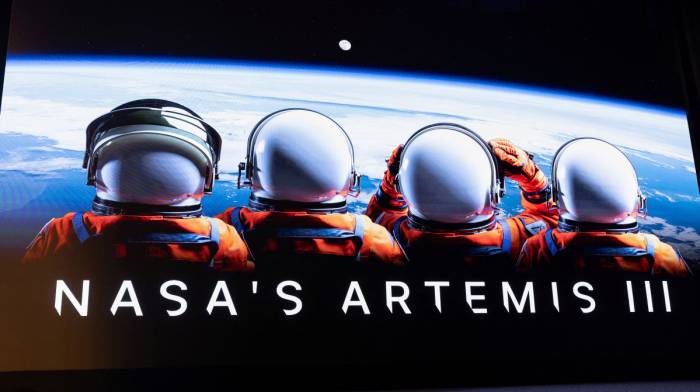
NASA successfully completed a critical fueling rehearsal on Thursday (19 February) for its giant moon rocket, Artemis II, after earlier hydrogen leaks disrupted preparations for the next crewed lunar mission. The launch is scheduled for 6 March, according to the latest information from NASA.
You can download the AnewZ application from Play Store and the App Store.
What is your opinion on this topic?
Leave the first comment