Indian tourists flock to the Himalayas to escape heavily polluted New Delhi
As pollution levels in New Delhi reached dangerously high levels over the weekend, residents of the Indian capital sought refuge in the cooler, cleane...
In a newly issued executive order, the Trump administration has directed the Department of Government Efficiency (DOGE) to expand its review of federal spending by establishing centralized technological systems across all agencies.
The order requires agencies to record contract and grant awards centrally, and mandates that employees who approve individual payments provide written justifications for their decisions.
Under the new directive, agency heads will have the authority to “pause and rapidly review” any payment where a written justification has not been submitted. The EO also extends to federally funded travel, instructing agency leaders, with support from DOGE, to create systems that centrally record approvals for non-essential travel, such as conferences. Once these systems are in place, employees will be required to submit written justifications for such travel expenses.
This move marks the latest expansion of DOGE’s authority to scrutinize federal spending. Earlier this month, DOGE circulated an email to federal employees, urging them to detail their weekly work accomplishments under the threat of termination. According to reports, the information will be analyzed using an AI algorithm to determine whether an employee’s work is deemed mission-critical.
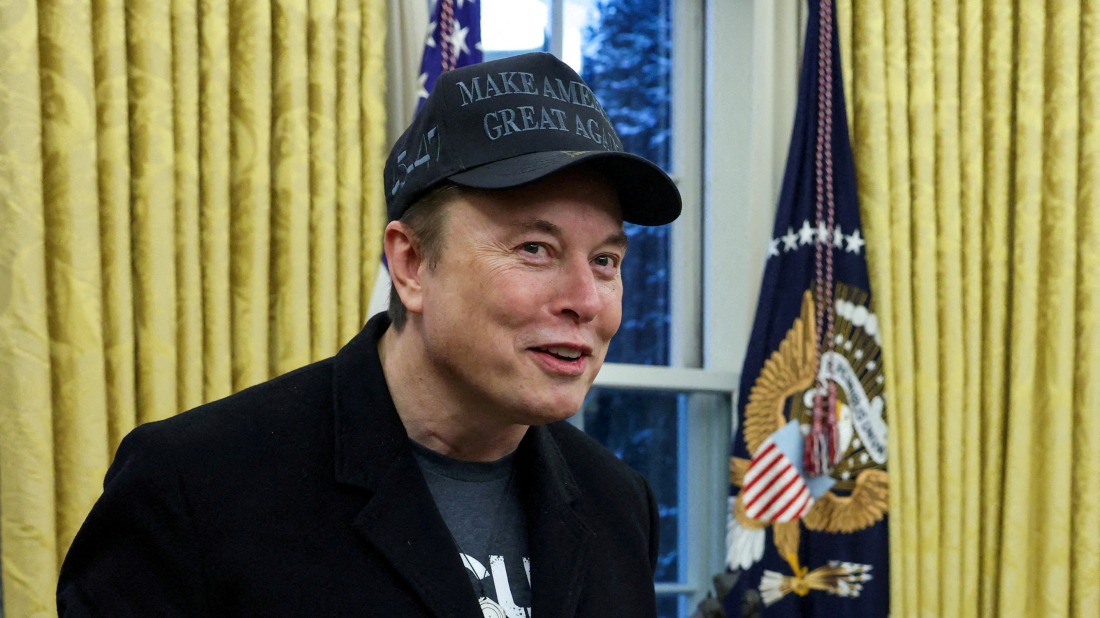
DOGE was established under an executive order signed by President Trump on January 20, 2025, which rebranded the U.S. Digital Service as DOGE and appointed teams of “special government employees” across federal agencies. Comprised largely of young professionals from Elon Musk’s businesses and other private-sector backgrounds, the unit has largely operated without extensive oversight, raising ongoing questions about its cybersecurity and privacy practices.
The latest executive order reflects the administration’s commitment to further tighten federal spending controls and enhance accountability across government agencies.

The death toll from Hong Kong’s deadliest fire in decades has risen to 161, after forensic analysis confirmed one more victim among the charred remains at Wang Fuk Court in Tai Po, more than three weeks after the blaze began, authorities said on Saturday.
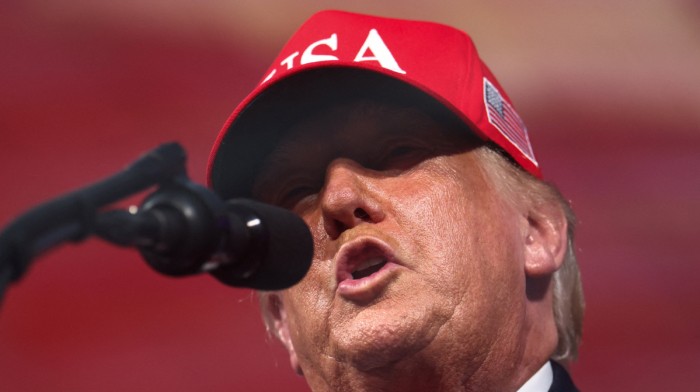
Israeli Prime Minister Benjamin Netanyahu is set to meet President Donald Trump on 29 December in Florida, where he is expected to present a package of military options regarding Iran, Israel’s public broadcaster KAN reported on Saturday.
The United States seized a second merchant vessel carrying oil off the coast of Venezuela in international waters on Saturday, as part of Washington’s sanctions enforcement campaign, according to the Department of Homeland Security.
US intelligence assessments indicate that Russian President Vladimir Putin continues to seek full control of Ukraine and to expand Russia’s influence in parts of Europe formerly under Soviet rule, contradicting repeated claims that Moscow poses no threat to the continent.
A major power outage swept across San Francisco on Saturday, leaving up to 130,000 customers without electricity, disrupting traffic and forcing some businesses to close temporarily, officials said.
China’s core artificial intelligence (AI) industry is projected to surpass 1.2 trillion yuan in 2025 (about $170 billion), up from more than 900 billion yuan in 2024, according to a new industry assessment.
Time Magazine has chosen the creators behind artificial intelligence as its 2025 Person of the Year, highlighting the technology’s sweeping impact on global business, politics and daily life.
Children are forming new patterns of trust and attachment with artificial intelligence (AI) companions, entering a world where digital partners shape their play, their confidence and the conversations they no longer share with adults.
The International Robot Exhibition (IREX) opened in Tokyo on 3 December, bringing together visitors to explore robotics applications for industry, healthcare, logistics, and everyday life.
A bipartisan group of U.S. senators, including prominent Republican China hawk Tom Cotton, introduced the SAFE CHIPS Act on Thursday, aiming to prevent the Trump administration from easing restrictions on China’s access to advanced artificial intelligence (AI) chips for a period of 2.5 years.
You can download the AnewZ application from Play Store and the App Store.
What is your opinion on this topic?
Leave the first comment