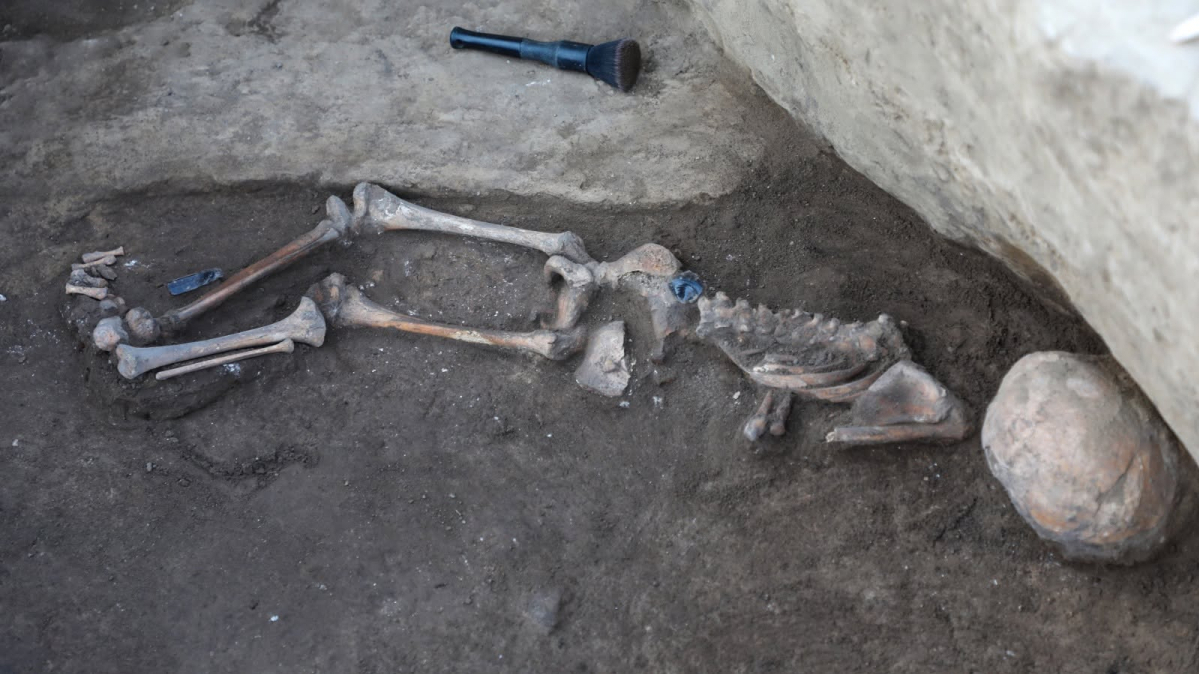
Archaeologists have uncovered what is believed to be Georgia’s first Neolithic burial site, containing the remains of a young child, the country’s heritage agency said on Wednesday (25 November).
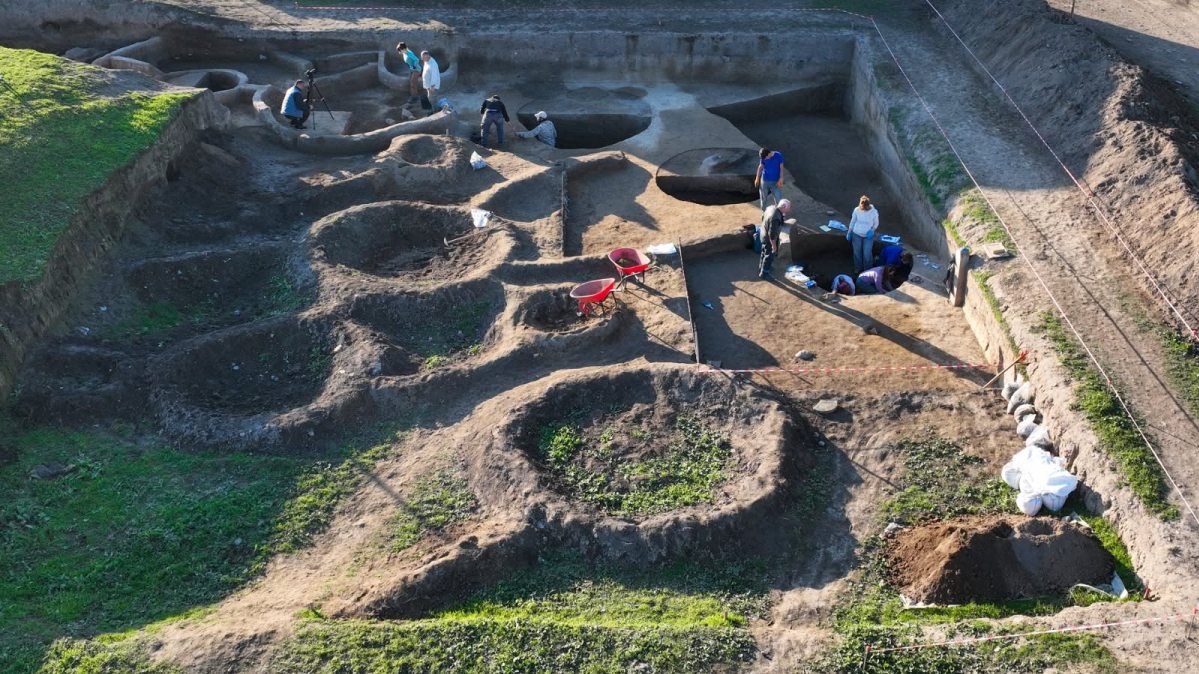
Georgia’s National Agency for Cultural Heritage Preservation said the Stone Age grave was discovered at Mashavera Gora, a major Neolithic archaeological site in southern Georgia.
“The discovery is of particular scientific significance, as no burials from this period have previously been found at archaeological sites in Georgia,” the agency said in a statement on Facebook.
Further scientific analysis is needed to establish the full significance of the find, the agency added.
Window into Stone Age life
Mashavera Gora is a prominent site of the internationally renowned Shulaveri-Shomutepe culture, a Neolithic farming society that flourished in the South Caucasus during the sixth millennium BC.
Artefacts recovered from the site offer valuable insights into the society’s daily life and level of development, the agency said.
The site also contains medieval cultural layers, suggesting it was inhabited over an extended period.
A team from the Georgian National Museum is carrying out the excavations with funding from the heritage agency.
Recent archaeological discoveries
The find comes less than a fortnight after archaeologists uncovered a chapel near the Nagzauri monastery complex in south-eastern Georgia.
The chapel lies just west of the complex, which is believed to date from between the fifth and eighth centuries.
Read more from Georgia:






















What is your opinion on this topic?
Leave the first comment