Stargazers across Azerbaijan can look forward to one of the year's most anticipated celestial displays as the Leonid meteor shower lights up the night sky from 6 to 30 November.
The meteor shower will peak at 03:45 Baku time (23:45 GMT on 17 November) on 18 November, with around 15 meteors per hour expected, according to Baku State University's Department of Astrophysics.
Best time to watch
The best viewing conditions are expected in the early hours of 18 November, between 02:00 (22:00 GMT on 17 November) and dawn.
As the Moon sets and the sky darkens, even fainter meteors should become easier to spot. Stargazers are advised to head away from city lights and give their eyes time to adjust to the darkness.
Although the meteors appear to radiate from the constellation Leo, they can be spotted anywhere in the night sky.
What causes the Leonid meteor shower?
The Leonids occur each year when Earth passes through dust and debris left behind by comet 55P/Tempel-Tuttle, which orbits the Sun once every 33.2 years.
The comet was independently discovered by German astronomer Wilhelm Tempel in 1865 and American astronomer Horace Tuttle in 1866.
What makes the Leonids particularly remarkable is their speed. The particles race into Earth's atmosphere at approximately 71 kilometres per second, equivalent to around 255,000 kilometres per hour.
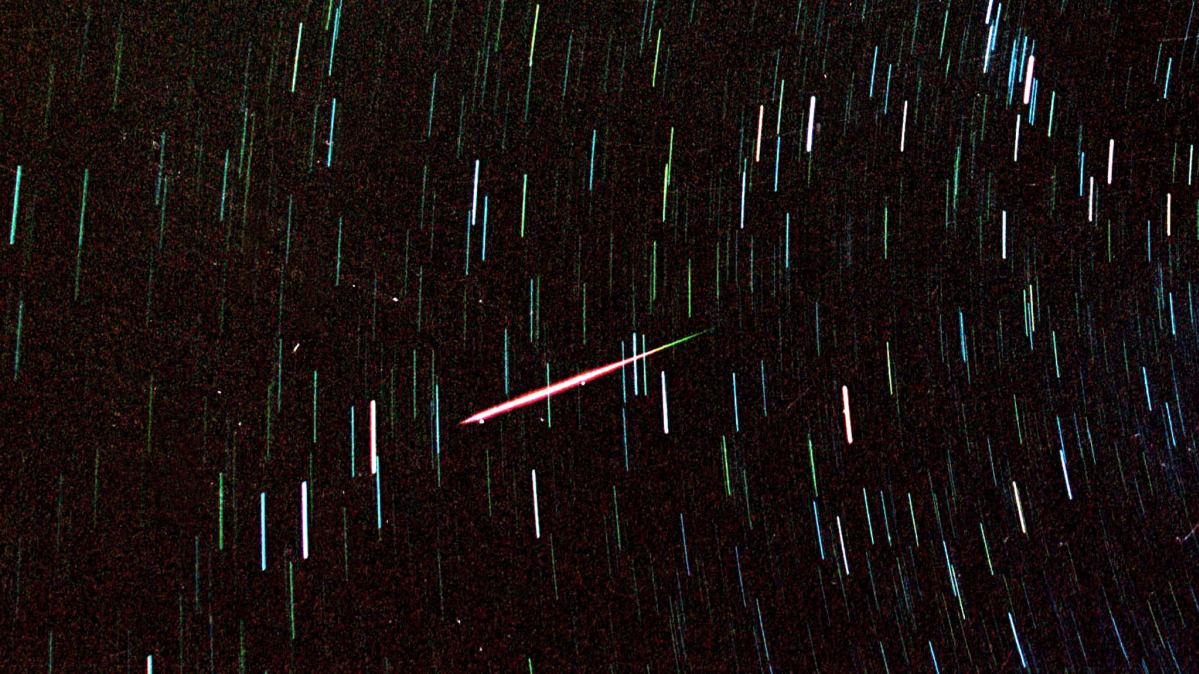
Friction and compression heat the particles, creating the bright streaks of light known as shooting stars.
No meteor storm expected in 2026
The Leonids have produced some of history's most spectacular meteor storms, with intense displays recorded in 1833, 1866, 1966 and between 1999 and 2002.
Such rare events happen when Earth passes through especially dense clouds of comet debris, triggering a dramatic surge in meteor activity.
Astronomers are not expecting a repeat in 2026. With around 15 meteors per hour forecast, this year's display will be more modest, but still promises a chance to witness one of the night sky's best-known annual spectacles.
Read more science news:


















What is your opinion on this topic?
Leave the first comment