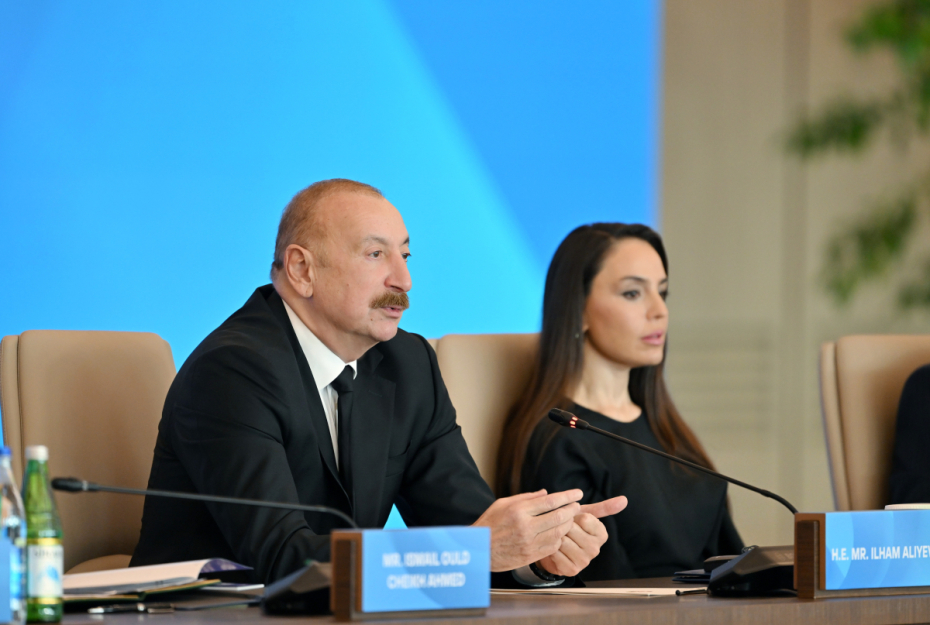
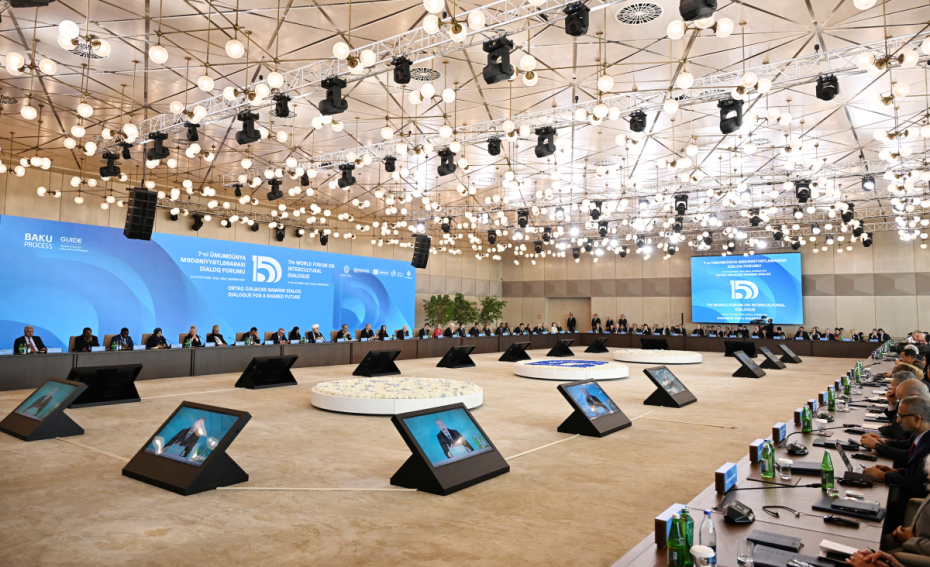
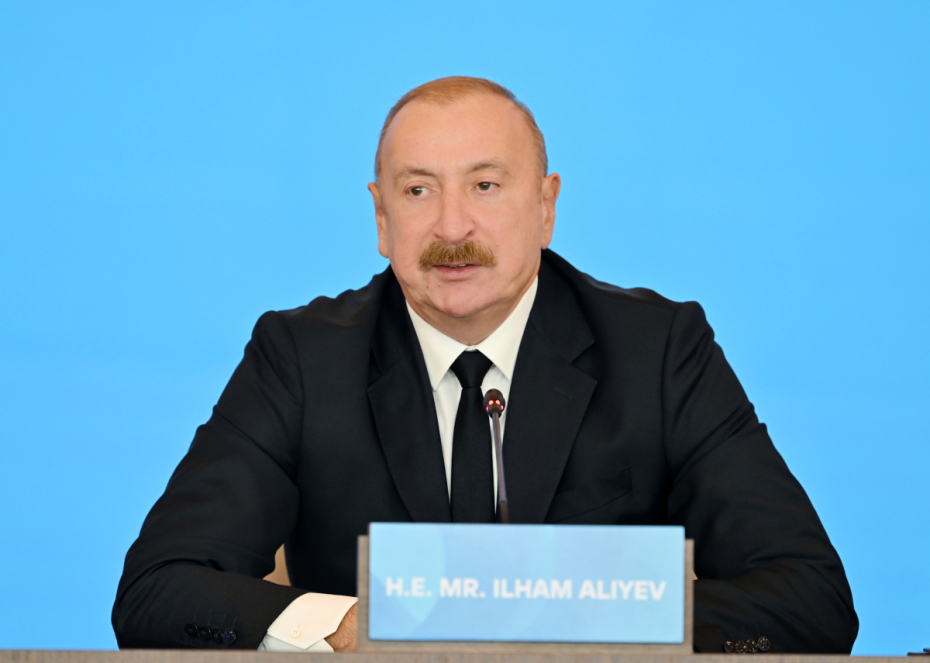
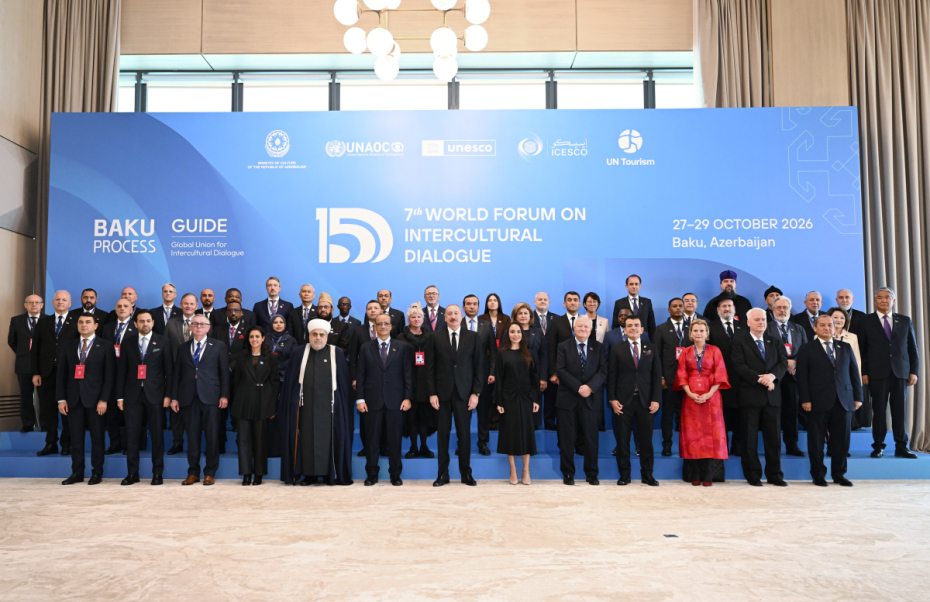
The 7th World Forum on Intercultural Dialogue, themed “Dialogue for a Shared Future,” has opened in Baku, with Azerbaijani President Ilham Aliyev addressing participants on the importance of intercultural relations, religious tolerance, and social harmony.
President Aliyev said the World Forum on Intercultural Dialogue has evolved into an important international platform for discussing intercultural relations and other global challenges.
“The World Forum on Intercultural Dialogue has really transformed over the years into one of the most efficient and inclusive platforms for addressing issues of intercultural relations, and not only,” President Aliyev said.
He stressed that intercultural and interreligious relations remain among the key issues on the international agenda.
Azerbaijan highlights its multicultural heritage
Speaking about Azerbaijan’s historical and cultural identity, Aliyev emphasised the country’s geographical position between Europe and Asia and its longstanding role in connecting the two regions.
“Azerbaijan has historically always been multicultural. We are situated between Europe and Asia, and for centuries Azerbaijan was a cultural bridge between Asia and Europe,” he said.
The president also highlighted the importance of religious and ethnic tolerance, describing these values as deeply rooted in Azerbaijani society.
National unity as a foundation for stability
President Aliyev identified social harmony as one of the key factors behind Azerbaijan’s stable development, noting that citizens belonging to different ethnic and religious communities enjoy equal constitutional rights.
He further underlined the role of solidarity, mutual respect and the national idea of Azerbaijanism in bringing together the country’s diverse communities.
“We enjoy a very high level of solidarity, mutual respect, and mutual understanding, and we are all united around our national ideas. One of them is Azerbaijanism, which embraces all the peoples of Azerbaijan,” Aliyev said.
President Aliyev reflects on Azerbaijan’s history
He also said that national unity had been particularly evident during the most difficult periods of Azerbaijan’s independent history, including the years of Armenia’s military aggression and occupation and the Second Garabagh War.
According to President Aliyev, representatives of different ethnic groups and religious communities stood together during these periods, demonstrating the solidarity he described as a symbol of Azerbaijan’s victory.
Addressing the issue of the country’s territorial integrity, Aliyev said Azerbaijan had restored control over its territories that had remained under occupation for years.
Noting that Azerbaijan had liberated its territories that had remained under occupation for years in accordance with the UN Charter and the right to self-defence, he said, “We restored our dignity and international law, and we solely implemented United Nations Security Council resolutions, which were adopted in 1993.”
The 7th World Forum on Intercultural Dialogue builds on the evolution of the Baku Process, shifting the focus from shared values and peaceful coexistence towards practical responses to global divisions. It aims to translate dialogue into concrete action that advances understanding, cooperation, peace and sustainable development.









What is your opinion on this topic?
Leave the first comment