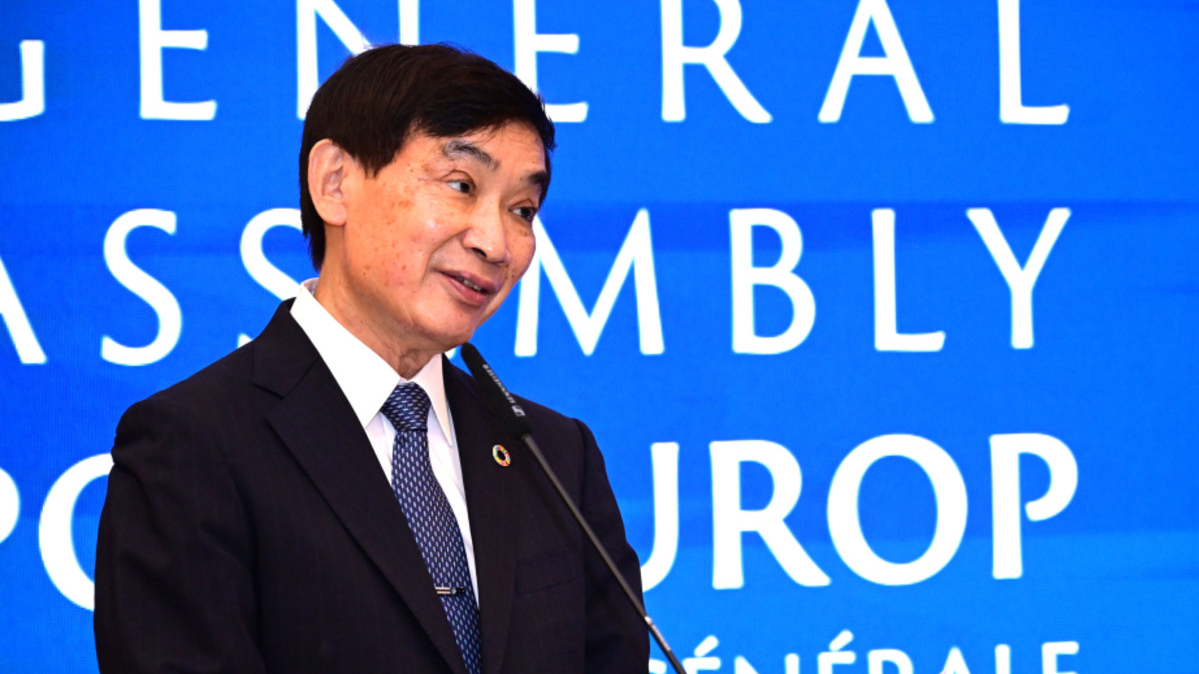
Azerbaijan is among a relatively small group of countries represented on both of the Universal Postal Union’s main governing councils, UPU Director General Masahiko Metoki has said.
Speaking to journalists in Baku, Metoki described Azerbaijan’s election to both the Council of Administration and the Postal Operations Council as an important achievement.
“It is not easy to win these elections, but Azerbaijan secured seats on both councils. Among the UPU's 192 member countries, around 30 countries are represented on both councils,” Metoki said, according to APA.
Azerbaijan was elected to the two bodies during the UPU’s 28th Universal Postal Congress in Dubai in September 2025, securing membership for the 2025-2029 cycle. The UPU’s current membership lists confirm Azerbaijan’s presence on both councils.
Role of the two UPU councils
The Council of Administration consists of 41 member countries and oversees the UPU’s work between its congresses. Its responsibilities include regulatory, administrative, legislative and legal matters, as well as supervision of the organisation’s strategy, budget and technical cooperation activities.
The Postal Operations Council has 48 member countries and focuses on the operational, commercial, technical and economic aspects of international postal services. It also develops recommendations and standards aimed at modernising postal products, services and cross-border operations.
The UPU, a specialised agency of the United Nations, has 192 member countries. Its congress, held every four years, is the organisation’s supreme decision-making body.
Postal sector adapts to digital shift
Metoki also addressed the broader transformation of the postal industry, pointing to the expansion of e-commerce, digitalisation and changing customer expectations.
He said traditional letter volumes were continuing to decline, while growth in parcel deliveries and greater use of data were creating new sources of revenue and opportunities for postal operators.
The trend reflects wider changes identified by the UPU. Its 2026-2029 strategy says the global postal sector is being reshaped by digitalisation, e-commerce and rapid technological change, requiring operators to modernise services and become more closely integrated into the digital economy.
UPU analysis has also highlighted continuing pressure on traditional mail services, with falling letter volumes coinciding with rising demand for parcel delivery and e-commerce logistics.
Digital networks seen as key to future growth
Metoki said postal operators should make greater use of their existing physical networks by combining them with digital capabilities and data-driven services.
That approach is also reflected in the UPU’s current strategy, which seeks to position postal networks as important partners in e-commerce while encouraging innovation, stronger digital infrastructure and closer cooperation across the global postal ecosystem.
The UPU has said the long-term competitiveness of postal operators will increasingly depend on their ability to combine extensive delivery networks with digital tools, improved service quality and more efficient cross-border logistics.

















What is your opinion on this topic?
Leave the first comment