Four major German political foundations have halted their work in Georgia as tighter rules on foreign grants put pressure on a decades-old partnership and add to tensions between Tbilisi and its European partners.
German Ambassador Barbara Voss said all four major German political foundations operating in Georgia had been forced to suspend their activities because of government decisions. Two - the Konrad Adenauer Foundation and Friedrich Naumann Foundation - closed their Tbilisi offices on 30 September.
The closures have brought renewed attention to Georgia's Law on Grants and raised questions over the future of foreign-funded civil society, research and educational projects in the country.
What the foundations did
Germany's party-affiliated political foundations are publicly funded and work internationally on civic education, policy dialogue and institution-building. Each had a distinct focus in Georgia.
The Konrad Adenauer Foundation, affiliated with Germany's Christian Democratic Union (CDU), had operated in the country since 2003, working on democracy, the rule of law, parliamentary development, European integration, interfaith dialogue and German-Georgian relations.
The Friedrich Naumann Foundation, affiliated with the Free Democratic Party (FDP), promoted liberal values, pluralism, citizen participation and the rule of law, while also providing training for independent journalists.
The Heinrich Böll Foundation, affiliated with the Greens, opened its South Caucasus regional office in Tbilisi in 2003. Its work covered democratisation, gender equality, environmental issues, conflict dialogue and Soviet-era history.
The Friedrich Ebert Foundation, affiliated with the Social Democratic Party (SPD), focused on social democratic values and cooperation with free trade unions, including research on labour protection.
Their activities included training, conferences, research, publications and grants for local partners. The foundations maintain that their work was non-partisan, although Georgian officials have disputed that position.
Voss has also pointed to scholarships, scientific cooperation and Eastern Partnership projects among areas of German-Georgian cooperation now under pressure.
How the grants law works
Amendments adopted in April 2025 require foreign donors to obtain government approval before issuing grants in Georgia. The legislation prohibits recipients from accepting grants issued without that consent.
Further changes adopted in March 2026 broadened the definition of grants and extended the regulatory framework.
Receiving a grant without the required consent can result in a fine equal to twice the value of the grant. Under the legislation, an offender may be held liable for an offence for up to six years after it was committed.
The Georgian government says the rules are intended to protect the country's sovereignty and prevent foreign interference, arguing that foreign donors are not banned from operating but must comply with national legislation.
Why the German foundations are leaving
The foundations say the requirements prevent them from operating independently.
The Konrad Adenauer Foundation said Georgian authorities rejected its applications for project funding on 28 July. It said efforts by the German government to find a way for the organisation to continue its work were unsuccessful.
According to the foundation, approval appeared possible only under conditions that would no longer allow its projects to reflect its political character and mission.
The Friedrich Naumann Foundation, which had worked in Georgia since 2002, said it applied under the new grants legislation in an effort to continue financing projects and cooperating with local partners.
It said Georgian authorities required every part of its programmes to be aligned with government priorities and individual activities to receive approval - conditions it said deprived the organisation of the independence needed to operate as a liberal political foundation.
Voss has also warned about the future of Ilia State University, which has received significant German support and maintains close research links with Germany. She said the university now faces a threat to its existence. Georgian authorities have not accepted that assessment.
A wider dispute over foreign influence
The grants legislation forms part of a broader package of Georgian laws governing foreign-funded activity. Georgia's Foreign Agents Registration Act provides for fines or imprisonment of up to five years for certain wilful violations, including failures to comply with registration requirements.
The legislation has faced criticism from international rights groups and European institutions, while the Georgian government says stronger safeguards are needed to protect the country from outside political interference.
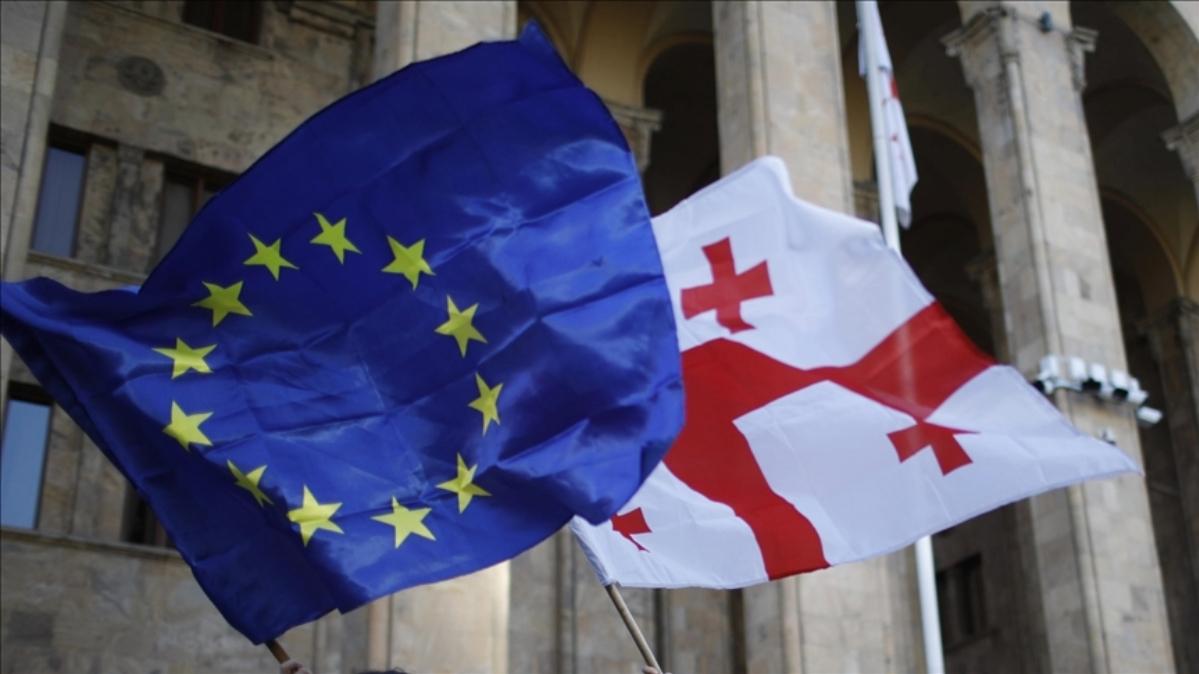
The dispute comes as Georgia's EU accession process remains stalled. The European Council said in October 2024 that the process had effectively halted. The following month, the Georgian government announced that it would not pursue the opening of EU accession negotiations until 2028.
In March 2026, the European Commission also suspended visa-free travel for Georgian holders of diplomatic, service and official passports for 12 months. Ordinary Georgian passport holders remain unaffected.
Tbilisi pushes back
Georgian officials have responded to Berlin's criticism with accusations of their own.
Georgian Dream MP Irakli Kirtskhalia said that if the foundations had submitted grant programmes the government considered worthwhile, they would have received approval. He also pointed to Germany's election results, economic situation and energy challenges, while stressing that Berlin alone does not decide which countries join the EU.
Archil Gorduladze, chair of parliament's Legal Issues Committee, rejected the foundations' claims as misinformation and invoked the Vienna Convention in response to what he described as threatening language from the German ambassador.
With neither side showing signs of backing down, the closure of the foundations' offices adds another point of friction between Tbilisi and its European partners - and puts a decades-old strand of German-Georgian cooperation under growing strain.

















What is your opinion on this topic?
Leave the first comment