Israel and Lebanon agree to ceasefire as talks resume
Israel and Lebanon have agreed to implement a ceasefire after U.S.-backed talks in Washington. The deal requires Hezbollah to halt attacks and withdra...
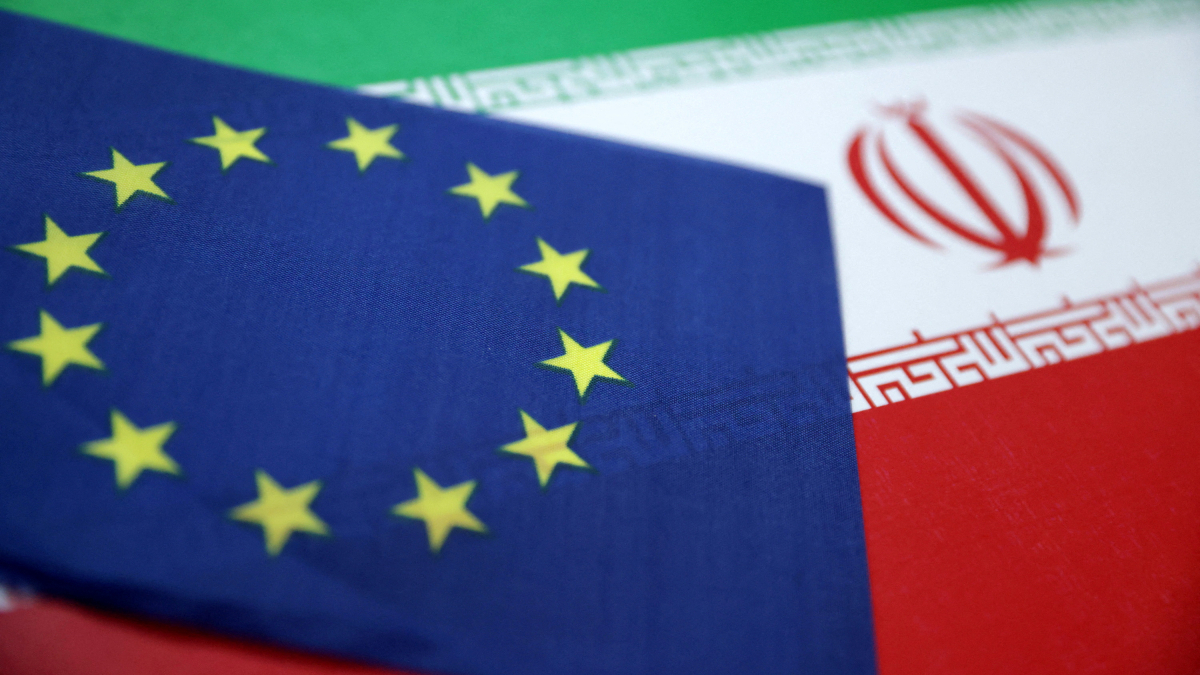
Iran announced on Saturday (21 February) that it has designated the naval and air forces of European Union member states as “terrorist entities” in a reciprocal move after the EU blacklisted the Islamic Revolutionary Guard Corps (IRGC).
The announcement was made by Iran’s Ministry of Foreign Affairs, Tehran described the EU decision as “illegal and unjustifiable”, arguing that the IRGC is an official component of Iran’s armed forces and that the European action violated the principles of the United Nations Charter and international law.
The reciprocal designation was adopted under Iran’s 2019 countermeasures law, including Article 7, which allows reciprocal action against states that designate the IRGC as a terrorist organisation.
Under Article 4 of the same law, the naval and air forces of EU member states are now subject to that legal framework.
The ministry reiterated that the IRGC is an official component of Iran’s armed forces and said Tehran would continue applying the principle of reciprocity in future diplomatic and security decisions.
The decision comes amid rising tensions between Iran and several European governments, which have criticised Tehran over domestic security policies and the handling of recent protests inside the country.
Following the listing, the IRGC is subject to restrictive measures under the EU counter-terrorism sanctions regime, including the freezing of funds and other financial assets or economic resources in EU member states.
EU operators are also prohibited from providing financial or economic resources to the group.
A total of 13 individuals, 23 groups and entities are currently subject to restrictive measures under the EU terrorism sanctions list.
The EU sanctions framework is separate from United Nations counter-terrorism regimes managed by the United Nations.
Earlier this month, Iran’s parliament announced that it also considers the armed forces of EU member states to be subject to reciprocal designation after approval by the country’s top security council.
The parliamentary announcement was followed by the summoning of ambassadors from EU member states to the Iranian Foreign Ministry.

Severe Tropical Storm Jangmi brought heavy rain, power cuts and transport disruption across Japan on Wednesday (3 June) as it tracked towards the greater Tokyo region.
Thousands of people have taken to the streets in Albania in recent days to protest against a luxury tourism project linked to Jared Kushner, the son-in-law of U.S. President Donald Trump, and his wife Ivanka Trump.
An Iranian drone and missile attack struck Kuwait International Airport early Wednesday, injuring several people, damaging Terminal 1 and forcing flight diversions, Kuwaiti authorities said.
Armenia’s parliamentary election comes at a defining moment for the South Caucasus, a region reshaped by the Garabagh conflict and broader shifts in Russia-West relations. The outcome is increasingly seen as a signal of Armenia’s future foreign policy direction and the regional balance of power.
Global weather forecasters predict a strong El Niño will develop in the second half of 2026, bringing hotter, drier conditions to much of Asia while increasing rainfall in parts of North and South America.
Armenia will hold parliamentary elections on 7 June 2026, a vote that will shape the country’s political direction for the next five years. Understanding how the electoral system converts votes into parliamentary power is key to following the outcome and its wider regional implications.
Disruptions to global energy routes have transformed energy security from an economic concern into a matter of national security, Turkish President Recep Tayyip Erdoğan said on Wednesday.
Artificial intelligence, digital innovation and youth engagement in environmental governance took centre stage at Eco Expo Central Asia 2026 in Samarkand, as experts and young leaders explored new approaches to climate resilience and sustainability.
A series of signals from Washington, including congressional testimony, a U.S. Embassy statement and a senior diplomat's visit to Tbilisi, has given Georgia's ruling party reason to declare a diplomatic reset. But Washington's message is more nuanced than Tbilisi is suggesting.
Afghan and Uzbek business officials have discussed ways to expand trade, ease transit bottlenecks and address customs challenges facing traders, according to the Afghanistan Chamber of Commerce and Investment (ACCI).
You can download the AnewZ application from Play Store and the App Store.
What is your opinion on this topic?
Leave the first comment