live France's Macron says no confirmation of Iranian sea mines in Strait of Hormuz - Wednesday, 11th March
Iran's new Supreme Leader, Mojtaba Khamenei, was 'lightly injured,' an unnamed Iranian officia...
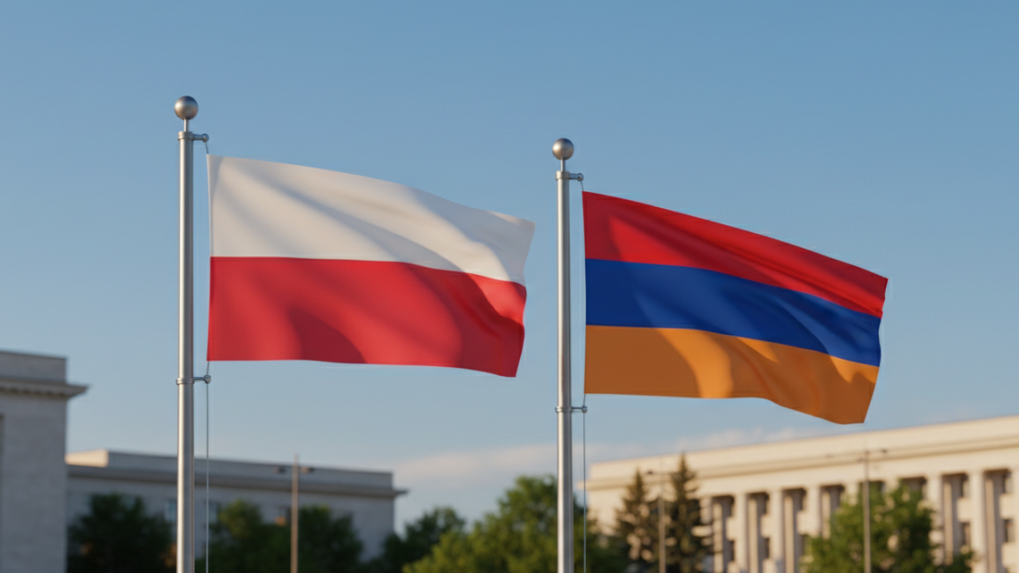
The Armenian Cabinet has approved a military-technical cooperation agreement (MTC) with Poland, which will be forwarded to parliament for ratification following its signing, according to Armenian media.
The agreement, formally titled “On Military-Technical Cooperation between the Ministry of Defence of the Republic of Armenia and the Ministry of National Defence of the Republic of Poland,” is designed to strengthen bilateral relations in the military-technical sphere and expand international defence cooperation.
The draft outlines the main principles and procedures for collaboration, emphasising equality, mutual respect, and mutual benefit. It specifies areas and forms of cooperation, sets regulations for the protection of classified information, and establishes rules for sales to third countries.
The agreement also details the procedures of the joint commission and includes mechanisms for dispute resolution, entry into force, and termination.
The Armenian Ministry of Defence said that the agreement aligns with the government’s 2021-2026 programme, which prioritises comprehensive reforms in the defence sector.
“Armenia places great importance on deepening its high-level, trust-based relations with Poland, aiming to achieve tangible results in the defence sector and to expand areas of cooperation,” the ministry stated.
It added that regular high-level political contacts and multi-sector collaboration between the two countries provide a strong foundation for constructive engagement in the military-technical field.
The legal basis for defence cooperation between Armenia and Poland is the 2004 Agreement on Cooperation in the Field of Defence, signed in Warsaw on 6 September 2004 and ratified by the Armenian parliament on 21 March 2005.
The new agreement is intended to formalise procedures for technico-military cooperation, creating a framework for closer coordination between the two defence ministries.
Cabinet officials noted that signing the agreement will complement the existing defence cooperation agenda, further promoting bilateral ties and enabling practical implementation of joint initiatives.

Tensions in the region remained high on Tuesday (10 March), as the United States and Iran exchanged increasingly sharp warnings, including threats over the strategic Strait of Hormuz, a critical artery for global oil supplies.
Iran's new Supreme Leader, Mojtaba Khamenei, was 'lightly injured,' an unnamed Iranian official said on Wednesday, as Tehran and Israel continued to exchange missile and drone strikes - all the latest updates throughout the day on AnewZ.
Global oil prices reached a four year high on Monday (9 March), surpassing $119 a barrel, as conflict in the Middle East rumbled on. Meanwhile, the Turkish Military said NATO air defence systems destroyed a missile fired from Iran towards the country.
U.S. President Donald Trump called his recent phone conversation with Russian President Vladimir Putin “very good.” The two leaders spoke on Monday about the situation in Iran and other international issues.
Start your day informed with AnewZ Morning Brief. Here are the top news stories for the 10th of March, covering the latest developments you need to know.
A wave of attacks across Israel and southern Lebanon escalated on Wednesday (11 March), with authorities reporting up to 12 incoming missile and drone alerts over Tel Aviv and Jerusalem.
Iran’s newly appointed supreme leader, Mojtaba Khamenei, is reportedly in good health and staying in a “safe place”, despite earlier reports that he had been injured during recent U.S.-Israel airstrikes, according to the country's president.
Kyrgyz President Sadyr Japarov has pledged to intensify the country's fight against corruption, declaring that graft is "worse than murder" and warning that even his closest relatives would face punishment if found guilty.
More than 68,000 children in eastern Afghanistan have been displaced after clashes between Afghan and Pakistani forces intensified along the border, according to a new report by Save the Children.
Turkish president Recep Tayyip Erdoğan told parliamentarians that ordinary Iranians are paying a heavy price for the conflict that began on Saturday 28 February, renewing his call for urgent de-escalation and offering Türkiye as a potential mediator.
You can download the AnewZ application from Play Store and the App Store.
What is your opinion on this topic?
Leave the first comment