As Türkiye seeks to play a more active diplomatic role in the South Caucasus, President Recep Tayyip Erdoğan's “symbolic steps” in the region are becoming a point of focus.
With power dynamics shifting and Russia no longer the dominant external force, Ankara’s influence has become increasingly significant.
These issues were discussed by Orkhan Valiyev, Head of Department at Khazar University, who spoke to AnewZ on the Daybreak programme. There he assessed the potential impact of symbolic diplomacy and Türkiye’s evolving regional role.
Valiyev emphasised that the current diplomatic momentum is the result of a long and gradual process rather than a sudden shift.
“When Erdoğan talks about symbolic steps what could that realistically mean how much impact can symbolic steps have on the region you know as I mentioned, yes the process started actually right after the second Karabakh war and culminated over the years within different perspectives and also the bilateral meeting,” he said.
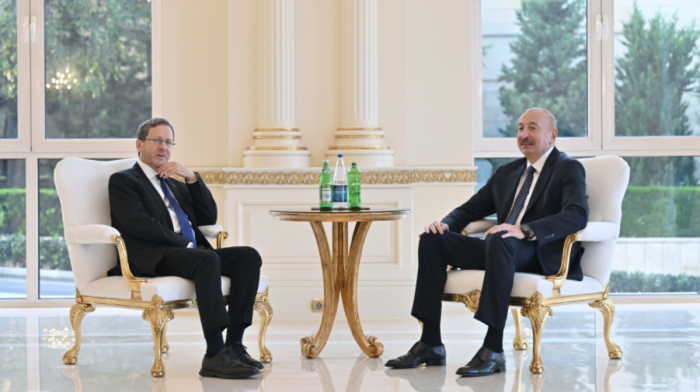
Valiyev pointed to high-level engagements as key milestones in that process citing Armenian Prime Minister, Nikol Pashinyan's visit to Türkiye.
“For example, before the bilateral meeting Pashinyan visited Ankara for example or İstanbul...met with Erdoğan for example so it seems that Armenia considers Türkiye as well not just Azerbaijan, and also they met in Washington..." he said.
He argued that Türkiye’s stance must be understood in light of the transformed regional environment.
“So Turkish position has certain consideration, because the second Karabakh war changed the situation, we have new breakthrough in the region,” Valiyev said.
Highlighting broader geopolitical shifts, he added: “So for example, Russia is not the main dominant power in the region. Türkiye is here as well not just for the members of the Turkic world also NATO member as well".
“So, in that in that sense the Turkish position and contribution I think is much more important,” he concluded.
Valiyev’s analysis suggests that symbolic steps, while limited in scope on their own, can signal deeper changes in regional relationships when viewed as part of a longer diplomatic process.
His comments underline how Türkiye’s growing influence, shaped by both regional ties and its role within NATO, is becoming a central factor in the post-war South Caucasus landscape.










What is your opinion on this topic?
Leave the first comment