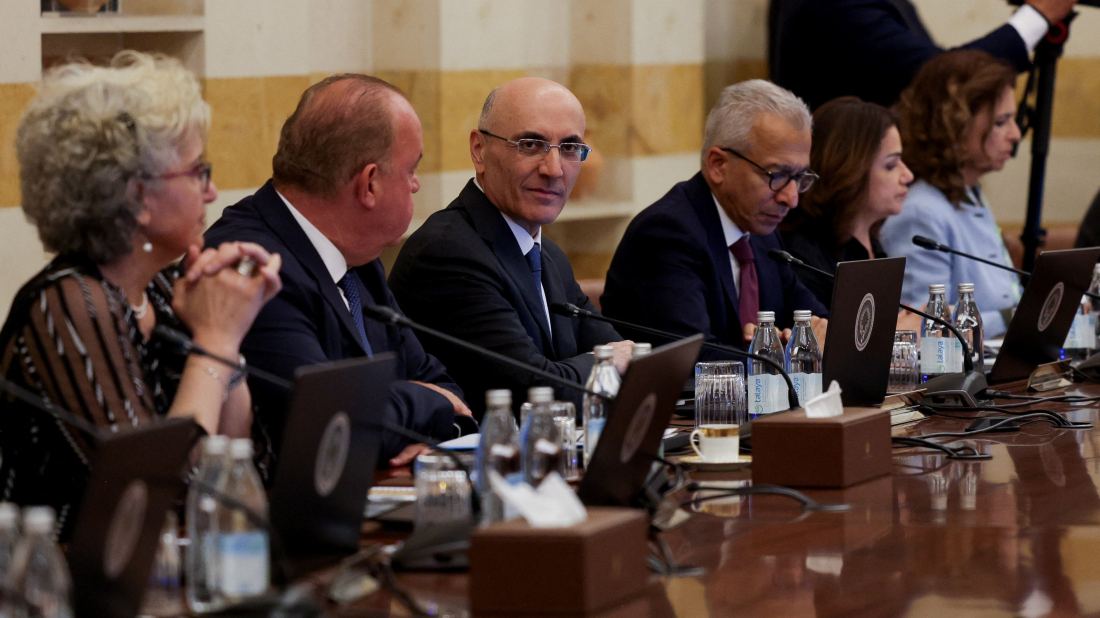
Lebanon’s cabinet will meet on Tuesday to discuss the arsenal of Hezbollah, following increased pressure from the United States for ministers to commit publicly to disarming the group, amid fears of renewed Israeli strikes if they fail to do so.
The meeting, scheduled for 3:00 p.m. (12:00 GMT) at the presidential palace, marks the first time the Lebanese cabinet will formally address the fate of Hezbollah’s weapons — a scenario that would have been unthinkable when the group was at its peak just two years ago.
U.S. pressure on Hezbollah to relinquish its arms has grown since last year’s conflict with Israel, which killed senior Hezbollah commanders, thousands of fighters, and destroyed much of its rocket arsenal.
In June, U.S. envoy Thomas Barrack presented a roadmap to Lebanese officials that would see Hezbollah fully disarmed in exchange for Israel halting strikes and withdrawing from five contested areas in southern Lebanon.
That proposal included a condition that Lebanon’s government pass a cabinet decision explicitly pledging to disarm Hezbollah.
Following several visits to Lebanon, Washington’s patience began to wear thin, and U.S. officials urged Lebanon’s ministers to make the pledge quickly so negotiations could continue.
But Lebanese officials and diplomats say that such a commitment could inflame sectarian tensions in Lebanon, where Hezbollah retains significant support within the Shi’ite Muslim community.
On Monday evening, dozens of motorcyclists waving Hezbollah flags rode through a Beirut suburb known as a party stronghold.
Ahead of Tuesday’s session, Parliament Speaker Nabih Berri, a key Hezbollah ally, has been in talks with President Joseph Aoun and Prime Minister Nawaf Salam to agree on a compromise that would satisfy U.S. demands while avoiding internal fallout, two Lebanese officials said.
Berri’s proposed wording would commit Lebanon to forming a national defence strategy and upholding a ceasefire with Israel, but stop short of an explicit pledge to disarm Hezbollah, the officials said.
Other ministers, however, plan to push for a more direct statement.
"There's frankly no need to kick the can down the road and postpone a decision. We have to put Lebanon's interest first and take a decision today," said Kamal Shehadi, a minister aligned with the anti-Hezbollah Lebanese Forces party.
Lebanese officials and foreign envoys say there is growing concern that failure to issue a clear decision could prompt Israel to escalate its operations, including potential strikes on Beirut.
A U.S.-brokered ceasefire in November ended open hostilities between Hezbollah and Israel, though Israel has continued targeted strikes on what it says are Hezbollah arms depots and fighters, mainly in southern Lebanon.















What is your opinion on this topic?
Leave the first comment