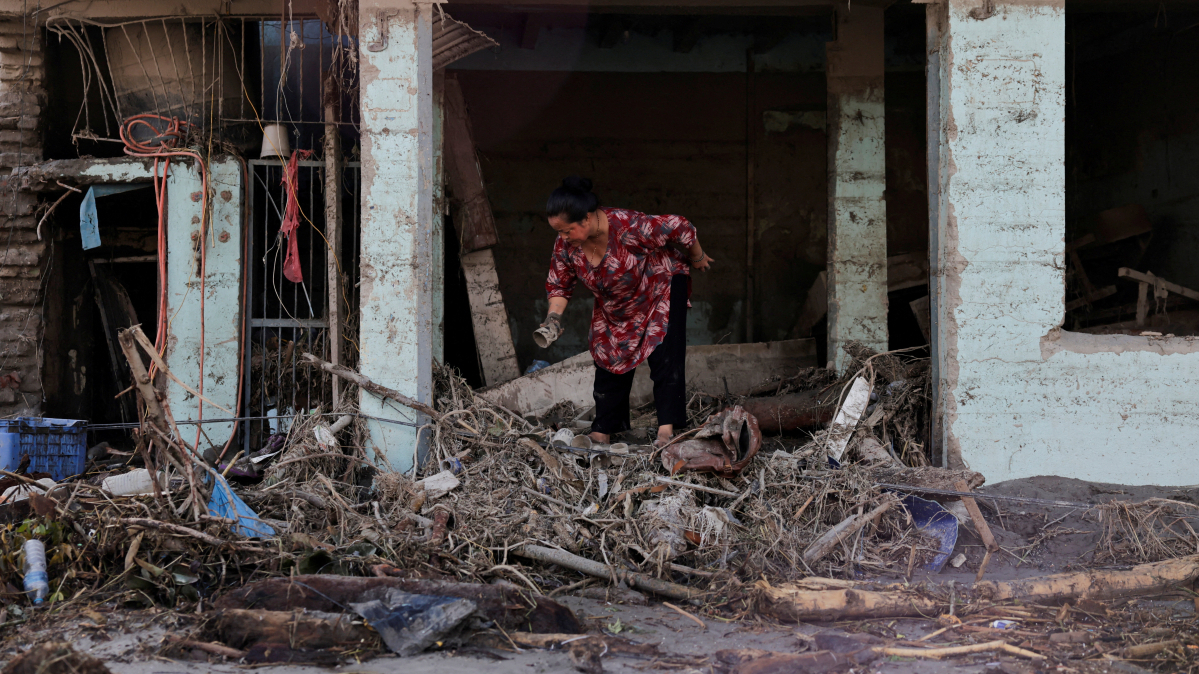
The death toll from flooding in Nepal has climbed to 469, the South Asian country’s police said on Friday. Almost 1,000 people are still missing in Nepal and neighbouring Tibet, following the glacier collapse near the border with China on Wednesday morning.
The flood ripped through villages and valleys, destroying power stations, roads and bridges along a route that links the Nepalese capital Kathmandu with Lhasa in Tibet, and is popular with tourists. Of those missing, at least 540 are foreigners.
Nepal and China have warned of the risk of fresh flooding in the Himalayas from two lakes that have formed on either side of their border, due to debris from the glacier collapse blocking a river.
Chinese authorities warned that three million cubic meters of water, the equivalent of about 1,200 Olympic swimming pools, are expected to flow into the lake on its side of the border over the next three days.
Peak flow is expected around 1 September, creating a high risk of the lake bursting its banks.
Chinese engineers are assessing the feasibility of creating a drainage channel in an attempt to reduce the risk of the lake breaching, but have been struggling with access.
"After the glacier collapse created the lake, many isolated cliffs and steep cliffs appeared along it," one of the engineers, Chen Hanxiao, told Chinese state broadcaster CCTV.
The formation of a barrier lake was captured in aerial footage by a Chinese rescue team on Thursday, Chinese state broadcaster’s English language service, CGTN, reported.
The footage showed masses of brown water accumulating in a basin with no visible outlet. The water had already submerged bushes and trees and appeared to push against a barrier of debris and stones.
Nepal snubs help from abroad
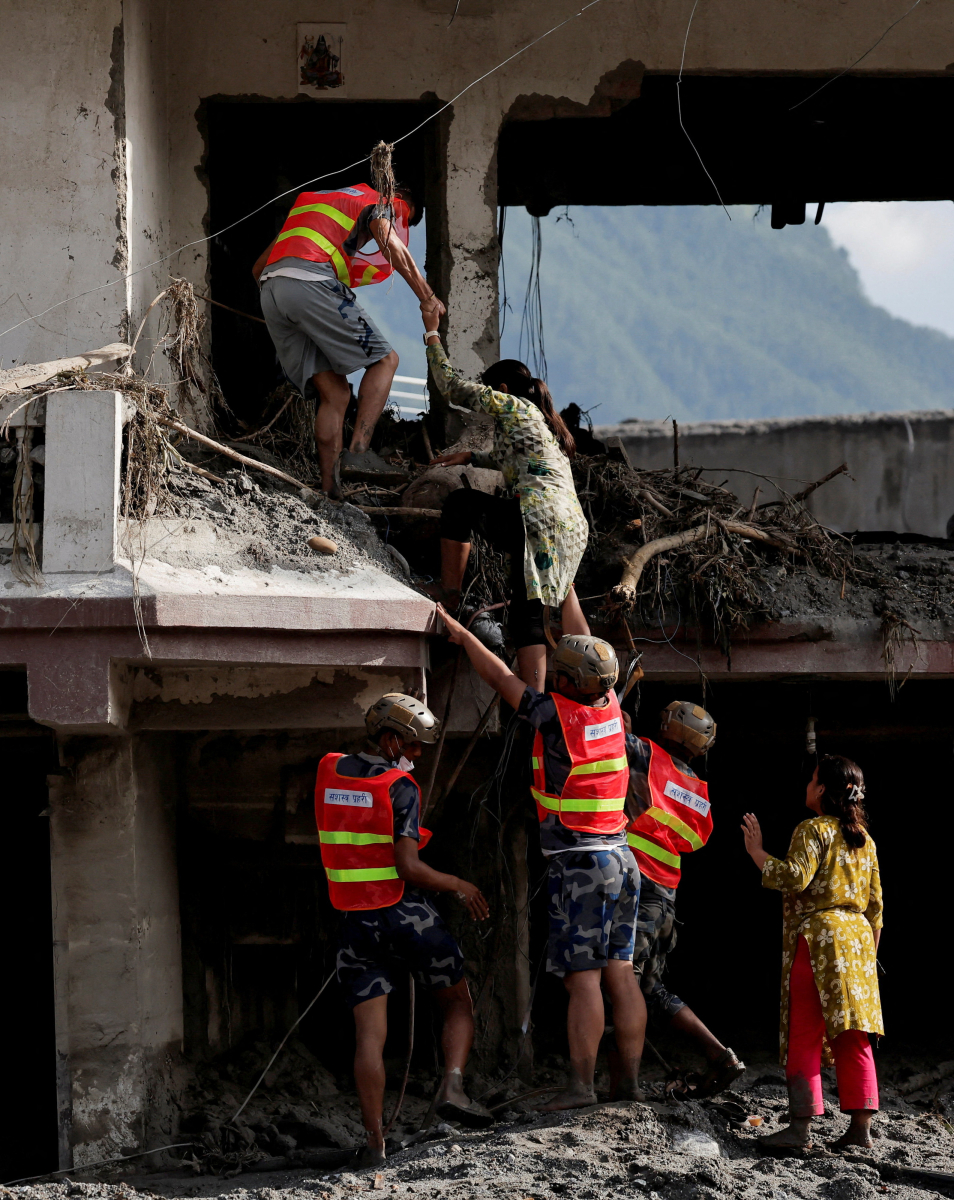
As rescuers continue to search for survivors and recover the dead, Nepal’s Foreign Ministry said on Friday that it didn’t need help from other countries.
"The offer for help is natural. Our security agencies are doing the search and rescue operation. For now we don’t require such help,” Lok Bahadur Chhetri, Spokesperson for Kathmandu’s Foreign Ministry said.
Chinese rescuers had yet to reach the worst-hit area on the Chinese side of the border, the Gyirong border crossing, by Thursday evening, state media reports indicated, as crews worked to clear debris from the key access road leading to the area.
Dibga Tamang was among the last people rescued from the hard-hit town of Rasuwa on Thursday, airlifted along with three others to an army camp in Nuwakot.
"All of our people have gone. They are dead," Tamang said. "I have no one left waiting for me. Everything and everyone is gone. The end."
Nepal's Prime Minister Balendra Shah, who visited the flood-hit town of Nuwakot on Thursday, said the situation was still difficult.
"All the state agencies are operating at full capacity. Our first priority now is to save [the] life of citizens, rescue the missing, treat the injured and provide immediate relief to the affected families," he said.
Read more from Nepal:
















What is your opinion on this topic?
Leave the first comment