The Oligarch’s Design: Tracing Power, Politics, Influence
The Oligarch’s Design is an investigative documentary exploring how financial power, political influence and carefully constructed narratives can sh...
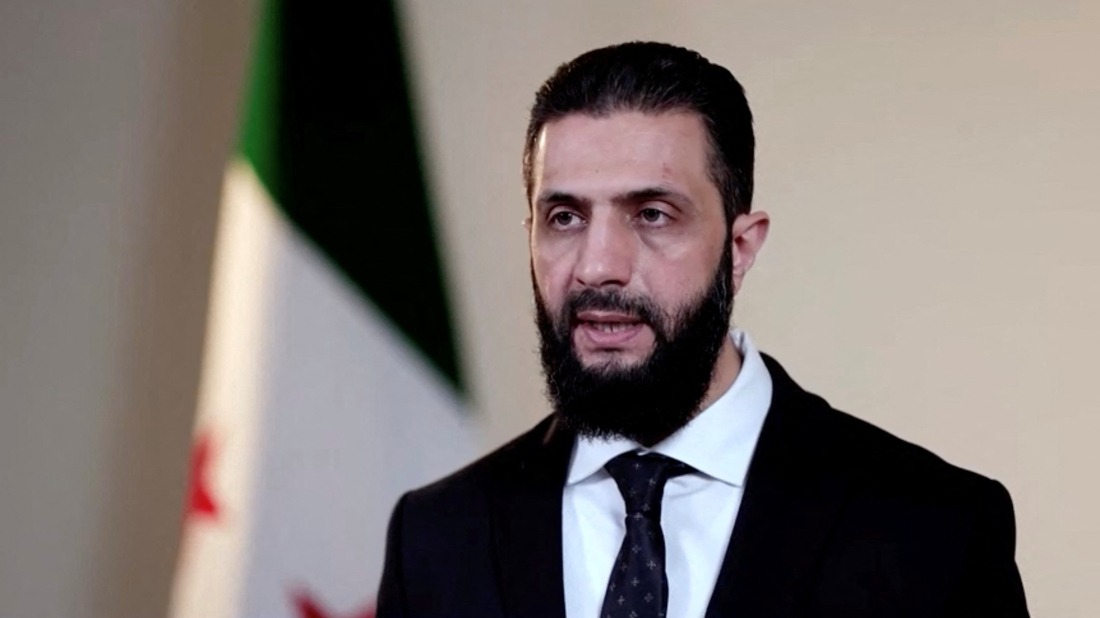
Syria’s leader Ahmed Sharaa vowed on Sunday to pursue those responsible for violent clashes between loyalists of ousted President Bashar al-Assad and the country’s new rulers. He warned that foreign powers were fueling unrest and pledged accountability for those exceeding their authority.
In a televised address, Sharaa accused Assad supporters and unnamed external actors of attempting to destabilize Syria. His remarks came as fighting in Assad’s coastal stronghold continued for a fourth day, leaving 1,000 people dead, mostly civilians, according to a war monitoring group.
Sharaa’s office announced the formation of an independent committee to investigate the clashes, including reports of killings by both sides. Graphic videos allegedly depicting executions have circulated online, though Reuters could not independently verify them.
A Syrian security official said hostilities had slowed around the cities of Latakia, Jabla, and Baniyas, but forces continued searching nearby mountainous areas where an estimated 5,000 pro-Assad insurgents are believed to be hiding.
Sharaa leads the Sunni Islamist Hayat Tahrir al-Sham group, which ousted Assad’s government in December 2024. Assad fled to Russia, leaving behind key allies and supporters, while Sharaa’s faction installed an interim government and took control of Syria’s military.
Assad’s overthrow ended decades of dynastic rule marked by severe repression and a civil war that erupted from a peaceful uprising in 2011. The conflict drew in multiple global and regional players, with Western nations, Arab states, and Türkiye backing the rebels, while Russia, Iran, and Tehran-backed militias supported Assad. The war has killed hundreds of thousands and displaced millions of Syrians.
Since Assad’s fall, Kurdish forces have maintained control over parts of northeastern Syria, while Israel has continued striking military sites.

Japan has lifted a tsunami advisory issued after an earthquake with a magnitude of 6.9 hit the country's northeastern region on Friday (12 December), the Japan Meteorological Agency (JMA) said. The JMA had earlier put the earthquake's preliminary magnitude at 6.7.
The United States issued new sanctions targeting Venezuela on Thursday, imposing curbs on three nephews of President Nicolas Maduro's wife, as well as six crude oil tankers and shipping companies linked to them, as Washington ramps up pressure on Caracas.
The resignation of Bulgaria's government on Thursday (11 December) puts an end to an increasingly unpopular coalition but is likely to usher in a period of prolonged political instability on the eve of the Black Sea nation's entry into the euro zone.
An extratropical cyclone has caused widespread disruption across Brazil’s São Paulo state, with powerful winds toppling trees and power lines, blocking streets and leaving large parts of the region without electricity.
Pakistan has indicated its openness to forming a regional bloc with Bangladesh without including India. The statement from Islamabad follows comments by Bangladesh’s top foreign affairs adviser, Md Touhid Hossain, that such an arrangement is strategically possible without India.
A flash of light followed by the sound of an explosion was observed over Gaza early on Saturday, according to witnesses, as severe winter storms worsened an already dire humanitarian crisis in the territory.
Hundreds of people gathered for a second consecutive week at Tel Aviv’s Hostages Square, on Friday (12 December), to support the family of Master Sgt. Ran Gvili, the last remaining Israeli hostage whose body is believed to be held in Gaza.
Turkish President Recep Tayyip Erdoğan and Russian President Vladimir Putin met for a closed-door discussion on the sidelines of the International Forum for Peace and Trust in Ashgabat, Turkmenistan, on Friday.
Kazakhstan has begun redirecting part of its crude exports, sending oil from Kashagan to China as the Caspian Pipeline Consortium (CPC) operates at reduced capacity.
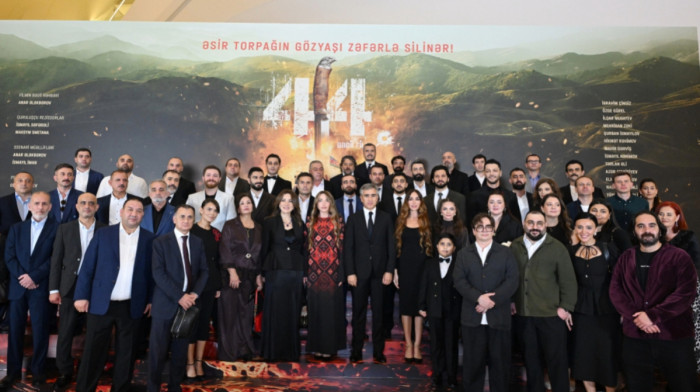
Azerbaijan’s post-conflict reconstruction in Karabakh is attracting international attention. The book by British author Graeme Wilson documents this journey, combining first-hand reporting and digital storytelling to highlight both the region’s restoration and the human stories behind it.
You can download the AnewZ application from Play Store and the App Store.
What is your opinion on this topic?
Leave the first comment