Iran’s Islamic Revolutionary Guard Corps (IRGC) said on Tuesday that three oil tankers had hit mines and caught fire in the Strait of Hormuz despite attempting to navigate the strategic waterway under heavy U.S. escort.
The reported incidents come as maritime organisations record the highest monthly rate of attacks in the Strait since the Israeli-U.S. war on Iran began in late February. Iran’s Foreign Ministry has vowed to use all means at its disposal to confront Washington’s naval blockade.
According to the Sepah News website, the IRGC Navy said the incidents occurred late on Monday, with one tanker hit off the southern coast and two others on the eastern side of the Strait.
“The U.S. military's air escort failed to prevent these incidents. Images of the explosions and fires on these vessels will be released in the coming hours,” the IRGC Navy said in a statement.
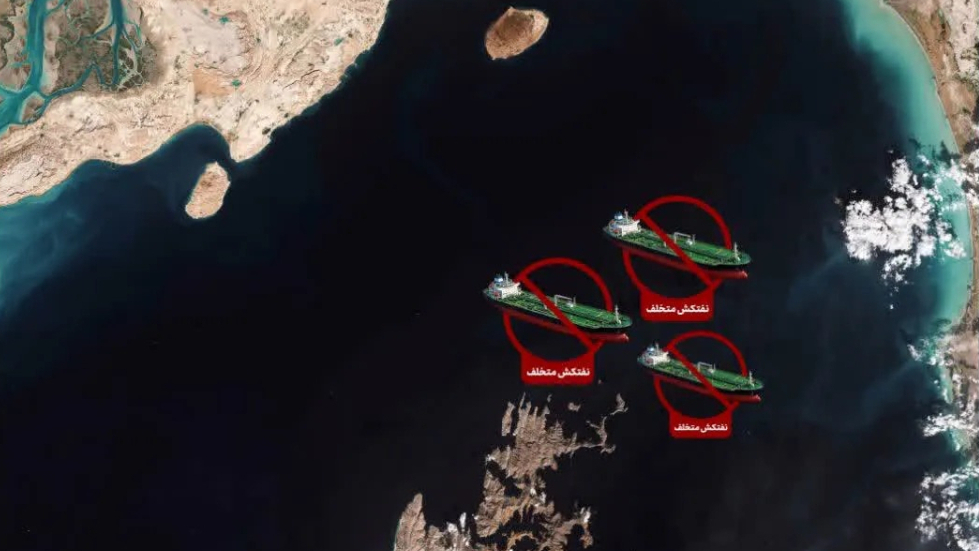
The Revolutionary Guards published a map of the strategic waterway featuring illustrations of three tankers marked as “offending vessels”.
Amid data by maritime organizations confirming attacks at the Strait have increased to highest level since the Israeli-US war on Iran began in late February, Foreign Ministry vowed that Tehran will use all tools at its disposal to confront Washington’s naval blockade. According to Sepah News website covering the IRGC statements, the force’s Navy said the incidents happened late on Monday adding that one the tankers was hit on the southern coast and two others on the eastern side of the Strait. “The US military's air escort failed prevent these incidents. Images of the explosions and fires on these vessels will be released in the coming hours,” said an IRGC Navy statement. The Revolutionary Guards filed a map of the strategic waterway showing sketch pictures of three tankers marked as “offending vessels”. “Any movement through unauthorized routes and disregard for issued warnings is considered a violation and cooperation with the aggressor forces and will be dealt with decisively in accordance with the announced regulations,” they warned. Reported attacks in and around Strait have been higher in October and November than any previous months since Israel and US attacked Iran in late February which has spilled to US naval blockade of Iran and Tehran’s grip on the waterway. As the numbers increased to highest level since the war began, the International Maritime Organization (IMO), reported 34 confirmed attacks in and around the Strait of Hormuz just in two months in October and November. The United Nations agency did not include figures from last night’s incidents. Previously, a total of 53 incidents had been reported to the UK Maritime Trade Operations Centre between March and September of this year – an average of 7 to 8 attacks per month. Diplomacy backs hard power On the diplomatic front, Iran’s Foreign Ministry Spokesman Esmaeil Baghaei stressed that Tehran will use all available means to challenge the US naval blockade. Speaking at a weekly news conference on Monday, he said that the “the naval blockade is considered a military aggression” adding that “Iran has the right to use any available tool to defend itself in this regard." Meantime, Foreign Minister Abbas Araghchi said on Monday that a land blockade of Iran is “next to impossible” due to the country's vastness, the capacity of the border provinces, and extensive ties with neighboring countries. “We must discourage the sanctions from achieving their goals and bring the country's resilience to a level where sanctions on Iran are essentially irrelevant,” he said on the sidelines of a meeting of heads of provincial heads of the Ministry of Foreign Affairs.” “The Ministry of Foreign Affairs offices in the provinces are tasked with working with provincial officials, economic officials, and economic activists, identifying capacities and establishing connections with neighboring countries, and our embassies in neighboring countries are also tasked with helping to establish these connections,” state IRNA news agency quoted him as saying. Also speaking at the meeting, he said Iran’s enemies were forced to move from demanding “unconditional surrender” to an “unconditional ceasefire”, calling for “unconditional negotiations”. According to Araghchi, “in the 12-day war (last June) and after 12 days of calling for unconditional surrender, they reached an unconditional ceasefire." “And in the 40-day war (February-April 2026), after approximately 20 days, Israel and US got to "unconditional negotiations" trying to reach an agreement through diplomacy.
“Any movement through unauthorised routes and disregard for issued warnings is considered a violation and cooperation with the aggressor forces and will be dealt with decisively in accordance with the announced regulations,” they warned.
Attacks reach highest rate since war began
The escalation comes amid Washington’s naval blockade of Iran and Tehran’s efforts to maintain its grip on the waterway.
The International Maritime Organization (IMO) reported 34 confirmed attacks in and around the Strait of Hormuz in October and November alone.
The United Nations agency did not include Monday night’s incidents in its figures.
By comparison, a total of 53 incidents were reported to the UK Maritime Trade Operations Centre between March and September – an average of seven to eight attacks per month.
Tehran vows to confront U.S. blockade
Iran’s Foreign Ministry spokesman Esmaeil Baghaei said Tehran would use all available means to challenge the U.S. naval blockade.
Speaking at a weekly news conference on Monday, he said that “the naval blockade is considered a military aggression”, adding that “Iran has the right to use any available tool to defend itself in this regard.”
Meanwhile, Foreign Minister Abbas Araghchi said on Monday that a land blockade of Iran was “next to impossible” due to the country's size, the capacity of its border provinces and extensive ties with neighbouring countries.
“We must discourage the sanctions from achieving their goals and bring the country's resilience to a level where sanctions on Iran are essentially irrelevant,” he said on the sidelines of a meeting of the Foreign Ministry’s provincial heads.
“The Ministry of Foreign Affairs offices in the provinces are tasked with working with provincial officials, economic officials, and economic activists, identifying capacities and establishing connections with neighbouring countries, and our embassies in neighbouring countries are also tasked with helping to establish these connections,” the state news agency IRNA quoted him as saying.
Iran points to shift towards diplomacy
Araghchi also argued that Iran’s enemies had been forced to abandon their demands for “unconditional surrender” in favour of an “unconditional ceasefire” and, subsequently, “unconditional negotiations”.
According to Araghchi, “in the 12-day war (last June) and after 12 days of calling for unconditional surrender, they reached an unconditional ceasefire.”
He added that, around 20 days into the 40-day war between February and April 2026, Israel and the U.S. had shifted towards “unconditional negotiations”, seeking an agreement through diplomacy.
Read more:













What is your opinion on this topic?
Leave the first comment