Pakistan and Oman called for restraint and diplomacy on Wednesday as they discussed the U.S.-Iran conflict, Houthi attacks on Saudi Arabia and threats to vital Gulf shipping routes, with Muscat praising Islamabad’s mediation efforts.
Omani Foreign Minister Sayyid Badr bin Hamad Albusaidi praised Pakistan’s diplomatic efforts at a joint press conference with Pakistani Deputy Prime Minister and Foreign Minister Ishaq Dar, saying they had helped pave the way for dialogue between Washington and Tehran.
“Your efforts to encourage engagement, understanding, respect and recognition are commendable, and I salute you for all your efforts,” he said, adding that Oman appreciated Pakistan’s role in providing space for dialogue between Iran and the United States.
Gulf security and energy supplies in focus
Dar said the talks covered the U.S.-Iran conflict, the Strait of Hormuz, the Bab al-Mandab Strait and developments in Gaza. He condemned Houthi attacks on Saudi Arabia as “totally unacceptable” and reaffirmed Pakistan’s solidarity with the kingdom.
Both ministers called for restraint, de-escalation and diplomacy, stressing the need to safeguard shipping through the two strategic waterways, which are vital to global food and energy supplies.
Dar warned that the conflict was already taking an economic toll on Pakistan, with disrupted energy supply chains driving up prices and increasing pressure on households. He called for renewed efforts to restore regional stability.
Pakistan’s role in U.S.-Iran diplomacy
Pakistan has worked alongside Qatar to help bring Washington and Tehran to the negotiating table. The Islamabad Memorandum of Understanding, signed in June 2026, formed part of diplomatic efforts to end the conflict.
Follow-up talks sought to put the agreement into practice and establish a framework for further negotiations, but setbacks have stalled progress, leaving key differences between the U.S. and Iran unresolved.
Oman, which has long served as a diplomatic intermediary in the region, acknowledged Islamabad’s contribution as concerns mount over Gulf security and maritime trade.
Pakistan and Oman seek closer trade ties
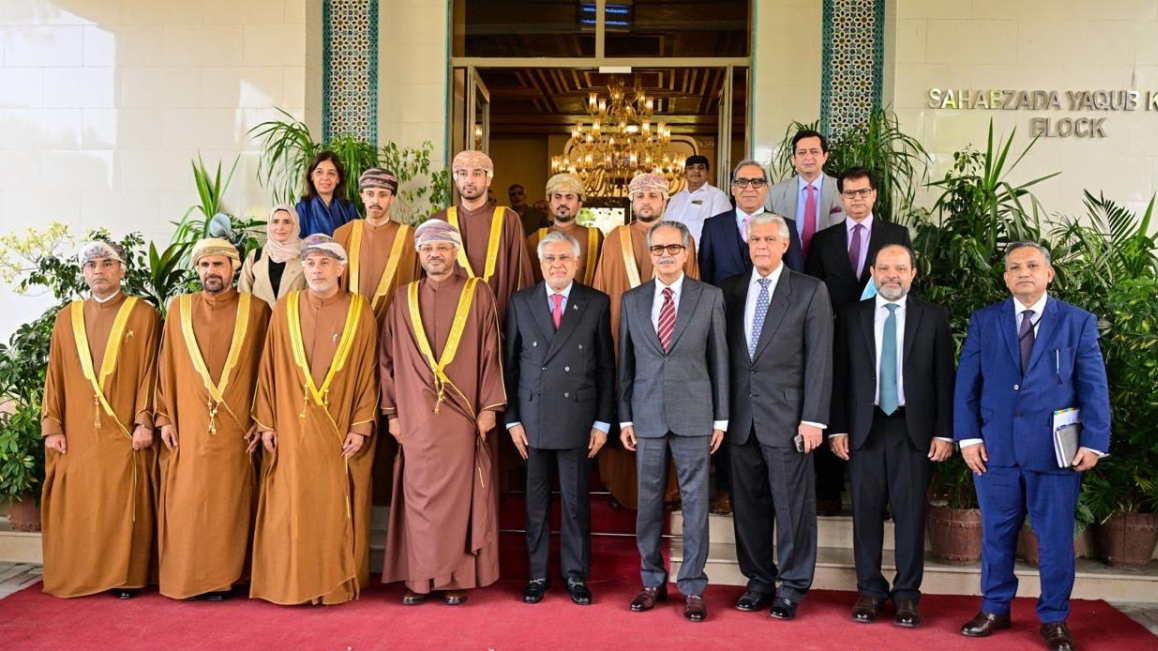
The diplomatic talks came alongside the eighth Pakistan-Oman Joint Ministerial Commission meeting in Islamabad, the first in seven years, co-chaired by Dar and Albusaidi.
The two countries agreed to deepen cooperation in trade, investment, agriculture, oil and gas, labour and workforce development through joint working groups. Dar also announced plans for a business investment forum in Pakistan.
The ministers identified maritime transport, logistics, industry, energy, education, information technology and climate change as further areas for cooperation. They also explored opportunities for more skilled Pakistani workers to take up jobs in Oman.
Dar said he intended to travel to Oman in 2027 for the next commission meeting. Discussions also covered a commission protocol and reciprocal visa exemptions for diplomatic and official passport holders.
Gulf tensions threaten Pakistan’s economy
Beyond the diplomatic push, continued instability in the Gulf poses a growing economic challenge for Pakistan. Disruptions to energy shipments and maritime trade could push up import costs and strain the country’s economy.
By strengthening ties with Oman and other regional partners, Islamabad hopes to keep negotiations alive while safeguarding its energy supplies and trade interests.
Read more:













What is your opinion on this topic?
Leave the first comment