Iran’s Islamic Revolutionary Guard Corps (IRGC) says it has captured a second U.S. military unmanned underwater vehicle in the Strait of Hormuz, as tensions between Tehran and Washington remain high.
IRGC claims capture of REMUS 600
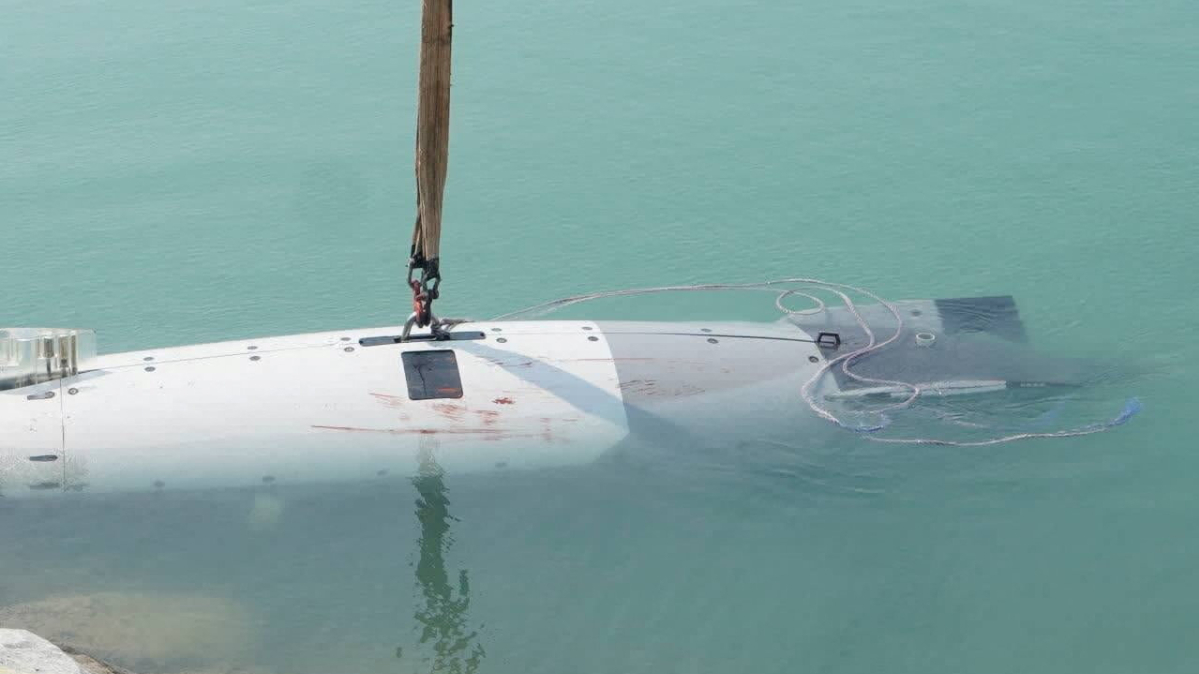
Iran's Islamic Revolutionary Guard Corps (IRGC) said it had intercepted and captured a second U.S. military unmanned underwater vehicle in the Strait of Hormuz, reiterating that the waterway remains closed to what it calls “unauthorised” shipping.
“The combatants of the IRGC Navy in a coordinated and complex operation conducted with intelligence dominance and electronic warfare capabilities, succeeded in trapping an advanced unmanned underwater vehicle belonging to the U.S. terrorist army, which was operating for espionage purposes in the Strait of Hormuz,” the force said in a statement.
According to Sepah News, the IRGC-affiliated news outlet, the autonomous underwater vehicle (AUV) was identified as a REMUS 600 and handed to specialists on Sunday for data recovery.
“The IRGC Navy firmly declares that the Strait of Hormuz is closed and that we are resolutely and continuously confronting dangerous activities and transit through unauthorised routes in the Strait of Hormuz,” read the statement.
The U.S. military has disputed the IRGC's account of the latest incident, saying it retains control of all its operational drone assets.
Second reported underwater drone seizure
On 8 September, the IRGC announced that it had captured another U.S. military autonomous underwater vehicle near the entrance to the Strait of Hormuz, identifying it as a Dive-LD.
The Pentagon subsequently acknowledged losing the Dive-LD, saying the vehicle had malfunctioned and did not contain classified systems or sensitive data.
“The capture of the US Remus 600 and Dive-LD submersibles hands Iran both the Pentagon’s Hormuz mine-clearing playbook and critical autonomous hardware. Exposing advanced sonar and drift-free navigation systems, the seizure resolves key bottlenecks in domestic un-crewed naval programmes,” according to Iran's semi-official ISNA news agency.
“Mirroring the impact of the RQ-170 capture on Iran's aerial drone power, this underwater windfall cements Tehran's asymmetric edge in the Persian Gulf,” the agency reported.
Tehran says no new U.S. talks planned
The reported seizure comes as Iran says its diplomatic delegation, led by Foreign Minister Abbas Araghchi, has no plans for another round of talks with the U.S. during its stay in New York, despite President Donald Trump saying he expects further mediated discussions this week.
“Iran's observations and positions were clearly and transparently conveyed to the American side last Tuesday through the Qatari mediator and Iran is awaiting a response from the American side,” state news agency IRNA quoted an informed source as saying.
“Accordingly, there is no plan for a new round of negotiations with the American side on the Iranian delegation's agenda, and the Foreign Minister will return home on Tuesday after completing the anticipated plans,” the source added.
Araghchi says Iran ready for diplomacy or war
In an interview with U.S. television, Araghchi said that despite Trump's public comments, Washington had not officially communicated its rejection of Iran's proposal to reopen the Strait of Hormuz through mediators.
Araghchi also said in a post on X on Sunday that Iran was ready for both “real diplomacy” and an “apocalyptic war”.
“Iran remains steadfast in the face of any aggression - even if it comes to an apocalyptic war. At the same time, we are ready for real diplomacy.”

















What is your opinion on this topic?
Leave the first comment