Iran's Foreign Minister Abbas Araghchi has called on the European Union and neighbouring states to blame Israel and the U.S. over how the hostilities are impacting global markets and American assets in the region.
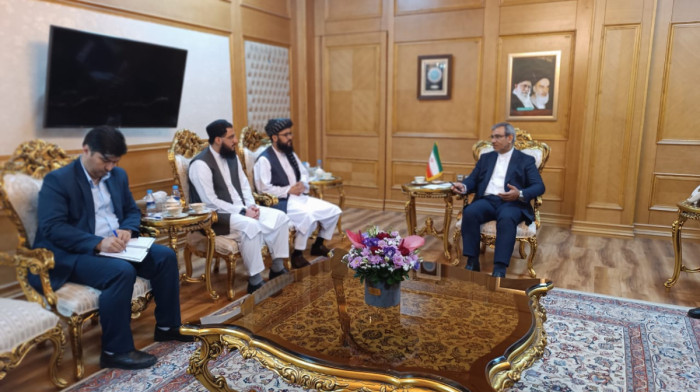
Araghchi, while speaking to EU Foreign Policy Chief Kaja Kallas in a phone conversation, strongly criticised the “dishonest” approach of certain European countries towards aggression against Iran, state IRNA news agency reported on Thursday.
“He stated that any support or appeasement towards the blatant lawlessness of these two regimes would be tantamount to complicity in the crimes they have committed against the Iranian nation,” he was quoted as saying in a Foreign Ministry statement.
“If the EU and European countries are concerned about peace and security in the region, they should seek to exert pressure on the aggressors and stop their military aggression against the Iranian nation, instead of adopting irresponsible positions.” the statement added.
Araghchi also said that the disruption of shipping in the Strait of Hormuz is the result of the war imposed by the United States and Israel.
The European Council is set to meet on Thursday to discuss the impact of the Middle East conflict on global oil prices, as well as a loan to Ukraine, which has so far been blocked by Hungary's Prime Minister, Viktor Orbán.
A delegation from China is also scheduled to meet European leaders in the coming week to discuss the Iranian war and blockage of the Strait of Hormuz.
Also in separate telephone calls with the foreign ministers of Türkiye, Egypt and Pakistan, he said that the attack on Iranian infrastructure in South Pars gas field on Wednesday (18 March) was an act “aimed at escalating regional tension” stressing that Iran will spare no effort in defending national sovereignty and the security of its citizens.
“In these talks, he stated that the attack on Iran's infrastructure by the US and the Zionist regime is an act aimed at escalating tensions and destabilising the region,” he added, stressing the need for "vigilance and coordination among regional countries in response to these threats,” IRNA reported.
In New York, Iran’s Ambassador at the UN Headquarters Amir-Saeid Iravani slammed Israel-U.S. attacks on Iran’s energy infrastructure and condemned the assassinations of senior Iranian officials, demanding accountability.
In a letter to the UN Secretary-General, the President of the Security Council, and the President of the General Assembly, Iran's Permanent Representative to the United Nations formally protested to the missile strike on Iran’s South Pars gas field, according to WANA news agency.
He described recent attacks on Iranian energy facilities as a “gross and serious violation of international law, including the fundamental principles of international humanitarian law.”
In a separate letter, Iravani protested against the targeted assassinations of National Security Council Secretary Ali Larijani, Minister of Intelligence Esmail Khatib, and their associates, attributing the attacks to Israel.
“If unchecked, such practices would extend beyond Iran, threatening leaders and governments worldwide,” read the letter.












What is your opinion on this topic?
Leave the first comment