Iran’s Supreme National Security Council Secretary Ali Larijani said the United States could evaluate its own interests separately from those of Israel in ongoing negotiations between Tehran and Washington.
In an exclusive interview with Al Jazeera, Larijani addressed the current state of Iran–U.S. talks, noting that the negotiation process is continuing and that regional countries are also working toward a successful outcome.
Referring to a letter he said he delivered to Oman’s Foreign Minister Badr bin Hamad al-Busaidi to be conveyed to Washington, Larijani stated that Iran has not yet received an official response from the United States.
“The U.S. can assess its own interests separately from Israel’s interests in the negotiations,” he said.
The comments come as talks are set to resume in Geneva on the 17 February between Iranian and U.S. delegations.
Nuclear issue and red lines
Larijani said Iran remains open to cooperation in the talks, pointing to former President Donald Trump’s frequently stated objective that Iran should not obtain nuclear weapons.
“That is a common point Iran does not oppose. We were in favour of negotiations before and we are now,” he said.
However, he stressed that the talks should not be prolonged and warned that certain issues are not open for discussion.
“The missile issue concerns Iran’s national security and will not be included in the negotiations. Any topic outside the nuclear issue would derail the process,” Larijani said.
On uranium enrichment, he argued that a country possessing nuclear technology cannot be expected to accept zero enrichment.
“For example, 20% enriched uranium is necessary for medical purposes,” he said.
Position on possible conflict
Addressing the possibility of failed negotiations and a potential U.S. attack, Larijani said he did not believe Washington was seeking a new war, but warned of consequences if force were used.
“We are not seeking war, but we are prepared. If they use force against us, they will receive a response,” he said.
He also accused Israel of attempting to sabotage the negotiations.
“We are negotiating with the U.S., meanwhile, Israel is trying to intervene and sabotage the talks. Today our biggest enemy is Israel,” he said.
Larijani further claimed that Israel is pursuing an adventurist role in the region and attempting to create a pretext for war. He said Iran is ready to cooperate with Saudi Arabia, Egypt and Türkiye to ensure regional stability in response to Israel.
Impact of recent tensions
Commenting on the 12-day confrontation between Iran and Israel, Larijani said Israeli intelligence networks inside Iran were not as strong as portrayed, though he acknowledged that some security lapses had occurred.
“We dealt serious blows to spy networks and increased security measures,” he said.
He added that Israeli attacks had led to greater national unity within Iran, describing it as “an important gain.”
Netanyahu calls for dismantlement
Speaking separately at the annual Conference of Presidents of Major American Jewish Organizations, Prime Minister Benjamin Netanyahu said he had told Trump that any agreement must go beyond limiting enrichment.
“There should be no enrichment capability. Not stopping the enrichment process, but dismantle the equipment and the infrastructure that allows you to enrich in the first place,” Netanyahu said.
He added that any deal must ensure enriched material leaves Iran and expressed scepticism about Tehran’s reliability.
“I expressed my scepticism of any deal with Iran because, frankly, Iran is reliable on one thing. They lie and they cheat,” Netanyahu said.
Nuclear talks between Iran and the United States, which were suspended in June 2025 following Israeli and U.S. attacks on Iran, resumed in Oman on 6 February.
Iran’s Foreign Ministry spokesman Esmail Baghaei previously said that negotiations in Muscat ended with both sides agreeing to continue discussions.
The talks have taken place amid renewed tensions between Tehran and Washington and an increased U.S. military presence in the region.
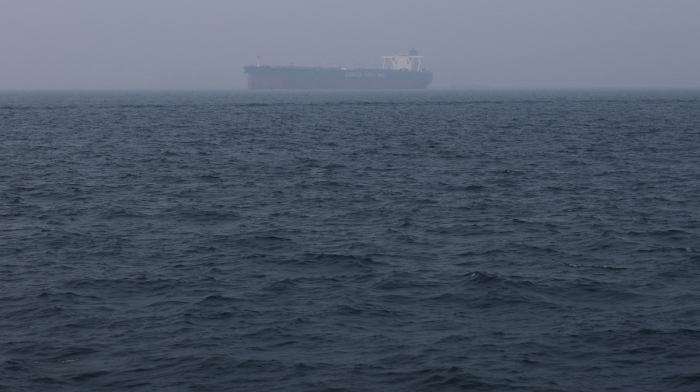
An unknown projectile struck a tanker 68 nautical miles northeast of Saudi Arabia on Friday according to a report released by the United Kingdom Maritime Trade Operations (UKMTO) on Saturday.
The day after waiving sanctions and tariffs related to Russian exports, U.S. President Donald Trump said on Saturday he has yet to announce a final decision on the matter as Secretary of State Marco Rubio said officials want more time to evaluate the situation.
A Saudi AH-6i helicopter crashed in the Najran region of Saudi Arabia due to a technical malfunction, killing its two crew members, the Saudi-led coalition's spokesman Brigadier General Turki al-Maliki said in a statement on Sunday.
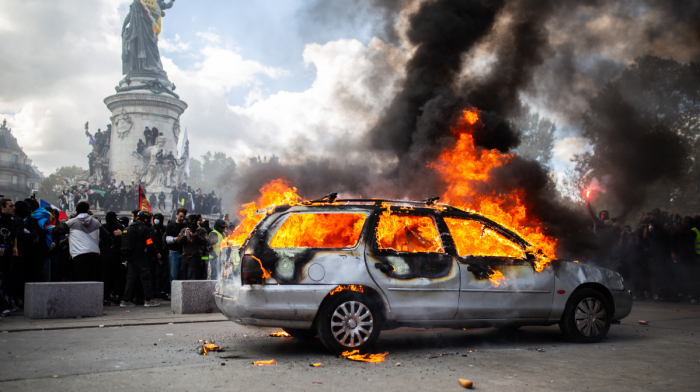
What started out as planned protests against the cost of living, declining public services and education funding in France, quickly devolved into violent riots across the country on Saturday.
The AnewZ documentary “Counterpoint: Two Centuries of German-Azerbaijani Shared History” investigates the story of German settlers who arrived on Azerbaijani lands around two centuries ago and established communities that left a lasting mark on the country’s cultural heritage.
A Saudi AH-6i helicopter crashed in the Najran region of Saudi Arabia due to a technical malfunction, killing its two crew members, the Saudi-led coalition's spokesman Brigadier General Turki al-Maliki said in a statement on Sunday.
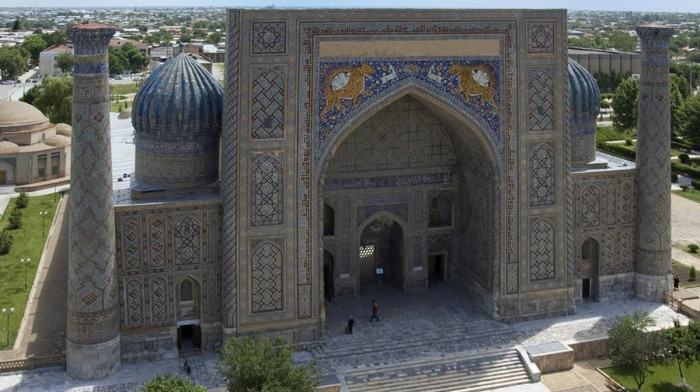
Uzbekistan welcomed 10.3 million foreign tourists in the first nine months of 2026, up 20.4 per cent year-on-year, as the Central Asian nation pushes towards its ambitious goal of attracting 20 million visitors annually by 2030.
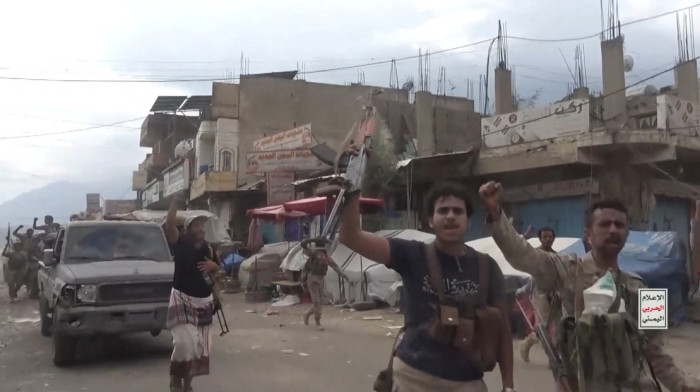
In an interview with AnewZ’s Sabir Safarov, Houthi-aligned journalist Hussain al-Bukhaiti warns of possible attacks on Saudi Arabia’s water and power infrastructure, dismisses concerns over global trade and acknowledges Iranian assistance in developing the group’s missiles.
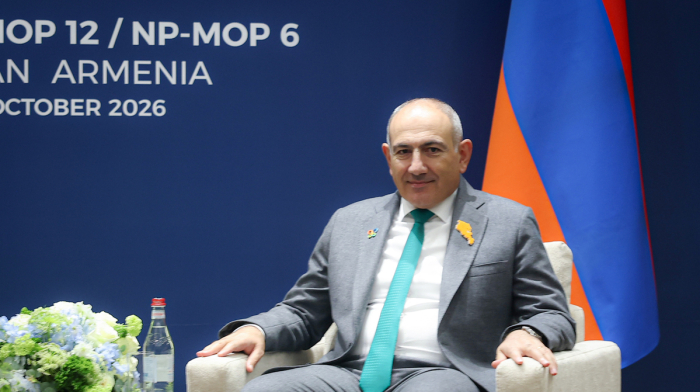
Armenia is looking to turn shared environmental challenges into opportunities for regional cooperation, with Prime Minister Nikol Pashinyan highlighting the potential for stronger ties with neighbouring countries through biodiversity protection.
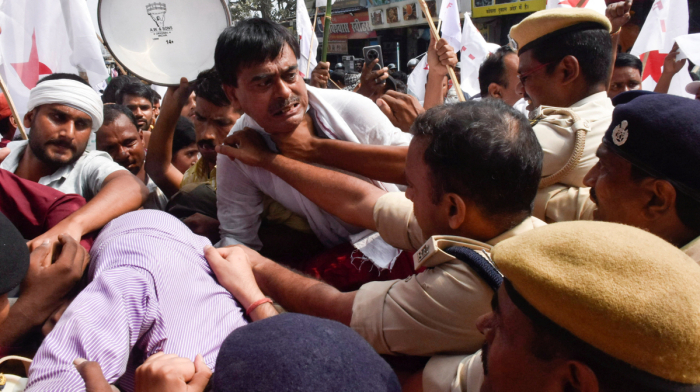
Student organisations, opposition groups and youth-led activists took to the streets in Patna and Mumbai on Friday (16 October), demanding the resignation of India's Chief Election Commissioner, Gyanesh Kumar, amid a row over changes to voter lists.
Download the AnewZ app
You can download the AnewZ application from Play Store and the App Store.











What is your opinion on this topic?
Leave the first comment