live U.S. needs to 'shut down' Middle East military bases: Mojtaba Khamenei - Thursday, 12 March
Iran should continue ‘blocking the Strait of Hormuz’, Iran's new Supreme Leader Mojtaba Khamenei, sai...
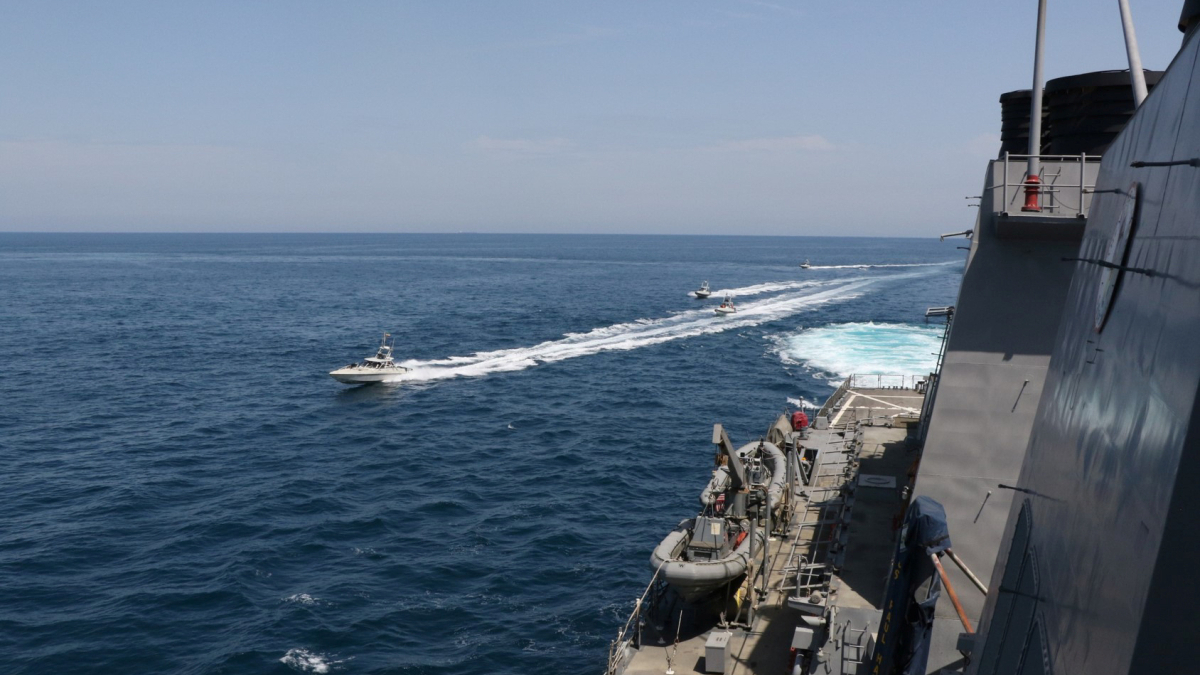
The U.S. military has warned it will "not tolerate unsafe" actions by Iran’s Islamic Revolutionary Guard Corps (IRGC) as Tehran announced it will conduct live-fire naval exercises next week in the Strait of Hormuz, one of the world’s most critical shipping routes.
In a statement on Friday, U.S. Central Command (CENTCOM) said it expects the IRGC to carry out the drills in a safe and professional manner and to avoid actions that could endanger international maritime traffic.
"CENTCOM will ensure the safety of U.S. personnel, ships, and aircraft operating in the Middle East," the command said.
CENTCOM stressed that the United States will not tolerate what it described as unsafe IRGC behaviour, including overflights of U.S. military vessels engaged in flight operations, low-altitude or armed overflights of U.S. military assets when intentions are unclear, high-speed boat approaches on collision courses with U.S. ships, or weapons being trained at U.S. forces.
The warning follows Iran’s announcement that the IRGC will hold live-fire naval exercises in the Strait of Hormuz, a narrow waterway linking the Persian Gulf to the Gulf of Oman through which a significant share of global oil and gas shipments pass.
Tensions between Washington and Tehran have escalated in recent weeks, with sharp rhetoric from both sides and increased military signalling in the region.
Donald Trump has recently said that a "massive armada" of American ships was moving toward Iran and warned that he would send even larger forces if necessary, while urging Tehran to "come to the table" for negotiations.
U.S. officials say the military build-up is intended to deter any threats to U.S. forces and allies, as well as to protect freedom of navigation in international waters.
Iran has repeatedly said its military activities in the region are defensive and has accused Washington of destabilising the Middle East through its military presence.
The Strait of Hormuz has long been a flashpoint in U.S.-Iran tensions, with past incidents involving tanker seizures, drone shootdowns and close encounters between naval vessels.
CENTCOM said it will continue to monitor Iranian activities closely and will take action if U.S. forces or international shipping are placed at risk.

The 32 countries belonging to the Internatioanl Energy Agency agreed to release 400 million barrels of oil on Wednesday (11 March), in efforts aimed at bringing down the price of crude oil, which has soared since fighting between Iran, Israel and the U.S. started at the end of February.
Iran should continue ‘blocking the Strait of Hormuz’, Iran's new Supreme Leader Mojtaba Khamenei, said in his first speech since being elected on Thursday. His words were read out by a broadcaster on state Iranian television. Khamenei has still yet to be seen in public since his election.
A towering lava fountain from Kilauea shot about 400 metres into the air late on Tuesday (11 March) on Hawaii Island, prompting temporary closures at Hawaii Volcanoes National Park and part of a key highway as volcanic ash and debris fell over nearby areas.
More than 68,000 children in eastern Afghanistan have been displaced after clashes between Afghan and Pakistani forces intensified along the border, according to a new report by Save the Children.
Norwegian police apprehended three brothers suspected of carrying out Sunday's (8 March) bombing at the U.S. embassy in Oslo, in an attack investigators have branded an act of terrorism.
International security and climate change are top of the agenda as leaders and policymakers from around the world meet at the 13th Global Baku Forum in the Azerbaijani capital this week.
Fifteen Turkish-owned vessels remain stranded in the blockaded Strait of Hormuz, Türkiye’s Transport and Infrastructure Minister Abdulkadir Uraloğlu said on Wednesday.
New Iranian Supreme Leader Mojtaba Khamenei has said Iran should continue ‘blocking the Strait of Hormuz’ in his first statement since his election, read out on Iranian State television on Thursday (12 March).
Iran’s President Masoud Pezeshkian has set recognition of Tehran’s inalienable rights, payment of war compensation, and international guarantees against any future invasion as conditions for ending the U.S.–Israel war with the Islamic Republic.
Iran should continue ‘blocking the Strait of Hormuz’, Iran's new Supreme Leader Mojtaba Khamenei, said in his first speech since being elected on Thursday. His words were read out by a broadcaster on state Iranian television. Khamenei has still yet to be seen in public since his election.
You can download the AnewZ application from Play Store and the App Store.
What is your opinion on this topic?
Leave the first comment