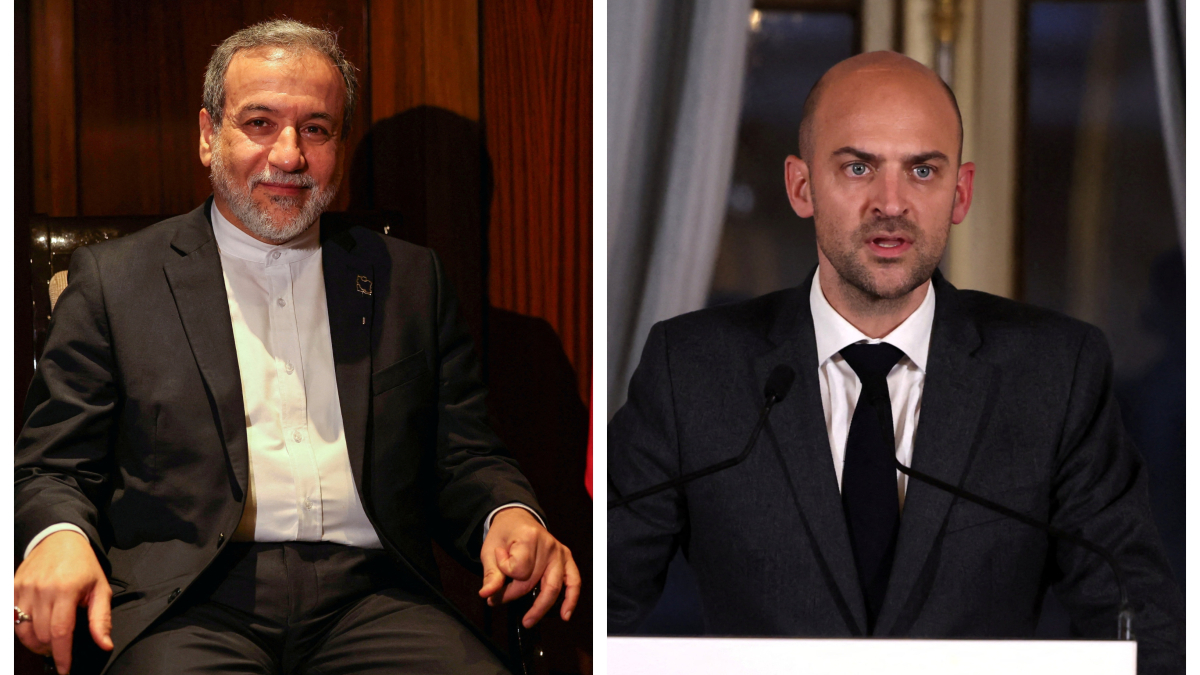
Iran’s Foreign Minister Abbas Araghchi visited Paris on Wednesday in a rare visit by an Iranian top diplomat in recent years.
The exchange of Iranian and French prisoners as well as Tehran’s civilian nuclear program topped the agenda of discussions.
Araghchi arrived in Paris from The Hague upon an official invitation of his French counterpart Jean-Noel Barrot after participating at the annual conference of Organization for the Prohibition of Chemical Weapons (OPCW) on Tuesday.
According to a Foreign Ministry statement issued in Tehran on Thursday, they reviewed developments in West Asia, Russia-Ukraine war, international security, as well as the nuclear program of Iran.
“During the meeting, Iran-France bilateral relations were reviewed, and the two sides emphasised the importance of continuing consultations to remove obstacles and facilitate relations,” read the statement.
Araghchi and Barrot last met in September on the sidelines of UN General Assembly in New York discussing release and extradition of one Iranian and two French citizens jailed in France and Iran.
In Paris meeting, “Araghchi referred to the arrest of Iranian citizen Mahdieh Esfandiari and welcomed a French court's decision to release her on parole calling for acceleration of the process of her acquittal and release,” the Iranian Foreign Ministry said.
Araghchi also told FRANCE 24 TV channel that Iran is ready for the exchange of French prisoners Cécile Kohler and Jacques Paris jailed on spying charges with the Iranian citizen which he expected to take place "over the next one or two months".
In New York, Araghchi and Barrot also held a joint meeting with their British and German counterparts as well as EU foreign policy chief discussing the move by the European troika to refer its dispute on Iran’s nuclear program to the UN Security Council.
Earlier in August, France together with Germany and the UK -- known as E3 -- called for reinstalment of UN nuclear sanctions on Iran before Resolution 2231 expired in September.
Last October, Secretary of Supreme National Security Council Ali Larijani said the French foreign minister promised in New York that if Iran and IAEA signed an agreement on inspections, the E3 would withdraw its call for return of sanctions.
However, Iran’s top security official added, the European troika failed to keep its promise after Iran and UN nuclear watchdog reached such a deal in Cairo, Egypt in September.
Araghchi’s visit to France came one week after E3 proposed a joint resolution with United States at the Board of Governors of International Atomic Energy Agency (IAEA) in Vienna calling for Tehran’s cooperation with the UN nuclear watchdog.
“Araghchi criticised performance of the European troika at the UN Security Council and IAEA board meeting, calling for a responsible and independent approach based on international law, in accordance with the Non-Proliferation Treaty,” Iran’s Foreign Ministry announced about his meeting in Paris.
The visit also coincided with unconfirmed reports suggesting that Iranian President Masoud Pezeshkian in his letter to Saudi crown prince Mohammed bin Salman has agreed with mediation of Riyadh in the nuclear dispute between Tehran and Washington.
Iran is "ready to negotiate" with the US on its nuclear programme, but Americans are "not really keen for negotiations,” Araghchi said in the exclusive interview with France 24.
“There are no negotiations now, but channels of dialogue have been established between us. Various intermediaries are transmitting messages, but now we have no decision to negotiate. Why? Because there is no will on the US side for a real and fair negotiations,” he stressed.
“We are ready to negotiate; we have always been ready.”











What is your opinion on this topic?
Leave the first comment