View: How Azerbaijan can leverage its role to boost cooperation in Central Asia
Azerbaijan has long understood the importance of fostering strong relations with its Central Asian neighbours as the country is strategically located ...
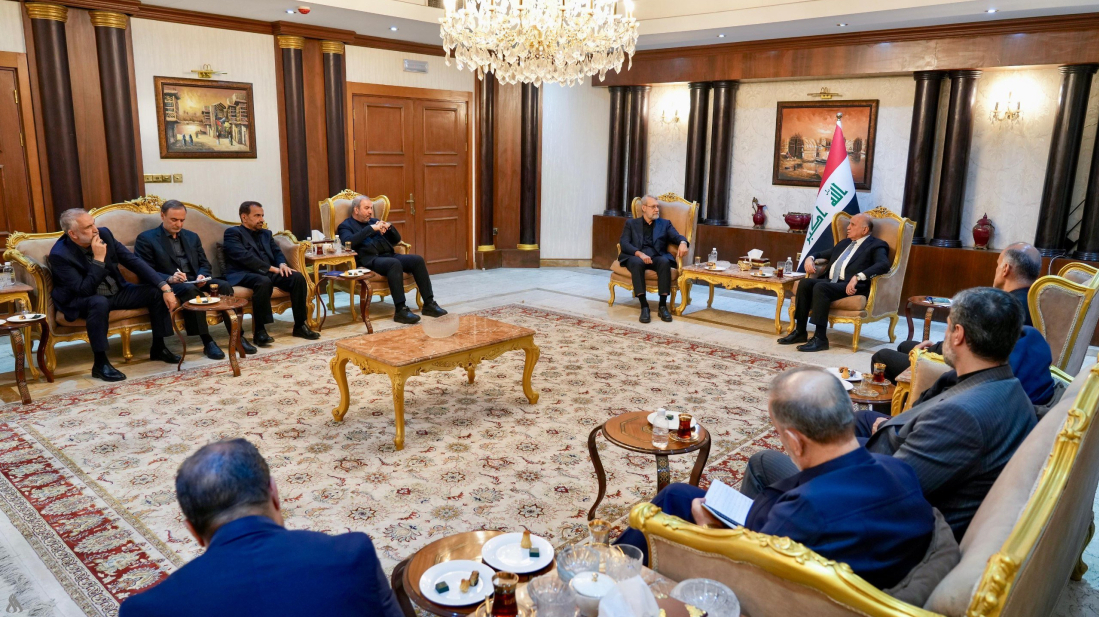
Iraqi Foreign Minister Fuad Hussein has proposed a "6+2" format meeting bringing together Iran, Iraq, and the six Gulf Cooperation Council (GCC) member states to address regional developments on the side lines of the United Nations General Assembly.
The proposal to hold a meeting in the (6+2) format was put forward during Hussein’s meeting with Ali Larijani, Secretary of Iran’s Supreme National Security Council, on Monday.
According to a statement from the Iraqi Ministry of Foreign Affairs, the two parties emphasized the importance of establishing joint regional security mechanisms and discussed the UN Secretary-General’s initiative on regional security.
Iranian and Iraqi senior officials discussed regional and security developments, including the situation in Gaza, highlighting "the threat posed by the Zionist entity’s occupation of the Strip and its efforts to forcibly displace residents to Egyptian territory."
They also addressed ongoing developments in Syria and their implications for regional stability.
In addition, the two sides discussed bilateral relations, including the Shalamcheh-Basra railway project and the challenges hindering its completion—such as mine removal and other logistical obstacles. It was agreed that relevant authorities from both countries would follow-up to find practical solutions.
The statement also noted that the idea of extending a strategic railway line from Iran’s Khosravi area to Khanaqin and Baghdad was discussed. Both parties emphasized the importance of initiating studies on the project, highlighting its potential to strengthen economic ties, boost religious tourism, and possibly connect to the Development Road project in the future.
During Ali Larijani’s visit to Baghdad, Iran and Iraq signed a security agreement, which he described as a model for regional security cooperation—one that could potentially be expanded to include other countries in the region.
The Iran's top security official stressed that the deal aims to safeguard mutual security by fostering closer coordination between Iran and Iraq.
Ali Larijani will continue his first regional trip by visiting Lebanon.

Russia’s human rights commissioner, Tatyana Moskalkova, has said that Ukraine has not provided Moscow with a list of thousands of children it alleges were taken illegally to Russia, despite the issue being discussed during talks in Istanbul.
Syrian President Ahmad al-Sharaa has offered condolences to President Donald Trump following an ISIS attack near the ancient city of Palmyra that killed two U.S. soldiers and a civilian interpreter, Syrian and U.S. officials said Sunday.
At least 17 people, including students, were killed and 20 others injured after a school bus fell off a cliff in northern Colombia on Sunday, authorities said.
At least 37 people have been killed in flash floods triggered by torrential rain in Morocco's Atlantic coastal province of Safi, Moroccan authorities said on Monday (15 December).
At least 37 people have died and dozens of others were injured after flash floods swept through Morocco’s Atlantic coastal city of Safi on Sunday, authorities said.
Azerbaijan has long understood the importance of fostering strong relations with its Central Asian neighbours as the country is strategically located at the crossroads of Eastern Europe and Central Asia.
The European Union’s interest in investing in regional connectivity projects in the South Caucasus, such as the Trump Route for International Peace and Prosperity (TRIPP) is driven by a need for strategic credibility and a tangible foreign policy success, according to a regional expert.
Shadow Trade is an investigative documentary by AnewZ that examines how global sanctions imposed after Russia’s 2022 war in Ukraine have been weakened through informal trade routes, permissive transit regimes, and overlooked commercial practices.
Kazakhstan and Uzbekistan have signed a new agreement on the transportation of natural gas through Uzbek territory, strengthening bilateral energy cooperation and supporting regional energy security ahead of the winter season.
Kazakhstan is assessing the scale of damage and potential losses following a recent attack on infrastructure operated by the Caspian Pipeline Consortium, a key export route for the country’s oil.
You can download the AnewZ application from Play Store and the App Store.
What is your opinion on this topic?
Leave the first comment