Kazakhstan and The European Bank for Reconstruction and Development (EBRD) will continue to work together to support transport infrastructure, green energy, small and medium-sized businesses, agriculture, and information technology in the country.
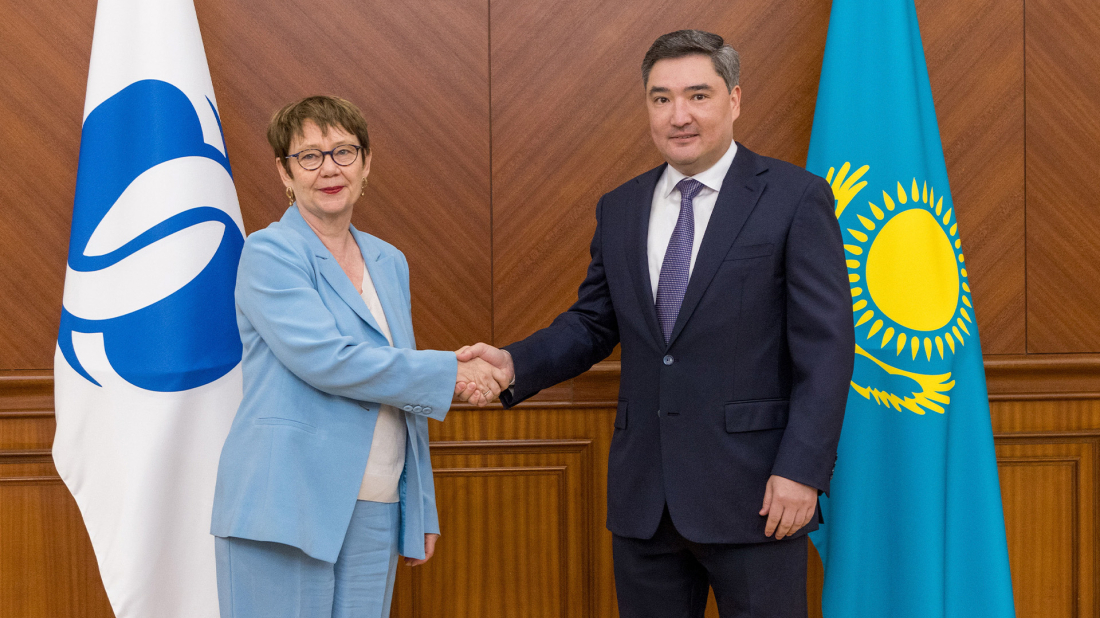
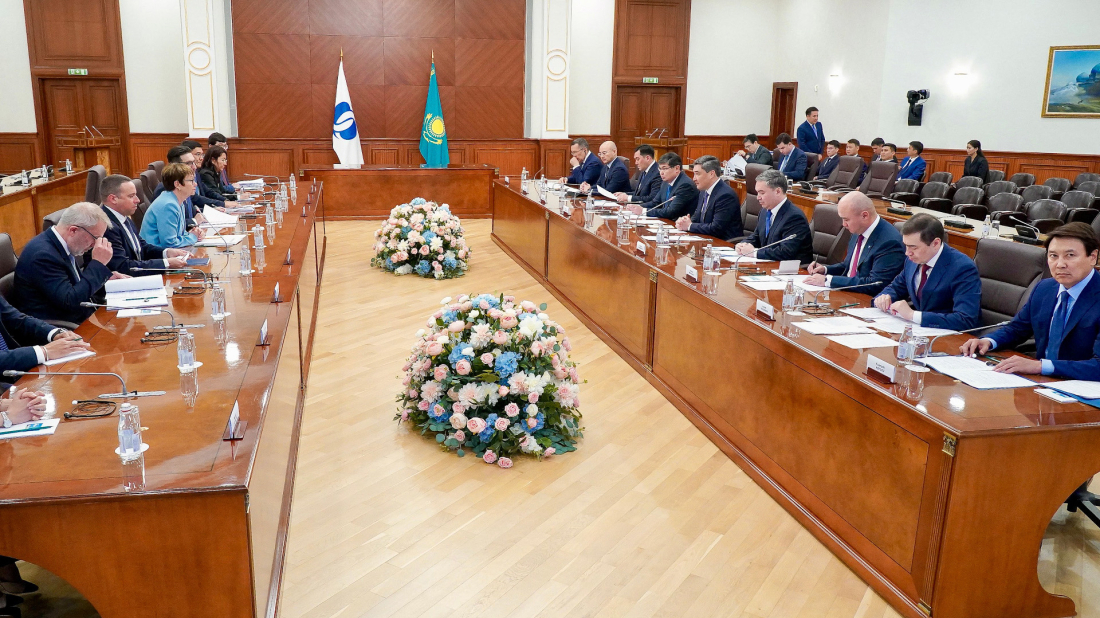
Kazakhstan’s Prime Minister Olzhas Bektenov and EBRD President Odile Renaud-Basso discussed cooperation in these sectors on Monday (23 June) ahead of the 37th plenary session of the Foreign Investors Council.
Odile Renaud-Basso highlighted the record increase in the EBRD investments in Kazakhstan last year, emphasizing the EBRD's strong interest in further deepening cooperation and jointly implementing projects focused on building a sustainable economy. She affirmed that the EBRD will continue to support the execution of initiatives under the National Infrastructure Plan through 2029.
“We highly value the strategic nature of our cooperation with the European Bank for Reconstruction and Development. Just last year, we signed 25 new projects with the Bank, totaling a record $935 million across key priority sectors. The Government of Kazakhstan is ready to further deepen its partnership with the Bank across a wide range of mutually beneficial areas,” Olzhas Bektenov stated at the meeting with EBRD President held ahead of the 37th plenary session of the Foreign Investors Council in Astana, Kazakhstan.
In 2024, the Bank expressed support to 25 projects, including the EBRD’s largest municipal project in Central Asia - construction of new wastewater treatment plant and related infrastructure in Aktobe, as well as the country’s first major public-private partnership (PPP) project for building a 630-bed multidisciplinary hospital in Kokshetau. The focus was also placed on supporting small and medium-sized businesses through consulting services and providing credit lines via domestic financial institutions.
The current portfolio includes 129 active projects valued at more than $3.2 billion, with 75% concentrated in the sustainable infrastructure sector. Since the beginning of their partnership, a total of 340 projects worth $11.6 billion have been implemented.
During the meeting, the sides highlighted the joint development of Kazakhstan’s Just Energy Transition Partnership (JETP) platform that would serve as a vital tool for attracting green investments to the country’s energy sector.
A project to build a substation in Astana which was considered with the purpose to enhance power supply reliability and meet the capital’s increasing electricity demand.












What is your opinion on this topic?
Leave the first comment