The leaders of the Gulf Cooperation Council and Central Asian countries will come together on May 5 in Samarkand, Uzbekistan, marking a major milestone in relations between the two sides.
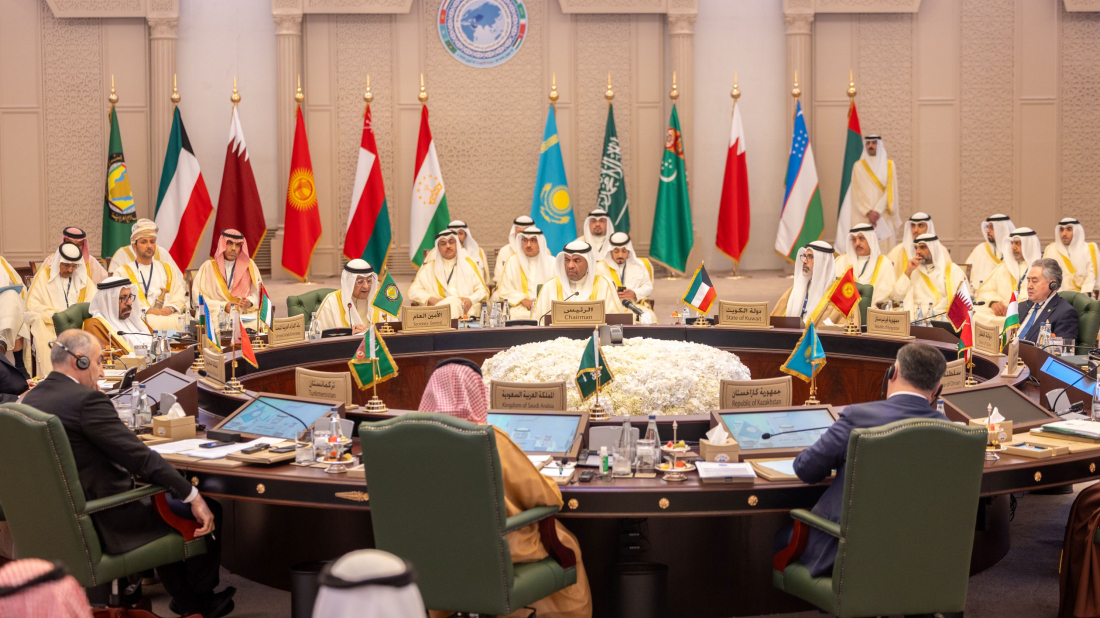
Preparations to the summit was discussed at the third ministerial meeting of the Strategic Dialogue between the GCC and Central Asian countries, held on Wednesday (April 16, 2025) in Kuwait City.
The meeting was co-chaired by Abdullah Ali Al Yahya, Minister of Foreign Affairs of the State of Kuwait and Bakhtiyor Saidov, Minister of Foreign Affairs of the Republic of Uzbekistan.
Foreign Affairs Ministers from the United Arab Emirates, Bahrain, Saudi Arabia, Oman, Qatar, Kuwait from GCC and Central Asia countries, including Uzbekistan, Kazakhstan, Kyrgyzstan, Tajikistan and Turkmenistan attended the third meeting.
"Since the inaugural summit between the leaders of the Gulf Cooperation Council and the Central Asian countries, held in July 2023 in Jeddah, we have observed tangible progress that underscores the commitment of both sides to translating the summit’s outcomes into concrete actions," - said Jasem Mohamed Albudaiwi, Secretary General of the GCC.
He emphasized that this meeting served to strengthen the partnership between the two sides, noting that relations have seen significant progress across various fields in recent years.
These efforts are being carried out in alignment with the Joint Action Plan for the period 2023–2027, which encompasses key areas such as political and security dialogue, economy, trade and investment, education, health, culture and media, as well as youth and sports.
The volume of trade in goods between GCC and Central Asian countries has reached approximately USD 10 billion, while investment flows have been significant, as well. Both sides expressed hope that both trade and investment will continue to grow sustainably in the coming years.
"The aim is to strengthen economic partnerships and explore investment opportunities between the two sides. We look forward to hosting the second Investment Forum in Kyrgyzstan on June 30, 2025, and participating in a session focused on the prospects for relations between both sides at the Astana International Forum in Kazakhstan on May 29, 2025," - Secretary General stated.
The Secretary General also commended the positions of the Central Asian countries on issues in the Middle East, noting that these positions have earned deep appreciation and respect from the GCC. He emphasized that these positions have been characterized by balance and genuine support, reflecting a profound understanding of the importance of solidarity in finding effective solutions to regional and international crises.
In this context, he further stated: 'On numerous occasions, the Central Asian countries have expressed their support for Arab issues, foremost among them the Palestinian cause, and have endorsed United Nations resolutions aimed at ending the occupation and achieving a just and lasting peace, in accordance with the resolutions of international legitimacy.'"
He welcomed the tripartite agreement between the Republic of Tajikistan, the Kyrgyz Republic and the Republic of Uzbekistan regarding the demarcation of the trilateral international border, and the signing of the Khujand Declaration on eternal friendship between the three countries.
He also welcomed the peace agreement reached between Azerbaijan and Armenia, reaffirming the Gulf Cooperation Council’s full support for all efforts aimed at resolving disputes through peaceful means and promoting platforms for constructive dialogue.
This position reflects the GCC’s conviction that security, stability, and regional cooperation constitute fundamental pillars for building a more peaceful, prosperous, and sustainable world.












What is your opinion on this topic?
Leave the first comment