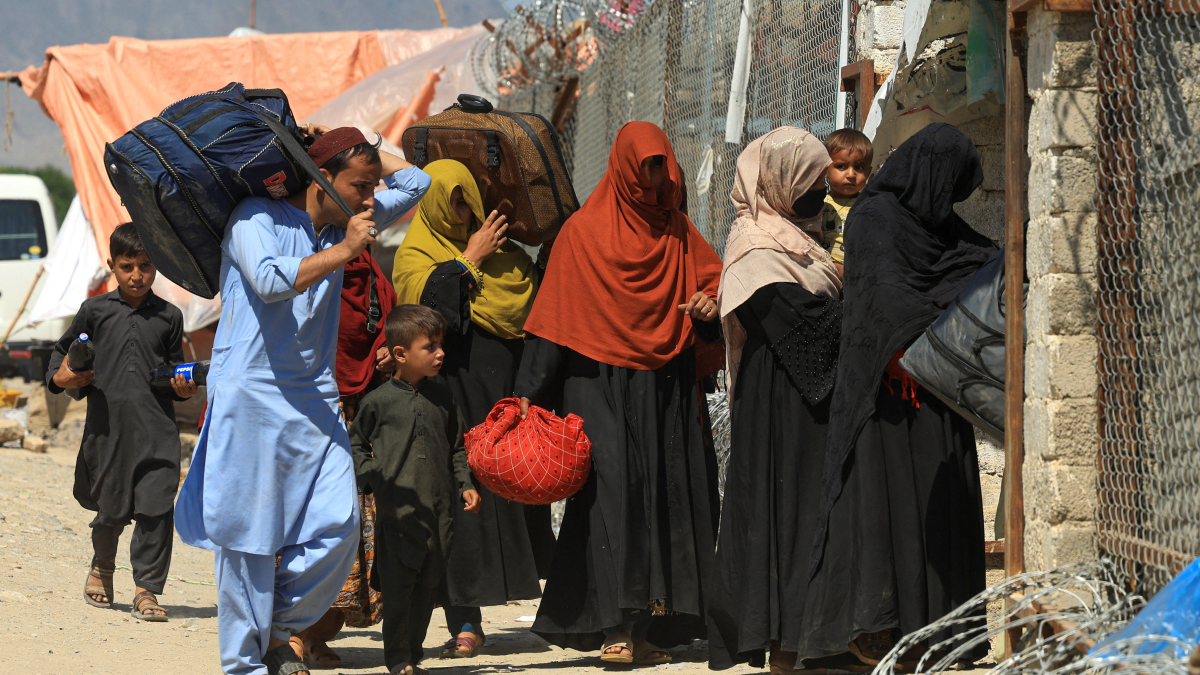
Afghan refugees in Pakistan are delaying or avoiding medical treatment because they fear arrest under the country's deportation policy, leading to preventable illnesses including child malnutrition and pregnancy complications, according to Médecins Sans Frontières (MSF).
Fear keeps refugees from hospitals
Afghan refugees in Pakistan are delaying or avoiding medical treatment because they fear police checks, arrest and deportation, according to Médecins Sans Frontières (MSF), which warned the policy is contributing to preventable illnesses.
The medical charity urged Pakistan to stop forcibly returning Afghan refugees under its Illegal Foreigners Repatriation Plan (IFRP) and introduce formal exemptions for people with international protection needs.
MSF said refugees told its teams they were avoiding hospitals and clinics because they feared police checks and arrest.
Summarising the impact on families, MSF shared the account of an Afghan refugee whose wife lost her baby after he was detained.
“I finally decided I had to go to the hospital, but I was terrified that they would arrest me again,” Najib, an Afghan refugee, said. “I rushed her to the doctor, but we were too late. My wife had already had a miscarriage.”
According to MSF, mobile clinics it operated in Quetta, Balochistan, in early 2026 found that one-third of children screened met the criteria for global acute malnutrition. Nearly 90 per cent of malnourished patients were Afghan refugees, most of them women and children.
Pakistan's deportation policy
Pakistan began implementing the IFRP in November 2023, initially targeting undocumented Afghan nationals before expanding it to include holders of Afghan Citizen Cards (ACC) and Proof of Registration (PoR) cards. On 10 July 2026, authorities ordered the immediate arrest and accelerated deportation of Afghan nationals without valid visas.
According to the UN High Commissioner for Refugees (UNHCR), more than 2.5 million Afghans have returned from Pakistan under the policy, many of them involuntarily. The UN has also identified more than 70,000 Afghan refugees as being at imminent risk if returned.
Highlighting the wider humanitarian impact, Marko den Hartogh, MSF's Head of Mission in Pakistan, said, “Pakistan has hosted Afghan refugees for more than 45 years despite limited international support. Yet Afghan refugees live under constant fear of arrest, detention, eviction, loss of livelihood, and deportation. This makes it unlikely that many of the returns to Afghanistan are truly voluntary.”
MSF also urged all countries hosting Afghan refugees to halt involuntary returns, warning that Afghanistan's already overstretched healthcare system is struggling to cope with the arrival of roughly six million returnees from Pakistan and Iran since 2023.
















What is your opinion on this topic?
Leave the first comment