U.S. and Iran exchange threats - Tuesday, 10 March
Tensions in the region remained high on Tuesday (10 March), as the United States and Iran exchanged increasingly sharp warnings, including thr...
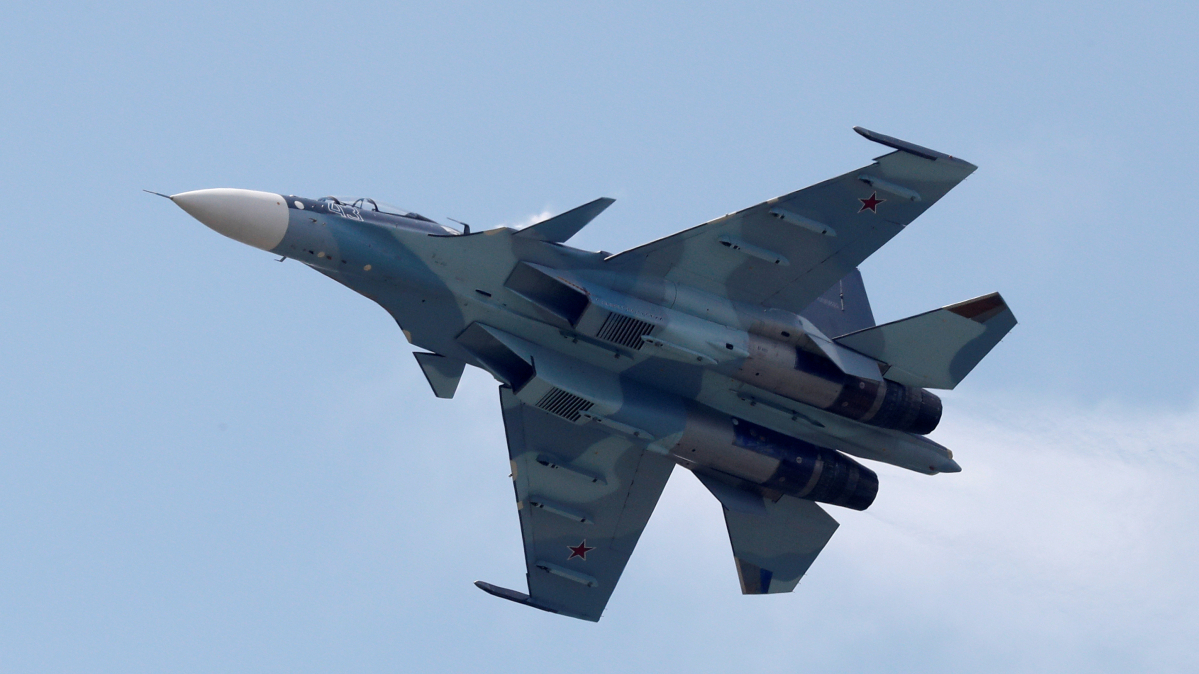
A Su-30SM fighter jet crashed during a scheduled training flight in Kazakhstan’s Karaganda region on 25 February, with both pilots ejecting safely, the defence ministry said.
Authorities said in a statement, the crew “ejected promptly” and that the pilots “are alive and well, and are under medical observation.”
It reported that the crash site had been sealed off and that “there is no threat to the public or infrastructure.”
Officials said that a special commission of the Ministry of Defence has been formed to investigate the incident, headed by the chief of the Flight Safety Department, including aviation service specialists.
The jet went down about 10 kilometres from Sary-Arka Airport in the Bukhar-Zhyrau district.
According to the statement, “a legal assessment will be made and a procedural decision will be taken” once the investigation is completed.
The Su-30SM is a twin-engine, two-seat multirole fighter aircraft developed by the Sukhoi Design Bureau and manufactured in Russia.
It is an advanced variant of the Su-30 family and is used for a wide range of missions, including air-to-air combat, ground attack and reconnaissance, and can carry a mix of guided missiles, bombs and a 30 mm cannon.
The aircraft is highly manoeuvrable thanks to thrust-vectoring engines and modern avionics, and is operated by the air forces of Russia, Kazakhstan, Belarus and others.
A comparable event recorded on 16 April 2021, when another Su-30SM went down during its landing approach at the Balkhash aviation centre.
The pilots survived that incident too, and investigators pointed to a probable bird strike as the cause.
Another case was recorded in 2020, when a Su-30M2 was struck by a Su-35S during air combat training, forcing its crew to eject.
Later in 2022, another Su-30SM crashed into a residential building in Irkutsk during a test flight, killing both pilots.
A further incident took place in 2023, when a Su-30 crashed during a training flight in the Kaliningrad region, Russia, killing two airmen.

Tensions in the region remained high on Tuesday (10 March), as the United States and Iran exchanged increasingly sharp warnings, including threats over the strategic Strait of Hormuz, a critical artery for global oil supplies.
Global oil prices surpassed $119 a barrel on Monday (9 March, 2026), an almost four year high, as the Middle East conflict rumbled on.
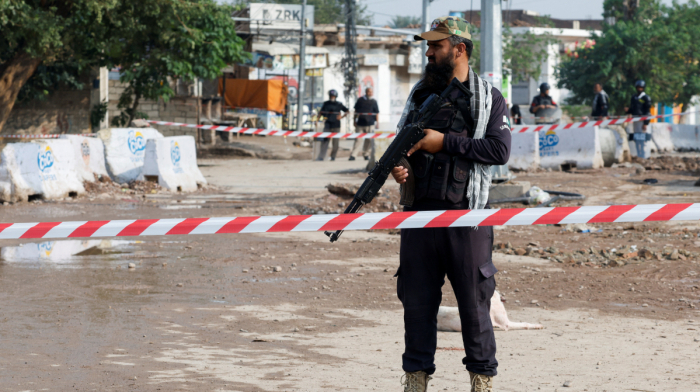
China has urged Afghanistan and Pakistan to resolve their dispute through dialogue after Chinese envoy Yue Xiaoyong met Afghan Foreign Minister Amir Khan Muttaqi, as fighting between the two neighbours entered its eleventh day.
Entry and exit across the state border between Azerbaijan and Iran for all types of cargo vehicles, including those in transit, will resume on 9 March, according to a statement by the Cabinet of Ministers of Azerbaijan.
Iran named Mojtaba Khamenei to succeed his father Ali Khamenei as supreme leader on Monday (9 March), signaling that hardliners remain firmly in charge, as the week-old U.S.-Israeli war with Iran pushed oil above $100 a barrel.
Iran and the U.S. exchanged threats on Tuesday, as U.S. Defense Secretary Pete Hegseth warned Tehran to expect the “most intense day" of attacks so far. Meanwhile, Iranian President Masoud Pezeshkian said “anyone who entertains the illusion of destroying Iran knows nothing of history."
The Strait of Hormuz has become a focal point of global concern as tensions rise following the conflict involving Iran, the United States and Israel. Tehran has threatened to block the strategic waterway, raising fears of disruption to global oil shipments and energy markets.
Reports of so-called “acid clouds” moving from Iran towards Central Asia are not supported by scientific data, national hydrometeorological services in Kazakhstan, Uzbekistan and Kyrgyzstan say, adding there is no threat to the region.
A senior delegation from the OSCE Parliamentary Assembly has been holding meetings with Georgian government officials, opposition leaders and security authorities this week, as international observers attempt to gauge the country’s political climate following last year’s contentious elections.
Turkish President Recep Tayyip Erdoğan has told Masoud Pezeshkian, his Iranian counterpart, that violations of Turkish airspace by Iran could not be justified “for any reason whatsoever.”
You can download the AnewZ application from Play Store and the App Store.
What is your opinion on this topic?
Leave the first comment