The AnewZ Opinion section provides a platform for independent voices to share expert perspectives on global and regional issues. The views expressed are solely those of the authors and do not represent the official position of AnewZ
As tensions between Iran and the U.S. persist, authorities in Tehran are facing another problem—this time at home.
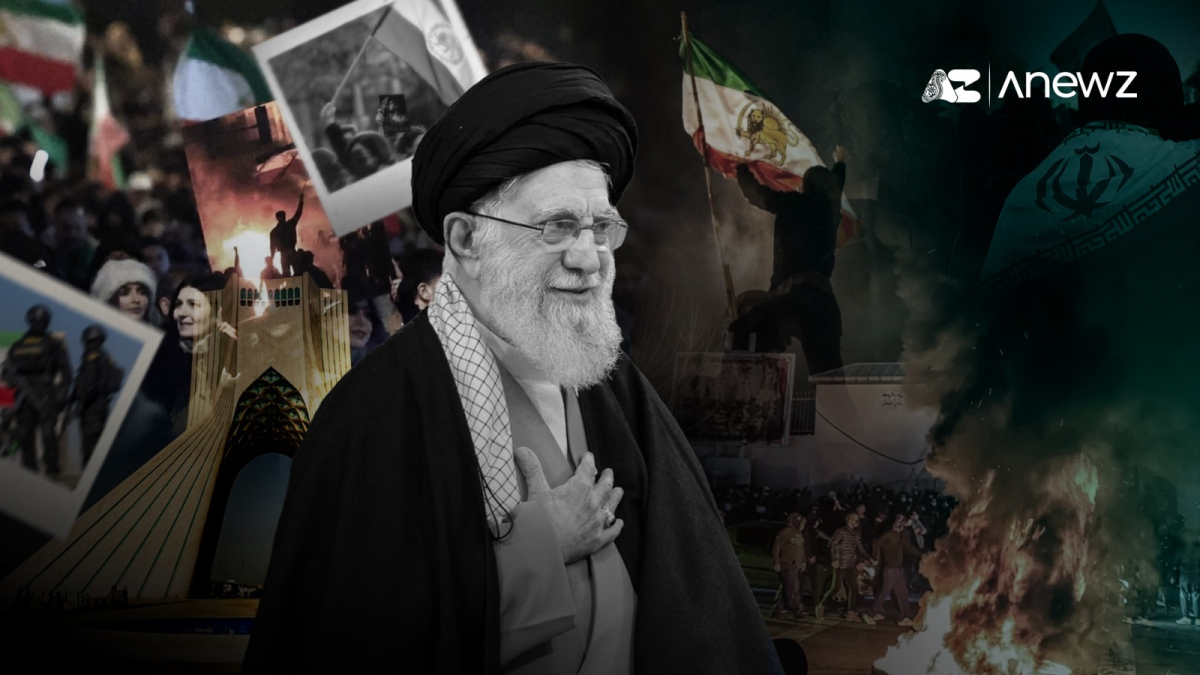
Iranians, dissatisfied with the economic situation, took to the streets to express their discontent, further complicating policymakers' predicament. The protests have already killed at least 2,571 people, according to reports, with demonstrations taking place all over the country.
But it would be inaccurate to label the ongoing protests as a repeat of earlier unrests. While current demonstrations are reminiscent of previous movements, this wave was sparked by economic woes that rapidly escalated into a broader political crisis, posing challenges for Iranian authorities at both the domestic and international levels.
Al Jazeera reports that on Monday, the Iranian rial traded at around 1.4 million to $1, marking a steep decline from around 700,000 in January 2025 and around 900,000 in mid-2025. Food prices are an average of 72 percent higher than last year. Annual inflation is currently around 40 percent.
Despite the country's significant potential, Iran’s economy has long underperformed. However, the government's response to the protests is one of the elements that makes these demonstrations distinctive. Authorities have partly accepted the grievances and made limited adjustments by appointing a new Central Bank governor. Iran’s President Masoud Pezeshkian went as far as calling on his government to listen to the “legitimate concerns” of protesters.
But it is not all about appeasing protesters. The government implemented internet restrictions, which may have prevented the centralisation of the protests. Authorities have also utilised this approach during the protests in the aftermath of the death of Mahsa Amini in 2022, and the Bloody November protests in 2019 and 2020. Reports from international media suggest that the government also shut down Starlink, a claim that Iranian authorities neither confirmed nor denied.
Internet restrictions are not the only similarity to previous protests, of course. In recent years, protests in Iran have one common characteristic: perceived distance between decision-making hierarchies and protesters. For protesters, internal matters are more important than geopolitical considerations, which policymakers often prioritise.
This brings us to another element that differentiates ongoing protests. Current demonstrations take place against the backdrop of several significant geopolitical developments that affect authorities' response options in Iran.
First, a short conflict between Iran, Israel, and its main ally, the U.S., in June 2025. Second, current protests take place as U.S. President Donald Trump voiced support for protesters, while considering potential responses, including a possible military option if Iranian authorities use force against protesters. And finally, the aftermath of American operation in Venezuela and the introduction of a new National Security Strategy by the U.S. in December 2025, which signalled the return of power politics as a main tool of securing national interests.
This geopolitical framing adds a layer of complexity for Iranian authorities, limiting their strategic choices. External actors play a more tangible role in the protests, rather than merely observing. Unlike previous protests, the impact of other nation-states is more palpable. It is unclear how long Iran can continue its strategy of tactical concessions and containing the growth of protests. But changing this equilibrium even slightly can have strategic consequences.
With President Trump’s statements, authorities in Iran are now facing a strategic dilemma. External actors may interpret appeasing protesters as a sign of weakness. Simultaneously, utilising coercive tactics also entails the risk of external backlash, given Donald Trump's warning.
The risk of the latter is amplified by the success of Trump’s operation in Venezuela, a move marking a return to power politics by the United States. After the U.S. unveiled its new National Security Strategy, American foreign policy shifted from containment toward the projection of its power and influence.
The U.S. has already introduced a 25% tariff on countries doing business with Iran. The introduction of the new levy will add to the economic challenges that Iranian authorities must address. Eventually, the cost of new tariffs will be passed on to consumers in Iran, raising prices and further increasing inflation.
In many ways, the challenges that the Iranian government faces are intertwined, with one affecting the other. The protests have so far remained fragmented, preventing them from evolving into a coordinated national movement and giving authorities in Iran opportunities to manage unrest.
However, the situation may deteriorate rapidly, driven by both domestic and international factors. For now, Iran’s political leadership has the opportunity to prevent the crisis from deteriorating. Economic transformations take time to mature, but decision-makers in Tehran need to turn things around quickly. Otherwise, geopolitical factors may further exacerbate domestic issues.










What is your opinion on this topic?
Leave the first comment