live Trump says Iran wants to meet with U.S., U.S. military launches fresh strikes
U.S. President Donald Trump announced the reimposition of a U.S. naval blockade on all Iranian ports and warned that power plants and bridges could be...
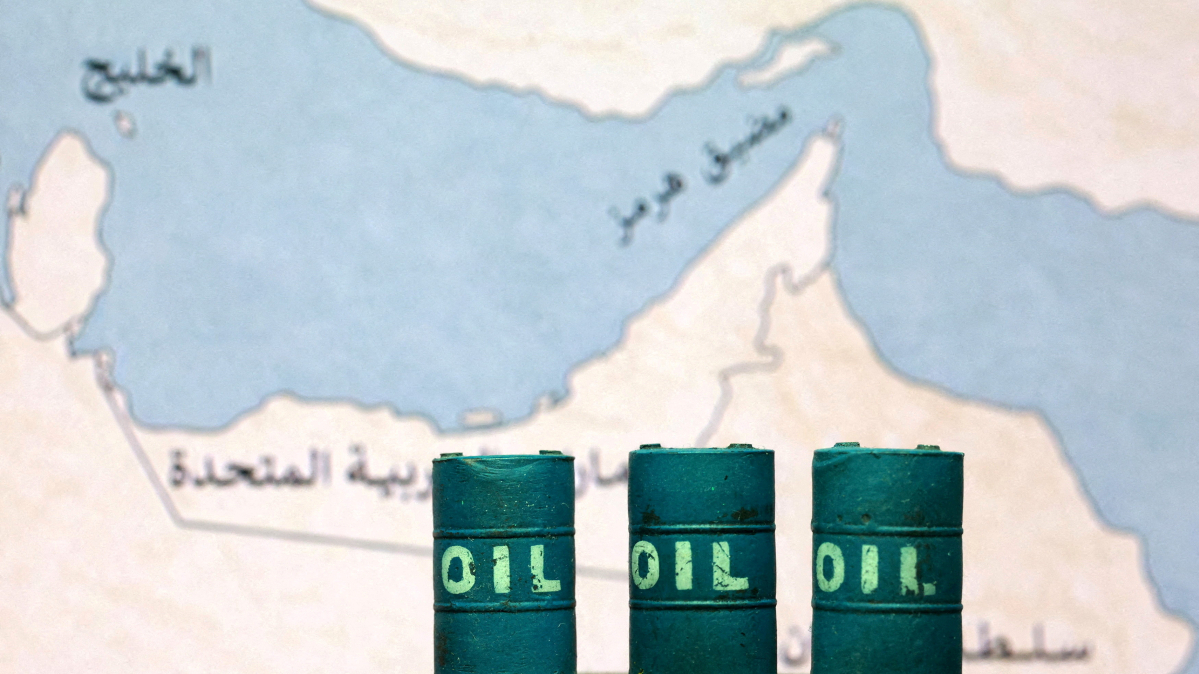
A second U.S.-sanctioned supertanker has entered the Gulf via the Strait of Hormuz, shipping data showed, despite a U.S. blockade on vessels visiting Iranian ports.
U.S. President Donald Trump announced the blockade on Sunday after weekend peace talks in Islamabad between the U.S. and Iran failed to reach a deal.
The U.S. Central Command said on X that 10 vessels have been turned around and no ships have broken through since the start of the blockade on Monday.
Still, Iran's Fars News Agency said on Wednesday that an Iranian supertanker subject to U.S. sanctions crossed the strait towards Iran's Imam Khomeini port despite the blockade. Fars did not identify the tanker or give further details of its voyage.
The empty Very Large Crude Carrier (VLCC) RHN entered the Gulf on Wednesday, data from LSEG and Kpler showed. It was not immediately clear where the VLCC, which is capable of carrying 2 million barrels of oil, is heading.
The tanker's entry into the Gulf comes a day after U.S.-sanctioned VLCC Alicia passed through the Strait of Hormuz. The Alicia is heading to Iraq, Kpler data showed.
Both tankers have records of carrying Iranian oil in the past few years, according to Kpler data.
Vessels that have been forced to turn back include the U.S.-sanctioned tanker Rich Starry, which returned to the Gulf on Wednesday, a day after exiting.
The U.S. has warned it could add secondary sanctions on buyers of Iranian oil in an apparent effort to gain leverage ahead of more negotiations, just weeks after Washington loosened the enforcement of some Iran energy sanctions.
Iran could consider allowing ships to sail freely through the Omani side of the Strait of Hormuz without risk of attack as part of proposals it has offered in negotiations with the U.S., providing a deal is clinched to prevent renewed conflict, a source briefed by Tehran said.
The U.S. blockade is expected to reduce Iran's crude exports, although the OPEC producer could sustain its current production at 3.5 million barrels per day (bpd) for weeks by storing oil in onshore tanks, analysts say.
Iran exported 1.84 million bpd of crude in March and has shipped 1.71 million bpd thus far in April, compared with an average of 1.68 million bpd in 2025, according to Kpler data.

The United States carried out a third consecutive night of airstrikes against Iran, targeting military capabilities around the Strait of Hormuz as Donald Trump announced the reinstatement of a blockade on Iranian shipping and proposed a 20% fee on cargo passing through the strategic waterway.
U.S. President Donald Trump announced the reimposition of a U.S. naval blockade on all Iranian ports and warned that power plants and bridges could be targeted next week unless Tehran returns to negotiations.
The United States and Iran have significantly escalated their conflict, exchanging heavy missile and drone strikes across the Gulf region. Iran claims it has once again closed the Strait of Hormuz, a vital global shipping route.
The death toll from the fire at a live music pub in Bangkok has climbed to 32 after two more victims died from their injuries, according to Thailand's Police Hospital.
Ukraine and Russia exchanged fresh attacks on Tuesday, with Kyiv targeting shipping and energy infrastructure inside Russia while Moscow launched another large-scale missile and drone assault on Ukrainian cities.
The U.S. has launched fresh strikes on Iran after Tehran targeted a container ship and said it had again closed the Strait of Hormuz. Iran also claimed to have expanded attacks on U.S. military facilities across the Gulf.
Iran's Supreme Leader, Mojtaba Khamenei, has promised to avenge the killing of his father, while U.S. President Donald Trump said Tehran and Washington had agreed to continue talks despite an escalation of hostilities this week.
Iran planned to assassinate U.S. President Donald Trump, according to intelligence shared with Washington by Israel, the Wall Street Journal has reported, citing people familiar with the matter.
The U.S. military said on Wednesday it launched fresh strikes on Iran to keep the Strait of Hormuz open to shipping, triggering Iranian attacks on Kuwait and Bahrain in the latest escalation to derail efforts to end the war.
U.S. President Donald Trump said on Wednesday that the memorandum of understanding signed with Iran to end the conflict was "over", adding he did not want to engage with Tehran, calling the Iranian leadership "sick people".
You can download the AnewZ application from Play Store and the App Store.
What is your opinion on this topic?
Leave the first comment