live Iran military: Expect much more 'devastating and widespread' retaliation if civilians are hit - Monday, 6 April
Iran's military vows more "devastation" over U.S. President Donald Trump's threat over the opening of the Strait of Hormuz,...
Oil prices fell sharply for a second day after Israel confirmed a U.S.-brokered ceasefire with Iran, easing fears that the conflict would disrupt global energy supplies.
Brent crude, the global benchmark, dropped by 5.4% to $67.65 per barrel on Tuesday, after tumbling 7% on Monday, returning to levels last seen before Israel launched strikes against Iranian nuclear and military sites on 13 June.
The market reacted to a post from U.S. President Donald Trump “It has been fully agreed by and between Israel and Iran that there will be a Complete and Total CEASEFIRE,” he announced.
Israel’s government later confirmed it had accepted the ceasefire proposal after achieving its military objectives.
The truce brought relief to global financial markets. London’s FTSE 100 rose 0.8%, Japan’s Nikkei gained 1.1%, and Hong Kong’s Hang Seng climbed 2.1%.
Meanwhile, an Iranian strike on Al Udeid airbase in Qatar Monday night was described by the US as “largely symbolic,” further calming fears of wider regional disruption.
The Strait of Hormuz, a critical shipping lane for global oil and gas, remained open despite Iran’s parliament voting to close it.
Analysts now expect market focus to shift back to fundamentals such as OPEC production plans and global demand trends. Senior Analyst Ipek Ozkardeskaya of Swissquote Bank said U.S. crude could fall below $65 a barrel if tensions do not escalate again.
However, she warned that any new flare-up in hostilities could trigger another short-lived spike in prices.
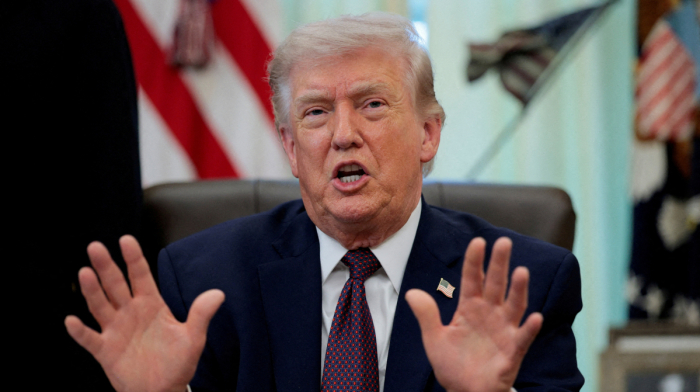
U.S. President Donald Trump threatened Iran's energy and transport infrastructure in a social media post containing expletives on Sunday (5 April), as he seperately gave Iran a deadline of Tuesday to reopen the Strait of Hormuz.
The crew of Artemis II mission are entering a pivotal phase of their journey, as they prepare to swing around the Moon and head back towards Earth. Now on the fifth day of their 10-day mission, the four astronauts are already witnessing views no human has ever seen.
The family of the late Virginia Giuffre have urged King Charles III to meet survivors of sexual abuse during his upcoming state visit to the United States.
Senegal has taken steps to curb government spending by banning non-essential foreign travel for ministers, as rising global oil prices place increasing pressure on the country’s finances.
A major gathering of Muslims in northern Paris will go ahead as planned after a French court overturned a government attempt to ban the event.
Major automakers showcased new electric vehicles at the New York Auto Show this week, under the slogan “electrification is the future." However, weakening demand in the United States and intense competition with China are raising questions for markets across the globe, including the South Caucasus.
The U.S. national average retail price of petrol rose above $4 a gallon for the first time in over three years on Monday (30 March), according to GasBuddy data, as the U.S.–Israeli war with Iran continued to roil global energy markets.
Japan and Indonesia will deepen coordination on energy security, Tokyo said, as the U.S.-Israeli war on Iran disrupts vital oil and gas flows to Asia.
China's three largest state-owned airlines have issued warnings regarding their financial outlook for the current year, acknowledging that the eruption of war involving Iran has driven jet fuel prices to unsustainable highs.
Stock markets across Asia fell on Monday as escalating conflict involving Iran drove oil prices sharply higher, fuelling fears of inflation and a potential global recession, with investors reacting to disruption risks in the Strait of Hormuz and prolonged hostilities.
You can download the AnewZ application from Play Store and the App Store.
What is your opinion on this topic?
Leave the first comment