China has carried out a major test of a new “super wireless” rail convoy, a technology that could reshape the future of heavy-haul transport.
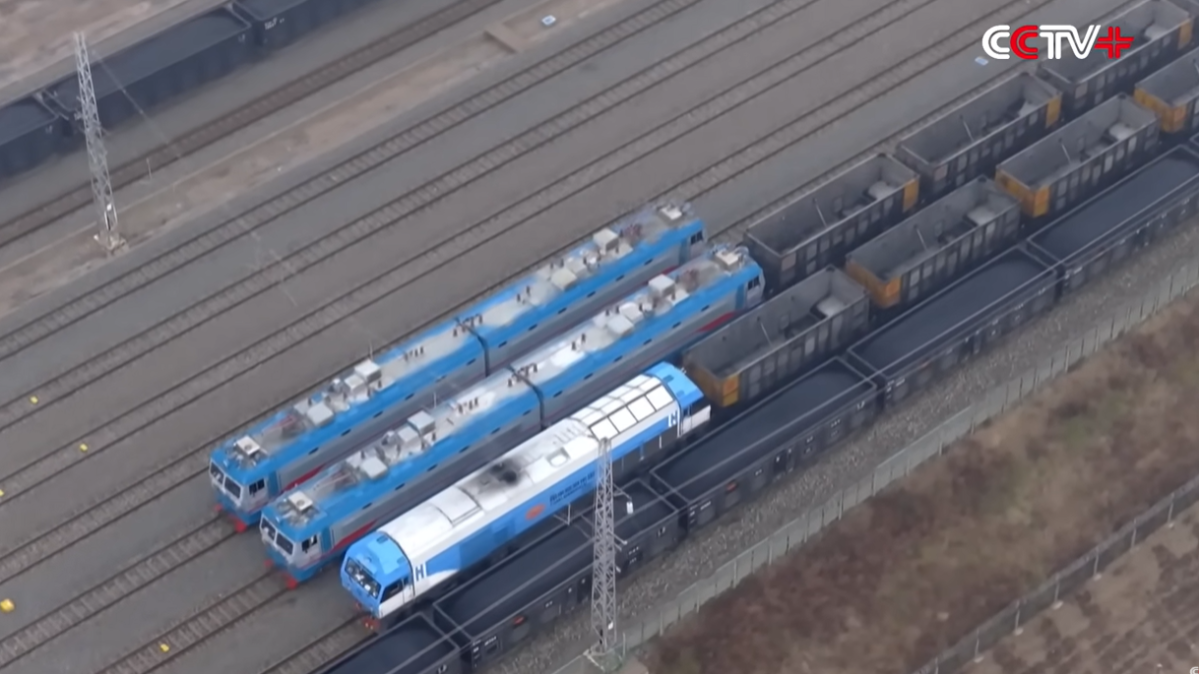
The trial took place on the Baoshen Railway in Inner Mongolia and involved seven freight trains travelling together as one coordinated convoy- but without being physically connected.
Instead of using the usual metal couplers that link train cars like a chain, each locomotive was controlled through an advanced wireless system.
This system allows all the trains in the convoy to start, stop, speed up and slow down at exactly the same time. Sensors and automated controls keep the distance between them stable, so the convoy moves smoothly like one huge train even though the locomotives are not touching.
During the test, all seven trains combined carried about 35,000 tonnes of cargo.
To give a sense of how massive that is, Chinese engineers explained that this amount of weight equals roughly three Eiffel Towers. Achieving this without physical couplings is considered a major step forward for railway technology.
Experts say the main advantage of this system is that it can sharply increase how much freight can move on existing railway lines. China already relies heavily on rail transport for coal, minerals, and other bulk goods, and demand continues to grow.
With virtual coupling, trains can run safely in very close formation, allowing more cargo to be moved at once. Officials estimate that freight capacity on certain lines could rise by up to 50 % without the need to build additional tracks.
Another benefit is flexibility. Because the locomotives are connected only through the wireless control system, they can be added or removed easily based on demand. Operators can form longer or shorter convoys quickly, depending on how much cargo needs to be moved that day. This reduces waiting times and improves the overall efficiency of the rail network.
Railway researchers believe that wireless convoys could become standard for heavy-haul routes in the coming years. If widely adopted, the technology could cut costs, reduce track wear, and help the rail network handle surges in demand more smoothly.
More testing is expected to refine the system, ensure reliability in different weather conditions, and prepare for larger-scale deployment.



















What is your opinion on this topic?
Leave the first comment