In the deserts of Namibia, Oman, and Saudi Arabia, scientists have uncovered strange, organized tubes embedded in ancient marble and limestone, sparking speculation that they may be the work of long-extinct microbial life. These unexpected formations could not only redefine our understanding of life
In the harsh deserts of Namibia, Oman, and Saudi Arabia, scientists have uncovered an astonishing discovery – thin, orderly tubes embedded in the marble and limestone rocks, potentially the remnants of ancient microbial life.
These mysterious structures, unlike any geological formations previously documented, suggest that an unknown form of microbial life may have once thrived in these extreme environments. If proven, this finding could transform our comprehension of life’s adaptability to some of Earth’s most unforgiving conditions.
The investigation was initiated by researchers from Johannes Gutenberg University Mainz (JGU), who first encountered the unusual formations during fieldwork in Namibia. Further analysis revealed biological material within the rocks, leading scientists to question whether these structures could be the work of ancient microbes. “We were astounded because these tubes are clearly not a product of geological forces,” stated Professor Cees Passchier, who first observed the strange formations. “We’re left wondering whether these life forms are extinct or still exist in some form.”
A Puzzle That Dates Back Millions of Years
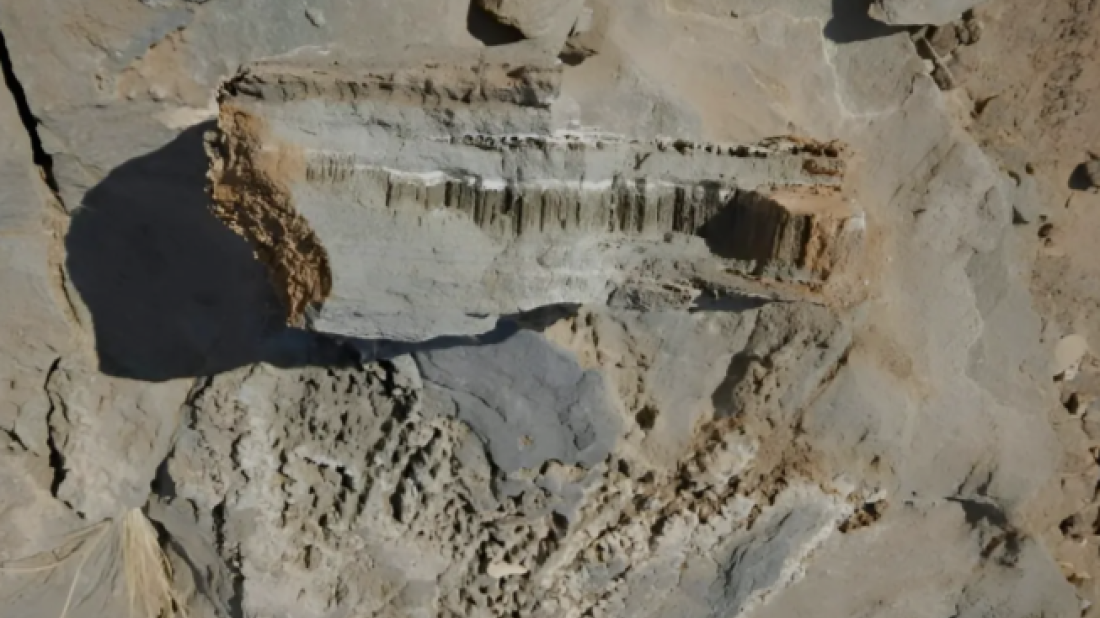
The discovery was made in samples of ancient marble, which formed over hundreds of millions of years under immense pressure and heat. The micro-tubes, found along fractures in the rock, appear highly organized and do not resemble typical erosion patterns caused by wind or water.
“These structures were not the result of geological events,” Passchier commented. “They seem too systematic and intentional to be a mere coincidence.”
The tubes, measuring no more than half a millimeter in width and extending up to three centimeters in length, run parallel to one another in bands that sometimes span tens of meters. In certain areas, calcrete, a type of crust, has formed around the bands, further emphasizing their distinct nature.
Although these formations were first noted in Namibia 15 years ago, recent findings in Oman and Saudi Arabia confirm that the phenomenon is more widespread. In Oman, the tubes appeared in limestone, while those in Saudi Arabia were found in marble.
Possible Role of Endolithic Microbes
The research team, in collaboration with molecular microbiologist Dr. Trudy Wassenaar, has theorized that these tubes may have been created by endolithic microbes—organisms that live inside rock. Known for their resilience, these microbes, which include bacteria, fungi, and lichens, can survive in some of the world’s harshest climates, including those devoid of light or water.
However, there’s a catch: the tubes are believed to be one to two million years old, possibly formed during a period when the desert regions were more humid. While the researchers found biological material within the tubes, the age of the structures makes it impossible to extract any DNA or proteins for identification.
“What makes this discovery so exciting is that we don’t yet know what microorganism is responsible,” said Passchier. “Is it a previously known organism, or is it a completely new and unrecognized form of life?”
Implications for the Global Carbon Cycle
The mystery of these tiny tubes holds more than just scientific intrigue; it could have significant implications for our understanding of Earth’s carbon cycle. Microbes that interact with rocks can play a key role in the breakdown of minerals and the release of carbon, which influences the planet’s climate.
Professor Passchier highlighted that while the exact nature of the microorganism remains uncertain, its impact on the global carbon cycle could be profound. "Even if these microbes no longer exist, their role in transforming calcium carbonate may have influenced the Earth’s CO₂ balance in ways that are still not fully understood,” he said.
The possibility that these microbes contributed to long-term climate regulation makes it essential for the scientific community to investigate further. The findings could help uncover how microbial life has influenced climate patterns throughout Earth's history, offering valuable insights into our planet's past and its future.
For now, the secret of these ancient tubes remains hidden in the rock, but with continued study, they may one day provide answers to questions about life’s persistence and its connection to Earth's climate system.






















What is your opinion on this topic?
Leave the first comment