Xi urges China and North Korea to deepen ties amid global instability
Chinese President Xi Jinping has urged China and North Korea to strengthen cooperation and maintain "strategic resolve" amid what he described as grow...
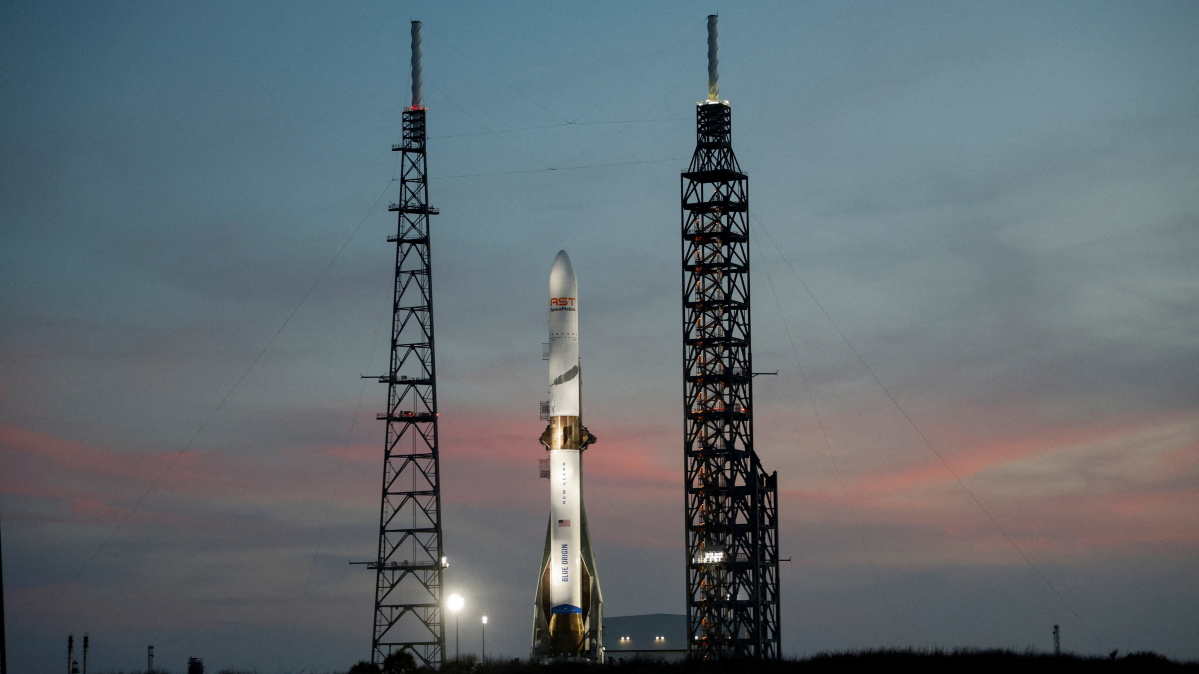
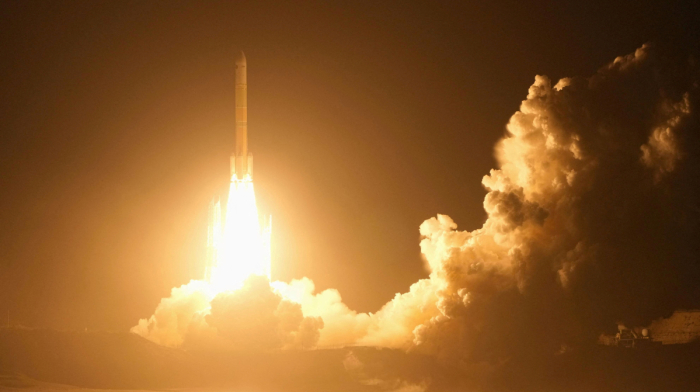
Blue Origin, the U.S. space company of billionaire Amazon founder Jeff Bezos, successfully reused and recovered a booster for its New Glenn rocket launched from Florida on Sunday (19 April), in the latest chapter of its intensifying rivalry with Elon Musk’s SpaceX.
The rocket lifted off at around 7:25 a.m. ET (1125 GMT) from Cape Canaveral, with the booster touchdown coming about 10 minutes later.
The company has launched the New Glenn twice before, but only with new rocket boosters.
However, the uncrewed mission also faced a setback as the rocket failed to deploy a communications satellite into a high enough orbit.
The satellite designed by Texas firm AST was part of the company’s effort to build a space-based cellular broadband network, similar to SpaceX’s Starlink.
"While the satellite separated from the launch vehicle and powered on, the altitude is too low to sustain operations with its on-board thruster technology and will (be) de-orbited," AST said.
In a response to a post on X from Bezos regarding Sunday's launch, Musk congratulated him.
Sunday's mission, the third for New Glenn, was key to demonstrating that it has a reliable booster reuse capability and can compete with the SpaceX Falcon 9 rocket.
The rocket’s booster is dubbed "Never Tell Me the Odds," a nod to Han Solo’s line in the film ‘Star Wars: The Empire Strikes Back.’
The mission came amid a surge of activity in the space sector.
Earlier in April, NASA’s Artemis II mission made history with a lunar flyby that took the astronauts further from earth than ever before.
SpaceX is building a special version of its Starship designed to land astronauts on the moon, as part of NASA’s Artemis programme.
Blue Origin is developing a more traditional lander and aims to achieve an uncrewed soft lunar landing this summer.
The developments come amid a U.S. space race with China to return humans to the moon for the first time since 1972.
Beijing, which plans to land its first crewed mission on the moon by 2030, is considered to currently be ahead in the contest.

It has been a punishing week for large parts of China, and forecasters warn the worst may not be over. After Typhoon Maysak left a trail of destruction and at least 23 people dead, Super Typhoon Bavi is now threatening the country's eastern coast.
At least 12 people have been killed in forest fires in Almeria in southern Spain, Andalucía’s emergency agency has said, as firefighters continue efforts to put out the blaze.
U.S. President Donald Trump said on Wednesday that the memorandum of understanding signed with Iran to end the conflict was "over", adding he did not want to engage with Tehran, calling the Iranian leadership "sick people".
The death toll from Venezuela's twin earthquakes has risen to 3,811, according to figures released by National Assembly President Jorge Rodriguez on Wednesday.
The U.S. military said on Wednesday it launched fresh strikes on Iran to keep the Strait of Hormuz open to shipping, triggering Iranian attacks on Kuwait and Bahrain in the latest escalation to derail efforts to end the war.
China has successfully tested an experimental rocket recovery system using a net attached to an offshore platform, marking a major step in its efforts to develop reusable rockets and compete with U.S. space technology.
OpenAI on Thursday unveiled ChatGPT Work, a new artificial intelligence agent designed to help professionals create documents, presentations and websites using advanced coding capabilities without requiring programming expertise.
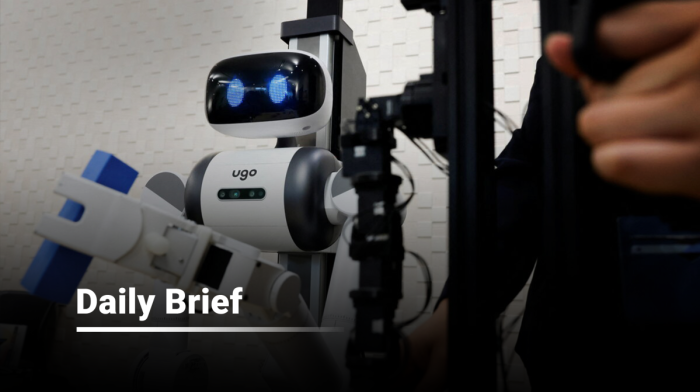
A Swiss humanoid robot capable of displaying the faces of world leaders and business executives was showcased at the AI for Good Global Summit in Geneva on Tuesday (7 July). Developers said the technology could make human-machine interactions more natural and expressive.
United Nations Secretary-General Antonio Guterres has warned that artificial intelligence is developing faster than governments and regulators can manage, calling for globally coordinated rules to reduce risks and ensure the technology is used safely, particularly by children.
Humanoid robots stumbled, collided and recovered as they battled for the RoboCup 2026 football title on Sunday (5 July), showcasing the latest advances in robotics and artificial intelligence at the world's largest competition of its kind.
You can download the AnewZ application from Play Store and the App Store.
What is your opinion on this topic?
Leave the first comment